
Nikon F2 Review (2026): Is This the Best Mechanical 35mm Camera?

The Famous Nikon F2
Reading Time: 7 Minutes
While the original Nikon F changed 35mm photography. The Nikon F2 feels like Nikon went back and fixed everything that wasn’t perfect yet. Introduced in 1971, many still see it as the peak of fully mechanical SLR design.
Built to handle real-world use, from war zones to brutal expeditions, the F2 wasn’t designed for comfort. It was built to keep working when everything else failed. With its stepless titanium shutter, fully manual operation, and the long-standing Nikon F-mount, it remains one of the most capable film cameras you can still shoot in 2026.
TL;DR: Nikon F2 at a Glance
Camera Type: Fully mechanical 35mm SLR
Launch Year: 1971 (the pinnacle of mechanical SLR design)
Lens Mount: Nikon F-mount (Compatible with 60+ years of Nikkor lenses)
Key Features: All-metal modular build, 1/2000s titanium shutter, hinged back door, 100% viewfinder
Power: No battery needed (metering requires LR44/silver-oxide batteries in the Photomic finder)
Best For: Enthusiasts, & professional film photographers
Not For: Casual shooters, beginners, or weight-conscious travelers
The Upgrade: Why I Switched to the Nikon F2 (From the Nikon F)
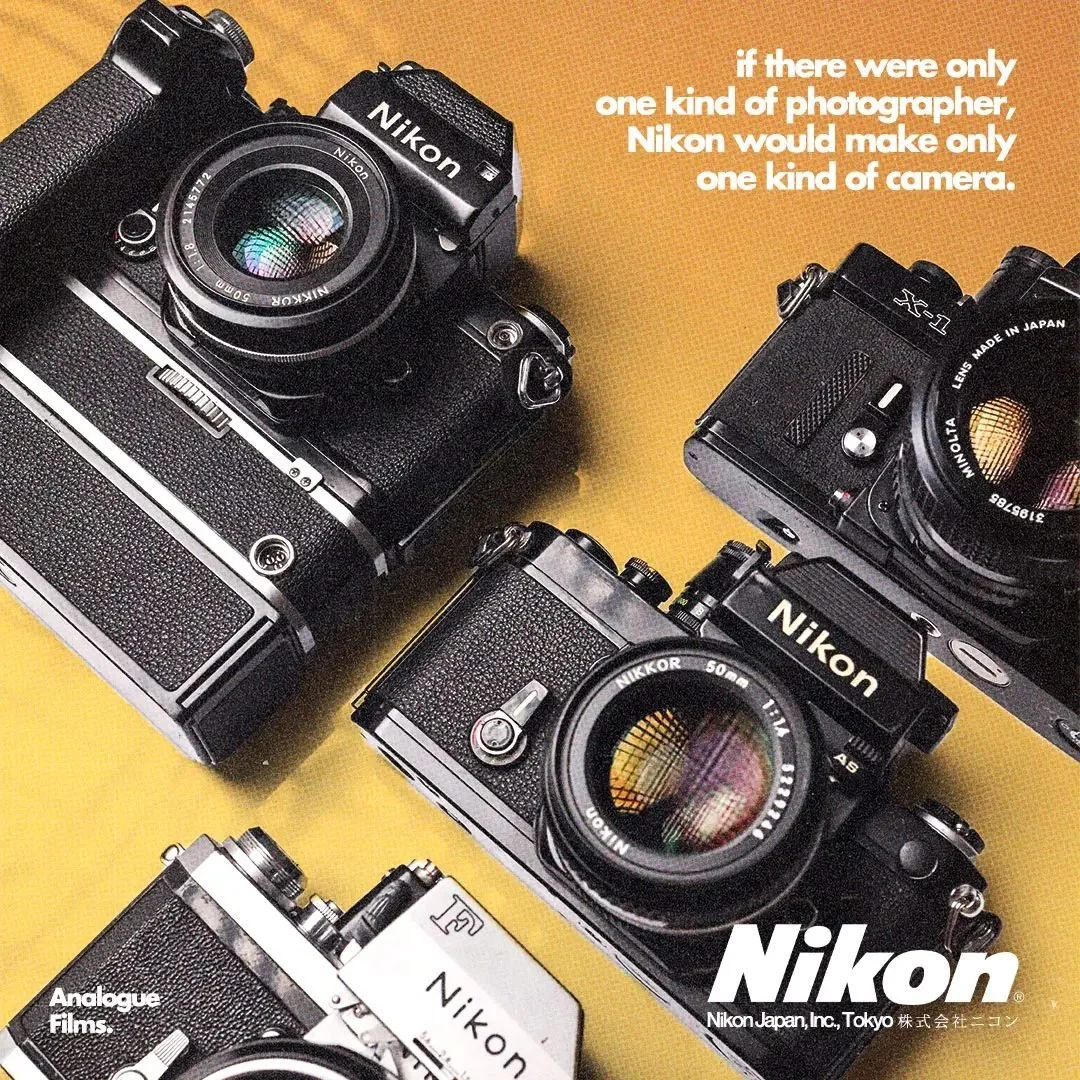
It all started with the F
As you might know, I was instantly hooked as soon as I got my hands on the Nikon F (full review here). The rugged feel and the incredible selection of lenses, something my trusty Canon P simply didn’t offer, completely pulled me in. It didn’t take long before I started looking for its successor, the equally legendary Nikon F2.
CLA Service & Long-Term Reliability
I just had a full CLA (clean lubricate adjust) done on it by Kamera Service Hoffmann in Stuttgart, not because something was defect, solely out of love for the camera. I want to enjoy it for many more years to come. So, strap on your boots for this Nikon F review.
Quick Summary: Nikon F2 Pros & Cons in 2026
| Pros | Cons |
|---|---|
| Fully Mechanical: Stepless titanium shutter that works without batteries. | Significant Weight: It’s a solid block of brass and steel, weighing nearly 1kg with a standard lens. |
| Improved Ergonomics: Features a hinged back door, making film loading much faster than the original Nikon F. | Bulk: The metered viewfinders make the camera noticeably top-heavy. |
| 1/2000s Shutter Speed: One of the few mechanical cameras offering high-speed performance for wide-open shooting. | Battery Dependency for Metering: While the camera is mechanical, the light meter requires SR44 batteries. |
| The "Universal" F-Mount: Compatible with almost 60 years of Nikkor lenses (Pre-AI, AI, and AIS lenses). | No Standard Hot Shoe: Like the F, it requires a special Nikon AS-1 adapter to use standard flashes. |
| 100% Viewfinder Coverage: What you see in the finder is exactly what ends up on your 35mm negative. | Price Tag: Because of its "cult" status, a clean, serviced F2 remains a significant investment in 2026. |
| Modular Versatility: Easily interchangeable prisms, focusing screens, and motor drives for any assignment. | Complex Metering: Older Photomic finders often suffer from "ring resistor" jumpiness if not serviced. |
Nikon F2 Review Contents (Quick Navigation)
Nikon F2 Technical Specifications (Quick Overview)
Build Quality: Why the Nikon F2 Feels Indestructible
The Titanium Shutter: 1/2000s and What Makes It Special
Handling and Ergonomics: What It’s Like to Shoot the Nikon F2
Nikon F2 in the Field: War, Expeditions and Real-World Use
Viewfinders and Focusing Screens: How Modular the Nikon F2 Really Is
Nikon F-Mount Lenses: What Works on the Nikon F2
The Ultimate Pre-AI Lens Kit for the Nikon F2
Accessories and Motor Drives: Expanding the Nikon F2 System
Nikon F2 Sample Images (Film Examples and Results)
The Verdict: Is the Nikon F2 Still Worth Buying in 2026?
Buying a Nikon F2 in 2026: What to Look For
Nikon F vs Nikon F2: Which One Should You Buy?
Nikon F2 FAQ: Common Questions Answered
Nikon F2 Technical Specifications (Quick Overview)
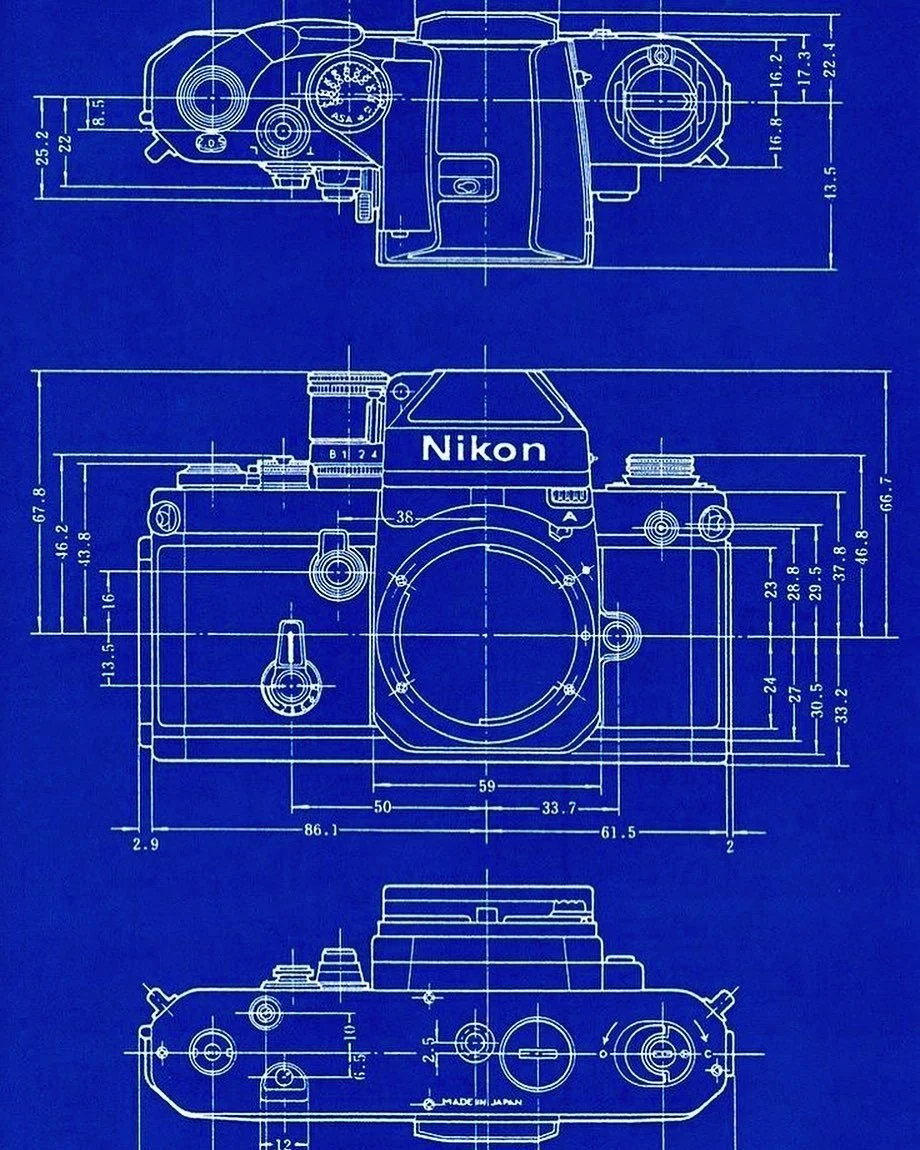
Nikon F2 Blueprint
To understand why the Nikon F2 is often called the "Last Great Mechanical SLR," you have to look at the refinements. In 1971, these specs weren’t just competitive, they were overkill for a fully mechanical camera.
| Feature | Specification |
|---|---|
| Camera Type | Nikon F2 35mm SLR camera, fully mechanical professional film camera |
| Introduction Year | 1971 (Produced until 1980/81, peak era of mechanical SLR design) |
| Lens Mount | Nikon F-Mount system (compatible with 60+ years of Nikkor F mount lenses: Pre-AI, AI, AI-S) |
| Shutter Type | Horizontal-travel, focal-plane mechanical shutter (professional SLR system) |
| Shutter Material | Titanium blade shutter (ultra-durable design for professional use and expedition photography) |
| Shutter Speeds | 2 seconds to 1/2000 sec + Bulb (B mode) for long exposure photography |
| Flash Sync Speed | 1/80 sec X-sync via PC sync terminal (compatible with studio flash systems) |
| Viewfinder Coverage | Approx. 100% frame coverage with interchangeable Nikon Photomic prisms |
| Interchangeable Viewfinders | DP-1, DP-2, DP-3, DP-11, DP-12 Photomic meters + waist-level finder + action finder |
| Focusing Screens | Fully modular system with 20+ interchangeable focusing screens (Type A, B, E, K, etc.) |
| Film Advance System | Single-stroke mechanical film advance lever (compatible with MD-1 / MD-2 / MD-3 motor drives) |
| Motor Drive Compatibility | Professional Nikon MD-1 / MD-2 / MD-3 motor drive system for high-speed shooting |
| Mirror Lock-Up | Mechanical mirror lock-up function (reduces vibration for long exposure photography) |
| Self-Timer | Mechanical delay timer (approx. 2–10 seconds) for tripod and studio use |
| Depth of Field Preview | Yes, mechanical DOF preview lever on lens mount for manual exposure control |
| Film Loading System | Hinged back door design (faster and more reliable than Nikon F removable back system) |
| Dimensions (Body Only) | Approx. 152 x 105 x 65 mm (classic professional SLR body size) |
| Weight (Body Only) | Approx. 730g (varies depending on Photomic finder and configuration) |
Why these specs still matter today
The Nikon F2 refined everything that made the original Nikon F great and removed its operational compromises.
The 1/2000s Shutter:
A major leap over the Nikon F, allowing more flexibility in bright light and faster action shooting without ND filters.
Modular Viewfinder System:
Unlike most cameras of its era, the F2’s entire exposure system lives in the prism. This means you can switch from a basic waist-level finder to a fully metered Photomic head in seconds.
Improved Ergonomics:
The hinged back door alone makes film loading significantly faster and easier compared to the original Nikon F’s removable back design.
Professional System Design:
The F2 was built from day one as a system camera for press, expedition, and war photographers, meaning every component is serviceable, replaceable, and overbuilt for decades of use.

Top View of the Nikon F2
Build Quality: Why the Nikon F2 Feels Indestructible
Where the original Nikon F feels raw and industrial, the Nikon F2 comes across as less brutal, more refined, but still every bit as indestructible. This latter was especially important for the war correspondents and photojournalists of the 70s who relied on the F-system's ruggedness in the most extreme environments.
There is still absolutely no plastic in the places that matter. The F2 feels like it was machined from a solid block of brass rather than assembled. It’s heavy in the best possible way, providing an sense of stability the moment you lift it to your eye.
The Titanium Shutter: 1/2000s and What Makes It Special
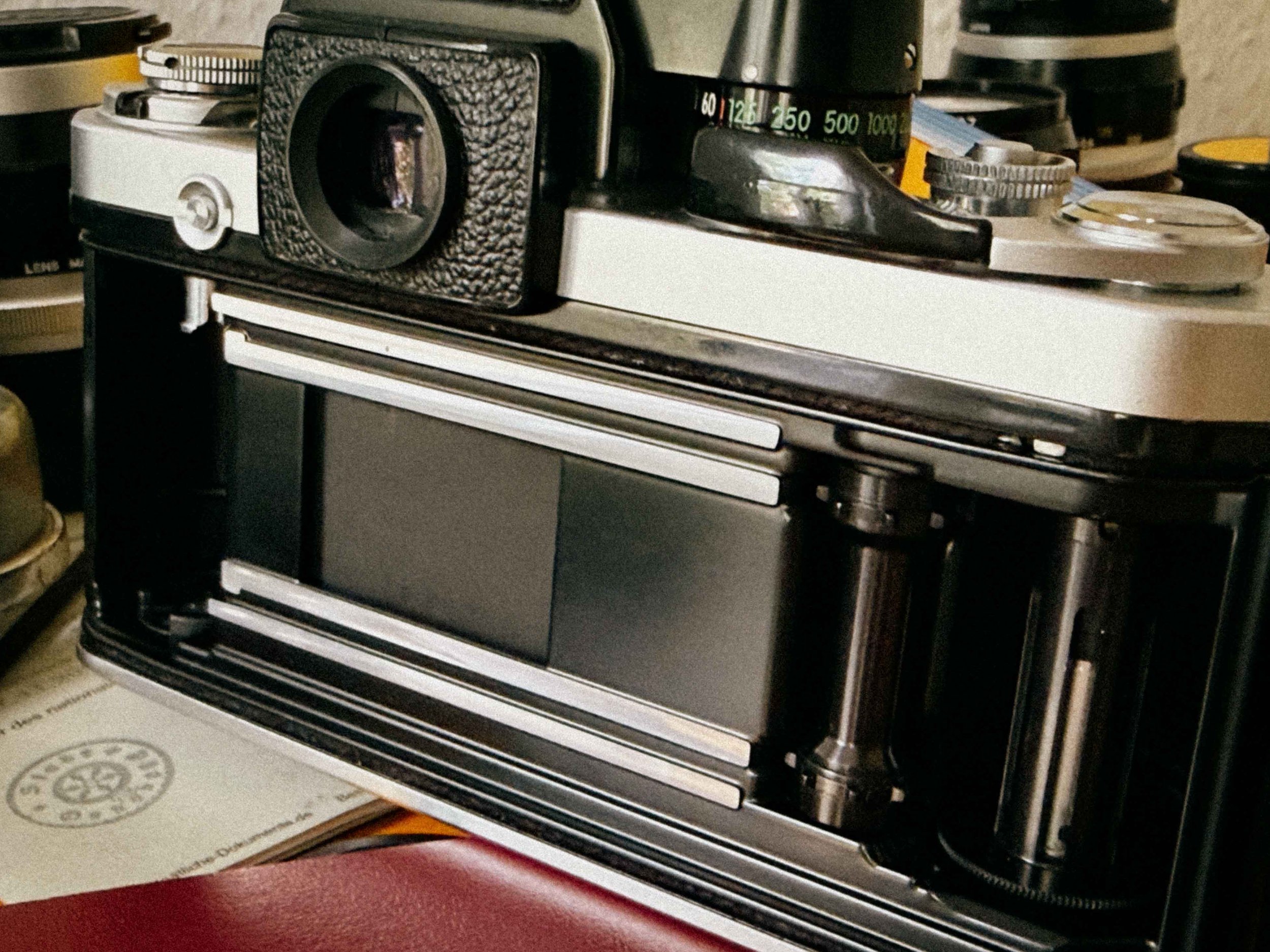
The Titanium Shutter
The heart of the Nikon F2 is its titanium shutter. Like its predecessor, it uses titanium foil instead of cloth, making it extremely durable and resistant to the dreaded sun-burn holes that often affect older vintage cameras. But the F2 pushes this design even further.
First of all: it’s fast. Very fast. Back in 1971, achieving a 1/2000s shutter speed in a fully mechanical SLR was serious high-precision engineering. Even today, that extra stop gives you real freedom, especially when shooting fast Films like Portra 800 in bright daylight.
The Secret Feature: Stepless Exposure Control
What really sets the Nikon F2 apart is its stepless shutter speed control between 1/125s and 1/2000s.
If your light meter lands between two standard values, say around 1/750s, you don’t have to compromise. You can simply set the shutter speed dial to an in-between position, and the system will follow accordingly.
For slide film (E-6), this is a huge advantage. Even half a stop can decide whether highlights hold or completely blow out.
Handling and Ergonomics: What It’s Like to Shoot the Nikon F2

Smooth lines
Coming from the Nikon F, the moment I picked up the Nikon F2, it felt like home but alos stepping into a more refined era of analog photography. It still carries the same DNA as its predecessor, but everything feels polished, and more mature. Nikon took every minor complaint from their customers of the 1960s and didn’t try to reinvent the SLR, they perfected it.
A More Refined and Ergonomic Mechanical SLR
The once sharp, edges of the Nikon F have been softened into more rounded, ergonomic contours. In the hand, the Nikon F2 immediately feels better balanced and more comfortable, especially during longer shooting sessions. It’s still a fully mechanical Nikon film camera, but one that clearly reflects years of refinement.
Film Advance and Shutter Feel: Where the Nikon F2 Truly Evolves
Advancing the film and firing the shutter is where the difference becomes most obvious. The Nikon F2 feels smoother, more controlled, and noticeably, almost silky in operation. Some people even say Leica-esque. Granted, this impression comes from a properly serviced example, but even beyond maintenance, the precision of the F2 is unmistakable.
Improved Film Advance Lever and Handling Experience
The film advance lever has also been redesigned for better ergonomics. With its plastic-covered grip, it feels more secure and natural under the thumb, especially during fast-paced shooting. It’s a subtle upgrade, but one that significantly improves the overall handling of this camera.
Faster Film Loading with Hinged Back Design
Film loading is another area where the Nikon F2 clearly improves on the original Nikon F. The hinged back door replaces the older removable back system, making loading faster, easier, and far more intuitive in real-world use. It’s a and valuable practical upgrade.
The Shutter Collar: More Than Just a Lock
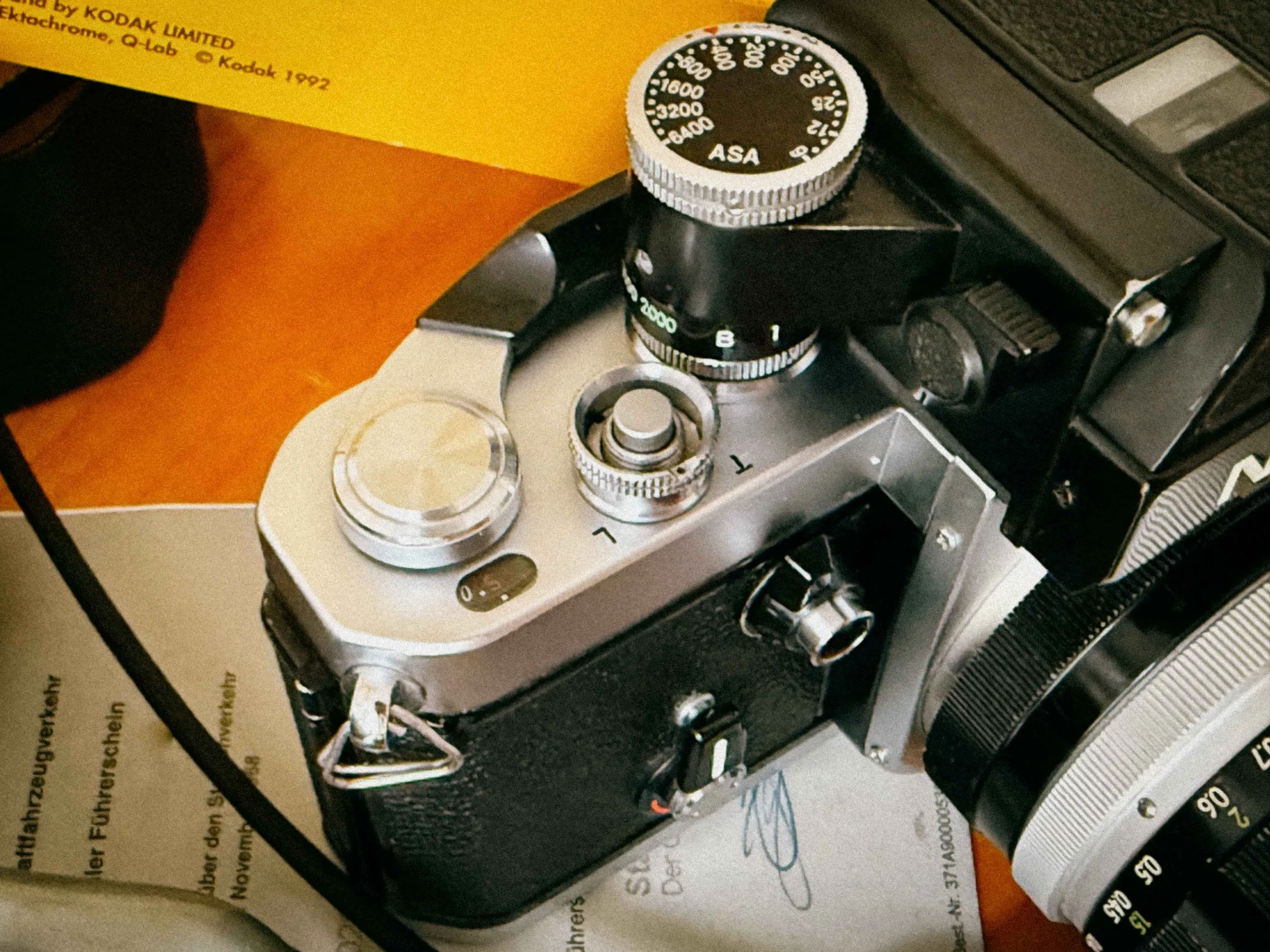
The hidden gem
One of the most understated yet brilliant features of the F2 is the collar surrounding the shutter release button. It’s not just there for protection; it also has a function:
The "T" Mode: By rotating the collar to the "T" (Time) position, the shutter will stay open indefinitely after you press it. To close it, you simply rotate the collar back. It’s the fail-safe for long exposures when you've forgotten your cable release.
The "L" (Lock) Mode: Rotating the collar to the "L" position physically blocks the shutter button. Nowadays, when every frame of film is an investment, this is a life-saver. It prevents accidental shots while the F2 is bouncing around in your bag or hanging from your shoulder. It’s a simple, robust solution that ensures you only fire when you intend to.
Mechanical Genius: The Self-Timer as a "Long Exposure Computer"
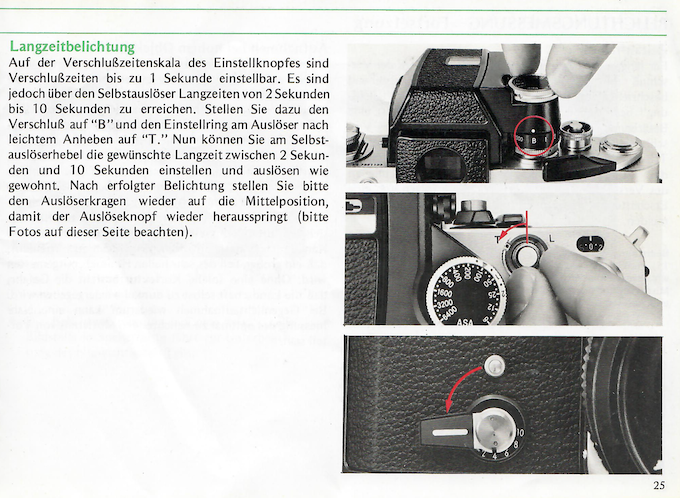
Excerpt from the German manual
The best "Easter Egg" of the Nikon F2 is the dual-purpose nature of the self-timer lever. In an era before digital timers, Nikon engineered a way to achieve long exposures using only springs and gears.
10-Second Mechanical Timing: If you set your shutter speed dial to B (Bulb) and move the shutter collar to the T position, the self-timer lever transforms into a countdown for long exposures.
The Workflow: You wind the self-timer lever to the number corresponding to the seconds you need (from 2 up to 10). When you fire the shutter, the camera uses the self-timer's internal clockwork to hold the shutter open for that exact duration before closing it.
The "Nikon Shuffle"
If you are using a Photomic finder, remember the "Nikon Shuffle." Every time you change a lens, you have to twist the aperture ring all the way to the left and then all the way to the right to "index" the lens.
The Nikon F2 doesn’t feel like a different camera from the Nikon F. It feels like the moment the system finally reached its perfect form.
Nikon F2 in the Field: War, Expeditions and Real-World Use
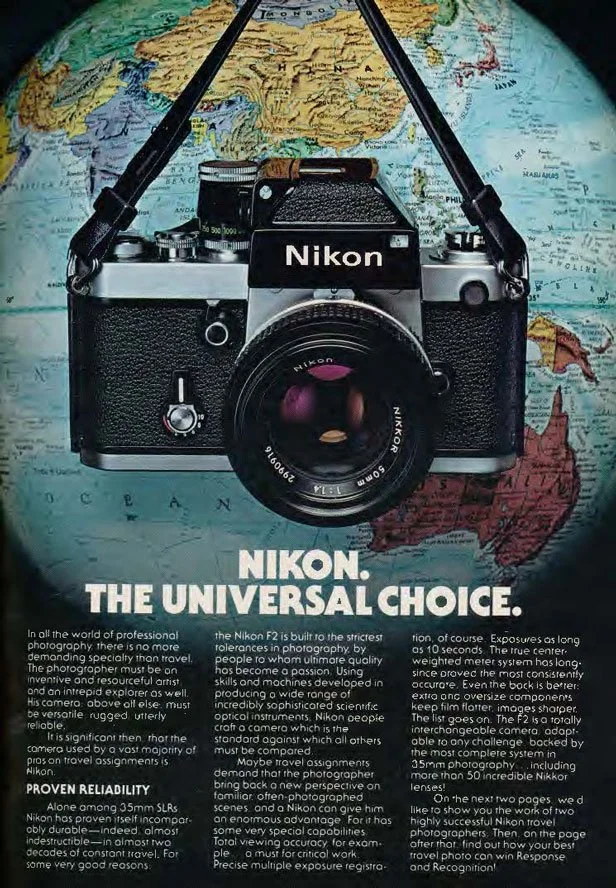
The Universal Choice
The Nikon F2 arrived in 1971 at a time when photojournalism was being defined in real conflict zones, extreme environments, and fast-moving global events. Building on the legacy of the original Nikon F, the F2 quickly became one of the most trusted 35mm SLR cameras for war photography and expedition use.
This was the era of the Vietnam War and the peak of analog press photography. The Nikon F2 earned its reputation exactly where it mattered most: in the great outdoors. It was used by war correspondents, documentary photographers, and expedition teams who needed a camera that would not fail under pressure, no matter the conditions.
From conflict zones in Southeast Asia to extreme environments documented by photographers working with publications like National Geographic, the Nikon F2 became THE camera of modern visual history. Arctic cold, desert heat, rain, dust, and constant travel – this camera was built to survive it all.
In 2026, the Nikon F2 still holds its place as one of the most reliable SLRs ever made – a camera designed for real-world use.
Viewfinders and Focusing Screens: How Modular the Nikon F2 Really Is
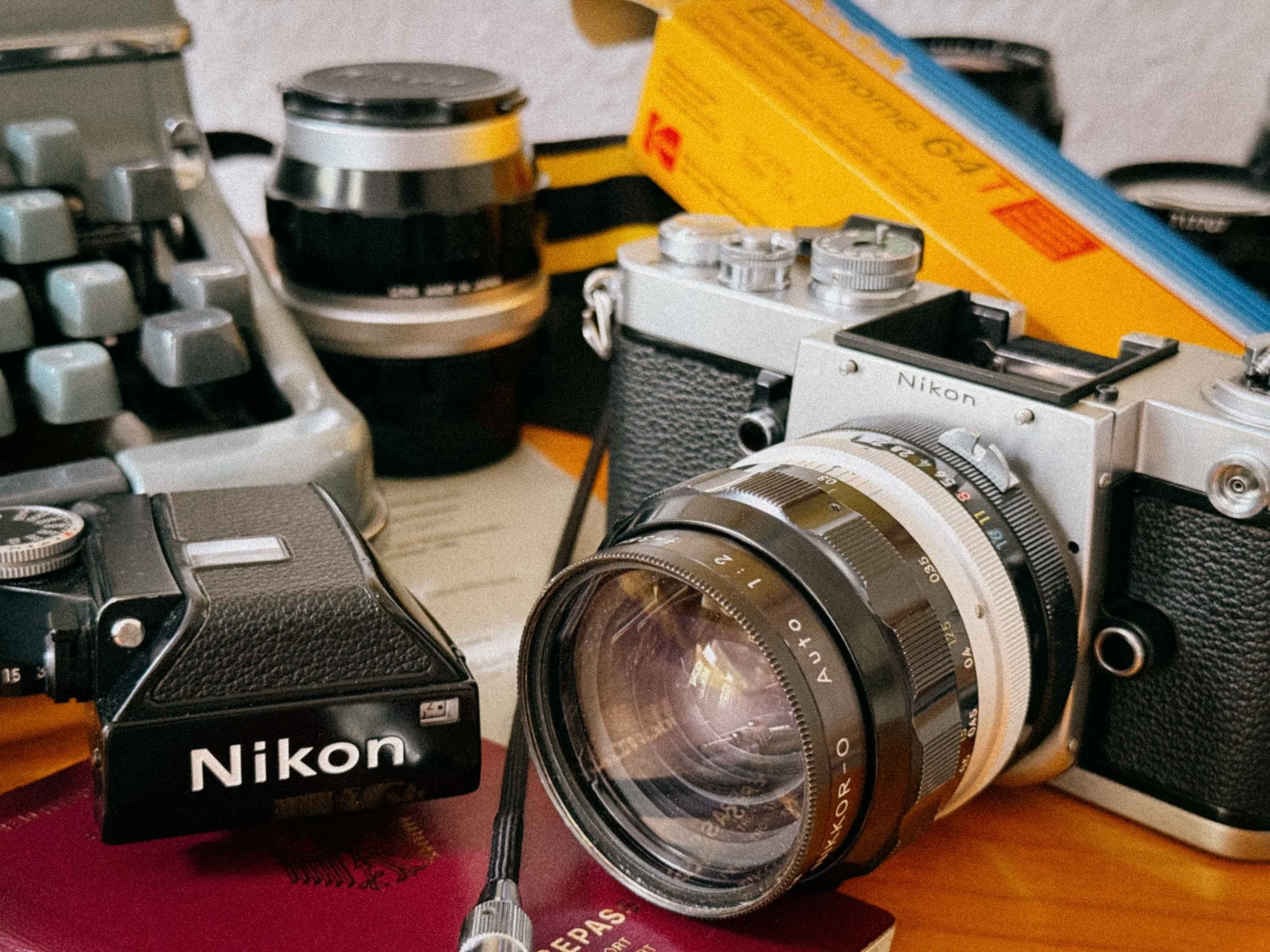
Nikon F2 with DP1 Metered Finder
The true genius of the Nikon F2 system lies in its modular design. Just like its predecessor, the F2 was built to adapt. No matter what the occasion was, Nikon offered a dedicated viewfinder for almost every situation.
This level of flexibility is also what makes the Nikon F2 slightly confusing for newcomers today. The camera’s “name” is not always fixed – it actually changes depending on which viewfinder (prism) is mounted on top of the body. In other words: the Nikon F2 is not just one camera, but an entire system built around interchangeable finders.
The Compatibility Trap: Matching Finders to Lenses
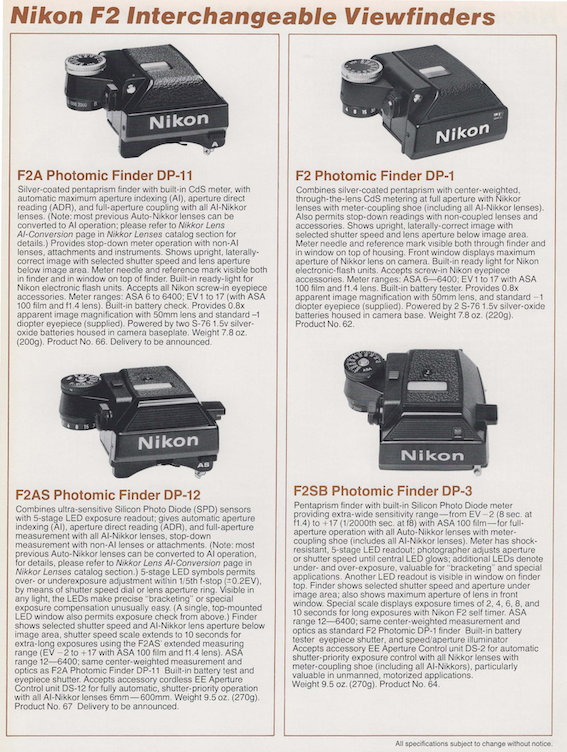
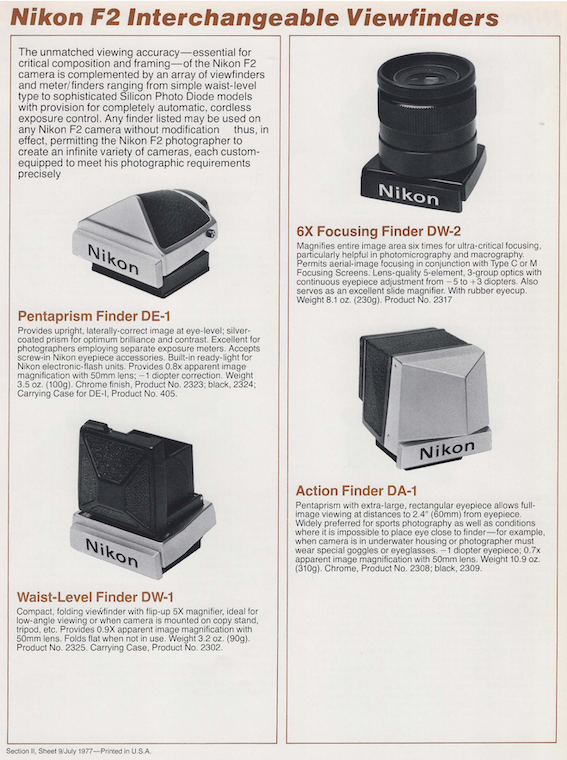
Not all finders work with all lenses. This is the most critical part of buying an F2 in 2026. If you want to use vintage Pre-AI glass (the ones with the solid metal "rabbit ears"), you have to be careful. Using the wrong lens on the wrong finder can, in some cases, even lead to jams or damage to the coupling lever.
The "name" of your Nikon F2 actually changes depending on which prism is mounted on the body. This table helps you match the right finder to your lens collection:
| Model Name | Finder | Metering / Display | Native Lens Compatibility | Key Feature |
|---|---|---|---|---|
| Nikon F2 | DE-1 | No Meter | All F-Mount Lenses | Sleekest profile. Fully mechanical and battery-independent. |
| F2 Photomic | DP-1 | CdS / Needle | Pre-AI (Non-AI) | The 70s classic. Requires the "Nikon Shuffle" (Rabbit Ears). |
| F2S | DP-2 | CdS / LED | Pre-AI (Non-AI) | LED arrows instead of a needle. Better for low-light work. |
| F2SB | DP-3 | Silicon (SBC) / LED | Pre-AI (Non-AI) | Fast-reacting SBC sensor. Rare and highly professional. |
| F2A | DP-11 | CdS / Needle | AI & AI-S Lenses | Modern "Automatic Indexing." No more Rabbit Ears needed. |
| F2AS | DP-12 | Silicon (SBC) / LED | AI & AI-S Lenses | Top-tier SBC tech with AI convenience. |
Critical Compatibility Warning:
- Pre-AI Finders (DP-1, 2, 3): These require lenses with the metal "Rabbit Ears" to communicate the aperture to the meter.
- AI Finders (DP-11, 12): These use a small coupling lever that sits against the lens's aperture ring.
- Pro Tip: Mounting an unmodified Pre-AI lens on an AI finder (DP-11/12) can physically damage the coupling lever. Always ensure your lens is "AI-compliant" before mounting it to an F2A or F2AS.
The World through the Finder: Precision Focusing Screens
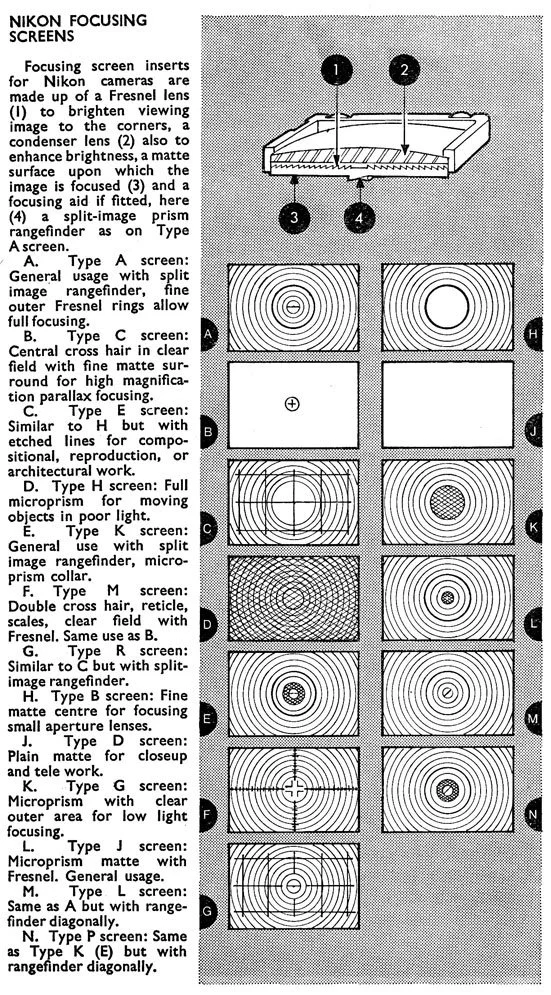
Overview of available Focusing Screens
The modularity of the Nikon F2 doesn’t stop at the prism. While other cameras of the era required a trip to a technician to change a focusing screen, the Nikon F2, like its predecessor, was designed to be customized by the photographer in seconds.
By 1971, Nikon had expanded the system to 19 different types of focusing screens (later growing even further). These weren't just generic alternatives; they were specialized tools for specific photographic disciplines. Just as with the finders, Nikon had a screen for every job.

View through the Nikon F2 DP1 Finder with A Screen
Standard (Type A ): Most bodies come with Type A (horizontal split-image) or the more modern Type K (split-image plus a microprism ring). These are excellent for 95% of general photography.
Architecture (Type E): As you can see it’s a plain matte screen but with an etched grid. It’s perfect for architectural shots, keeping horizons perfectly level in street photography, and the "Rule of Thirds."
Portrait (Type P) not shown above: Known as the "Apollo" screen, it features a 45° diagonal split-image. This is genius for portraits because you can focus on vertical and horizontal lines (like eyelashes or glasses) without needing to tilt the camera.
Low Light & Telephoto (Type B): If you use "slower" lenses like the 28mm f/3.5 in low light, a split-image can often "black out" on one side. The Type B (plain matte) is much brighter and easier to use in dim conditions or with long telephoto lenses.
Buying Tip: When browsing eBay or local shops, check which screen is installed. A scratched Focusing Screen isn't a dealbreaker. Swapping them is effortless: Remove the viewfinder, press the release button, flip the camera over, and the screen drops right out.
Nikon F-Mount Lenses: What Works on the Nikon F2
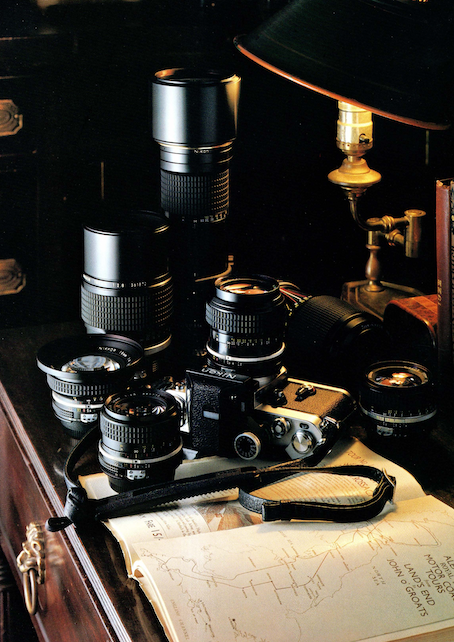
Vintage Lense Ad
One of the most significant advantages of the Nikon F2 is its role as a bridge between two eras of optical history. However, this is also where you need to pay the most attention to the interface between your lens and your finder.
The "Non-AI" Advantage
My Nikon F2, equipped with the DP-1 Finder, has one massive benefit: it lacks the fixed auto-indexing (AI) tab found on almost all later Nikon bodies. Which is great cause i can use my “Non-AI” lenses on the Nikon F as well as on my F2.
On the later Nikon F2 models, specifically the F2A (DP-11) and F2AS (DP-12), you have to be extremely careful. These finders feature a delicate AI-indexing tab that can be physically bent or damaged by older, unmodified "Non-AI" glass. If you want to use the vast and affordable library of early 1960s Nikkor lenses without permanently altering them, the DP-1, DP-2, and DP-3 finders are your safest and most versatile options.
Understanding the "Rabbit Ears"
To get a meter reading on these earlier finders, you rely on the iconic "Rabbit Ears" (the metal coupling prongs) on the lens.
The Ritual: When you mount a lens, you engage the pin on the finder into the prongs of the lens and perform the "Nikon Shuffle" (turning the aperture ring to its minimum and maximum).
The Reward: This tactile connection allows you to use almost any F-mount lens made between 1959 and 1977 with full TTL (through-the-lens) metering.
The Ultimate Pre-AI Lens Kit for the Nikon F2

My Favorite Lense Line up
If you want to experience the Nikon F2 without breaking the bank, you don't need a dozen lenses. What you need is a curated kit, a small selection of glass that covers everything from the frantic pace of street photography to the quiet focus of an intimate portrait.
I can’t stress enough how well-built these vintage Nikkor lenses are. We are talking about milled brass, precision-ground glass, and a feel that makes modern plastic lenses feel like disposable toys.
But it’s not just about the construction. These vintage Nikkors have a specific character that combines a nostalgic, cinematic look with a level of resolution that is still surprising in 2026. If you haven't noticed by now, I am a massive fan of this era of optics.
Here is my recommended lineup for the ultimate F2 kit:
1. The Wide-Angle: Nikkor-H 28mm f/3.5
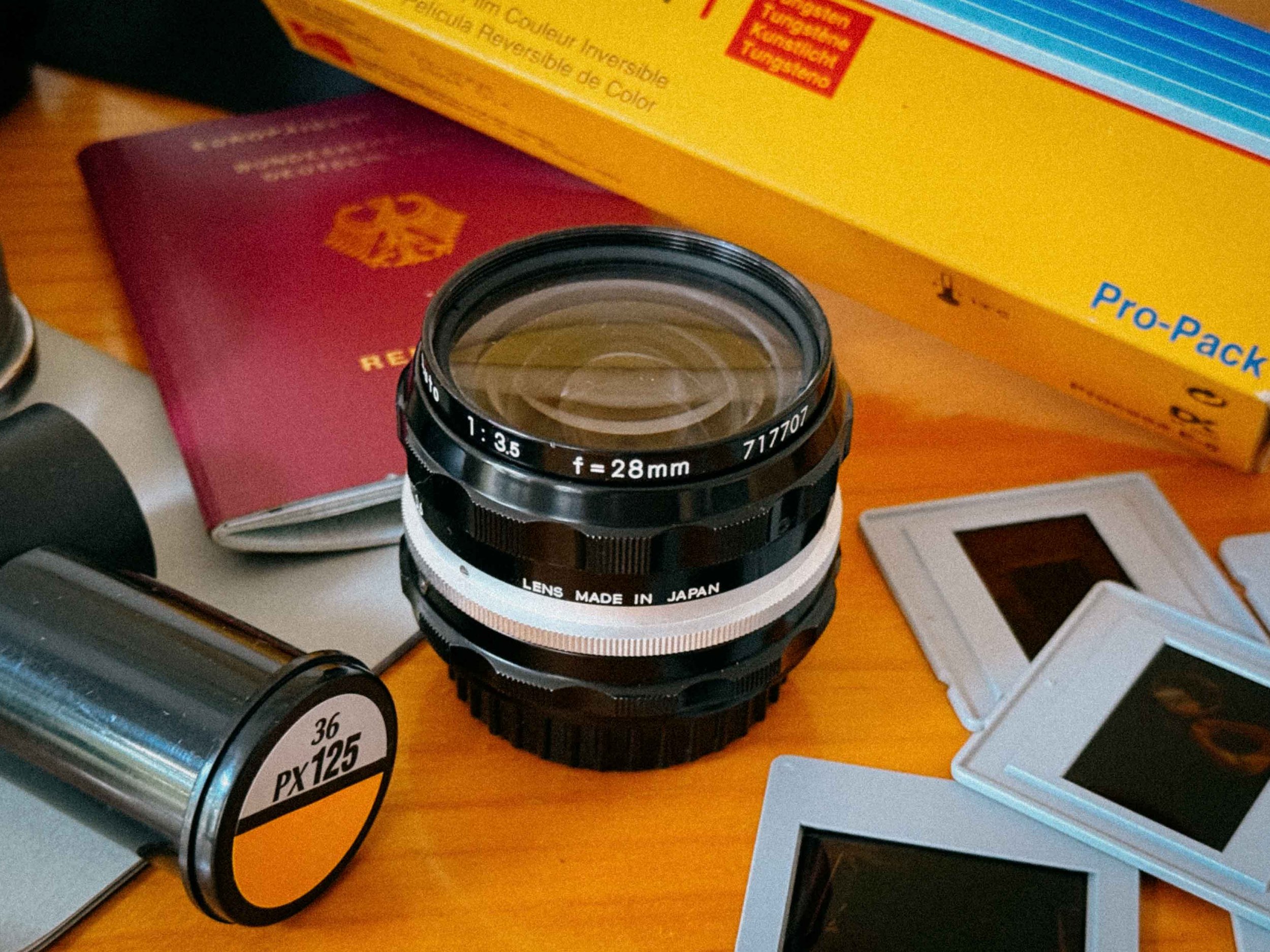
Nikkor-H 28mm F/3.5
Don’t be discouraged by the f/3.5 maximum aperture. This lens is a masterclass in optical correction, celebrated for its corner-to-corner clarity and virtually non-existent distortion. Its remarkably slim profile provides a much-needed counterweight to the F2's massive brass body. You can still find these for under $100. It’s the ideal lens for landscapes, though you’ll want to reach for something faster once the sun dips below the horizon.
2. The Documentary Choice: Nikkor-O 35mm f/2

Nikkor-O 35mm F/2.0
If I were stranded on a desert island with only one piece of glass, this would be it. The 35mm f/2 is the such a great lens. It’s fast enough to handle moody interiors and possesses a signature "glow" at f/2 that melts into surgical sharpness by f/4. I shot most of the sample images below with it.
3. The Workhorse: Nikkor-S 50mm f/1.4

Nikkor-S 50mm F/1.4
This is the quintessential "Standard" nifty fifty. The "S" stands for Septem (seven elements), and it is a lens with two distinct personalities. Wide open, it creates a dreamy, atmospheric aesthetic that is great for cinematic portraits. Stop it down to f/5.6, and it becomes a modern, high-contrast performer.
4. The Portrait Master: Nikkor-P 105mm f/2.5

Nikkor-P 105mm F/2.5
Widely regarded as one of the finest portrait lenses in history, the 105mm f/2.5 is famous for a reason. It manages to be tack-sharp where it matters while maintaining a gentle, flattering fall-off for skin tones. This early Pre-AI version utilizes a Sonnar optical formula, which produces a creamy, painterly bokeh that modern computer-designed lenses struggle to replicate. If you want to capture the soulful, haunting depth made famous by National Geographic's most iconic covers, this lens is non-negotiable. This is my absolute favorite for portraits.
The Nikkor Alphabet: Decoding the Glass

Nikkor-NC 28mm F/2.0
When you look at a vintage Nikkor, that single letter after the name (like the "P" in our 105mm) serves as a code. It’s not just a model designation; it reveals the optical soul of the lens by telling you how many glass elements were used in its construction.
Nikon drew from Latin and Greek numerical prefixes to create this system. Understanding this "alphabet" allows you to appreciate the mechanical and optical complexity of your kit before you even look through the viewfinder.
| Letter | Origin (Latin/Greek) | Elements | Example Lens |
|---|---|---|---|
| U | Unus | 1 | Ultra-rare specialized optics |
| B | Bini | 2 | Early tele-converters / specialized glass |
| T | Tres | 3 | Nikkor-T 10.5cm f/4 |
| Q | Quatuor | 4 | Nikkor-Q 135mm f/3.5 |
| P | Pente | 5 | Nikkor-P 105mm f/2.5 (The Legend) |
| H | Hex | 6 | Nikkor-H 28mm f/3.5 |
| S | Septem | 7 | Nikkor-S 50mm f/1.4 |
| O | Octo | 8 | Nikkor-O 35mm f/2 |
| N | Novem | 9 | Nikkor-N 24mm f/2.8 |
| D | Decem | 10 | Nikkor-D 15mm f/5.6 |
Pro Tip: Generally, the more elements (like the Nikkor-O or Nikkor-N), the more complex the optical design was
The "·C" Suffix: Understanding Light and Coating
As you hunt for vintage glass, you’ll often see a small "·C" engraved after the element letter (for example, Nikkor-S·C). This isn’t just a minor update; it marks the transition to Multicoating, a massive leap forward in optical technology.
Non-C (Single-Coated) Lenses: These are the purist's choice for a "period-correct" vintage look. They are more prone to flare and produce a lower-contrast, pastel-like aesthetic. If you want your photos to look like they were pulled straight from a 1970s archive, these are for you.
C-Type (Multicoated) Lenses: These handle harsh backlighting with much more grace. They offer punchier contrast and deeper color saturation, making them the better choice for slide film or high-contrast street scenes where you need to control stray light.
The "Auto" Label: A Mechanical Revolution
One of the most common points of confusion for newcomers is the "Auto" designation found on the barrel of many Pre-AI Nikkors. In 2026, we associate "Auto" with electronics, but in the era of the F2, it was a masterpiece.
It stands for Automatic Diaphragm. Before this innovation, the viewfinder would dim as you stopped down the lens; focusing at f/11 felt like trying to see through a dark room.
The "Auto" feature changed everything: it allows the lens to stay wide open for a bright, crystal-clear focusing experience, only "snapping" down to your selected aperture at the exact millisecond you fire the shutter. It is the mechanical heartbeat of the Nikon system, a seamless interaction between the camera body and the glass that made the F2 the fastest tool of its time.
Accessories and Motor Drives: Expanding the Nikon F2 System
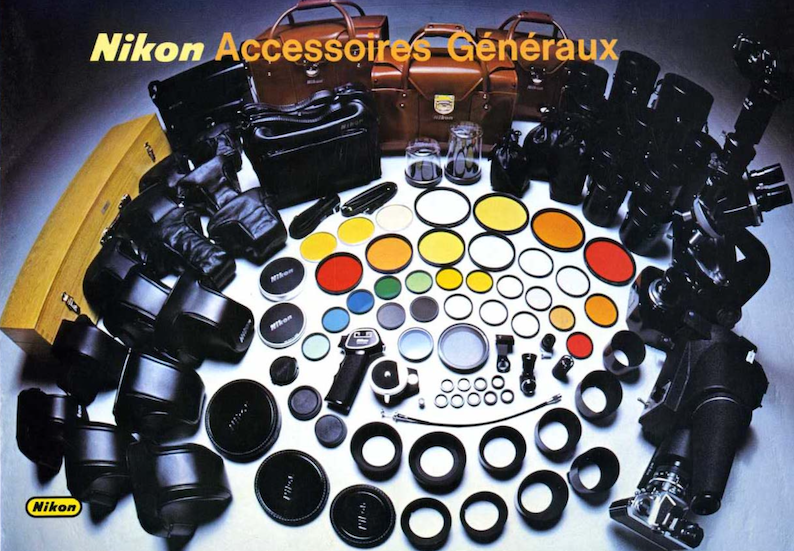
Nikon offered a wide array of accessoires for the F2
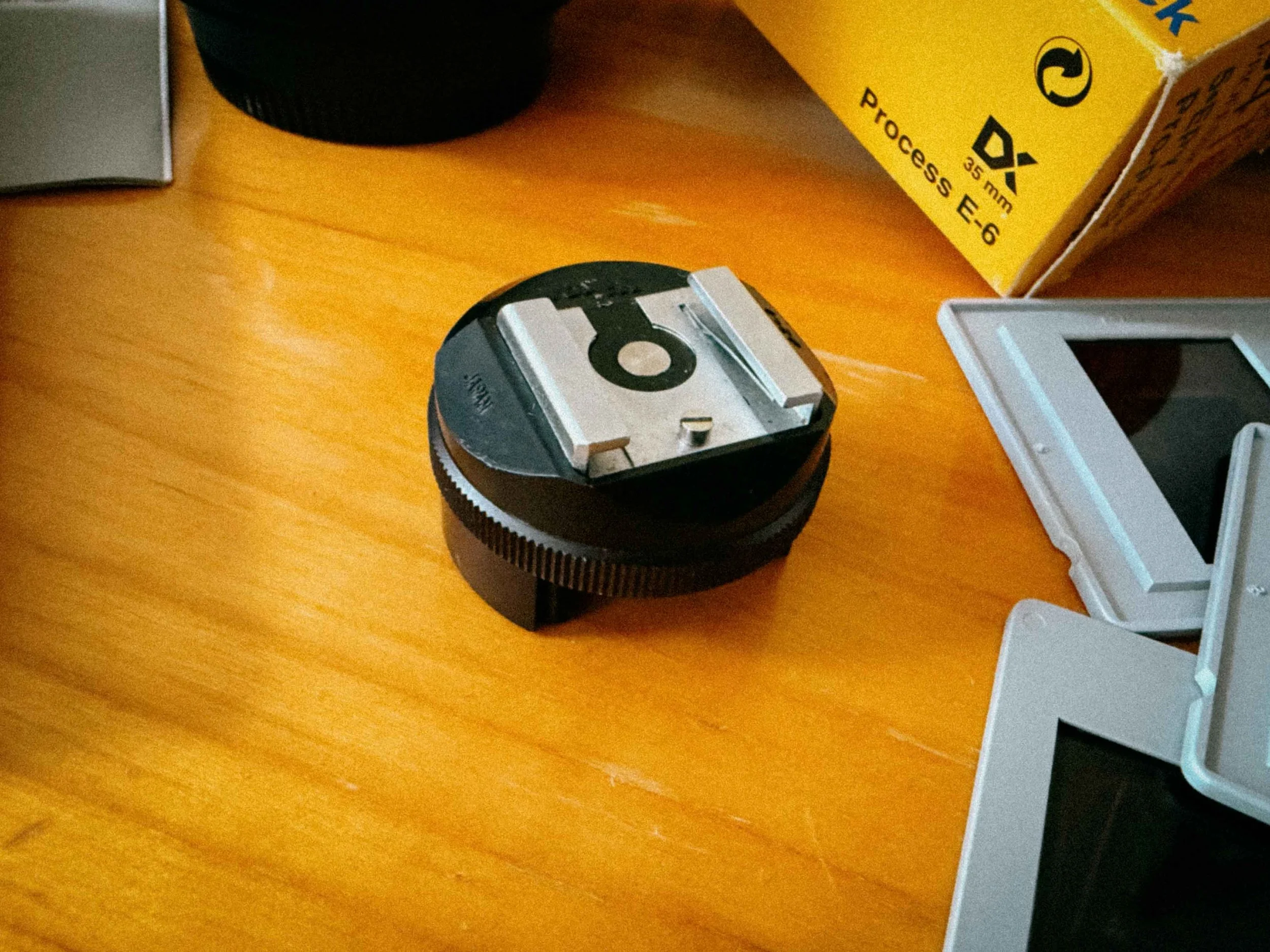
Nikon AS-1 Hotshoe Adapter
Nikon AS-1 Adapter
The Nikon F does not have a standard hot shoe. It uses a unique mount around the rewind crank. If you want to use a modern flash or a wireless trigger in 2026, you’ll need the Nikon AS-1 adapter. Without it, your will have to use its PC-Port.
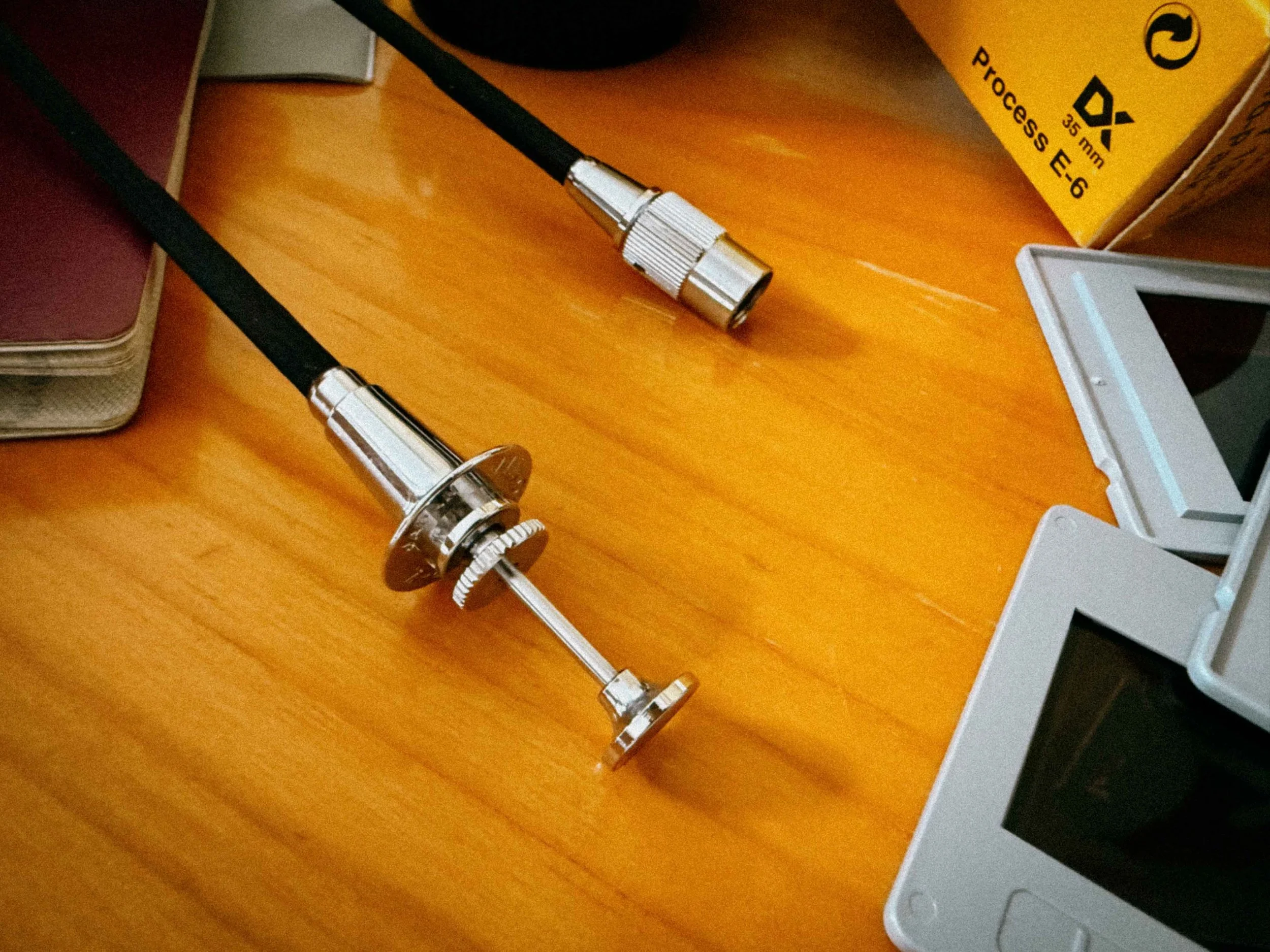
The Shutter Release Cable (The AR-2)
Nikon AR-2 Cable Release
The Nikon F uses a proprietary "Leica-style" bell mount. To use a remote cable for long exposures or tripod work, you need the Nikon AR-2 cable release (or a "Nikon to Standard" adapter). It’s a small detail, but realizing your standard cable will not fit while at a shooting is something you want to avoid.
While most of us shoot the F2 as a regular camera, Nikon offered an staggering array of expansions that transformed the camera for specialized work:
Motordrives and more
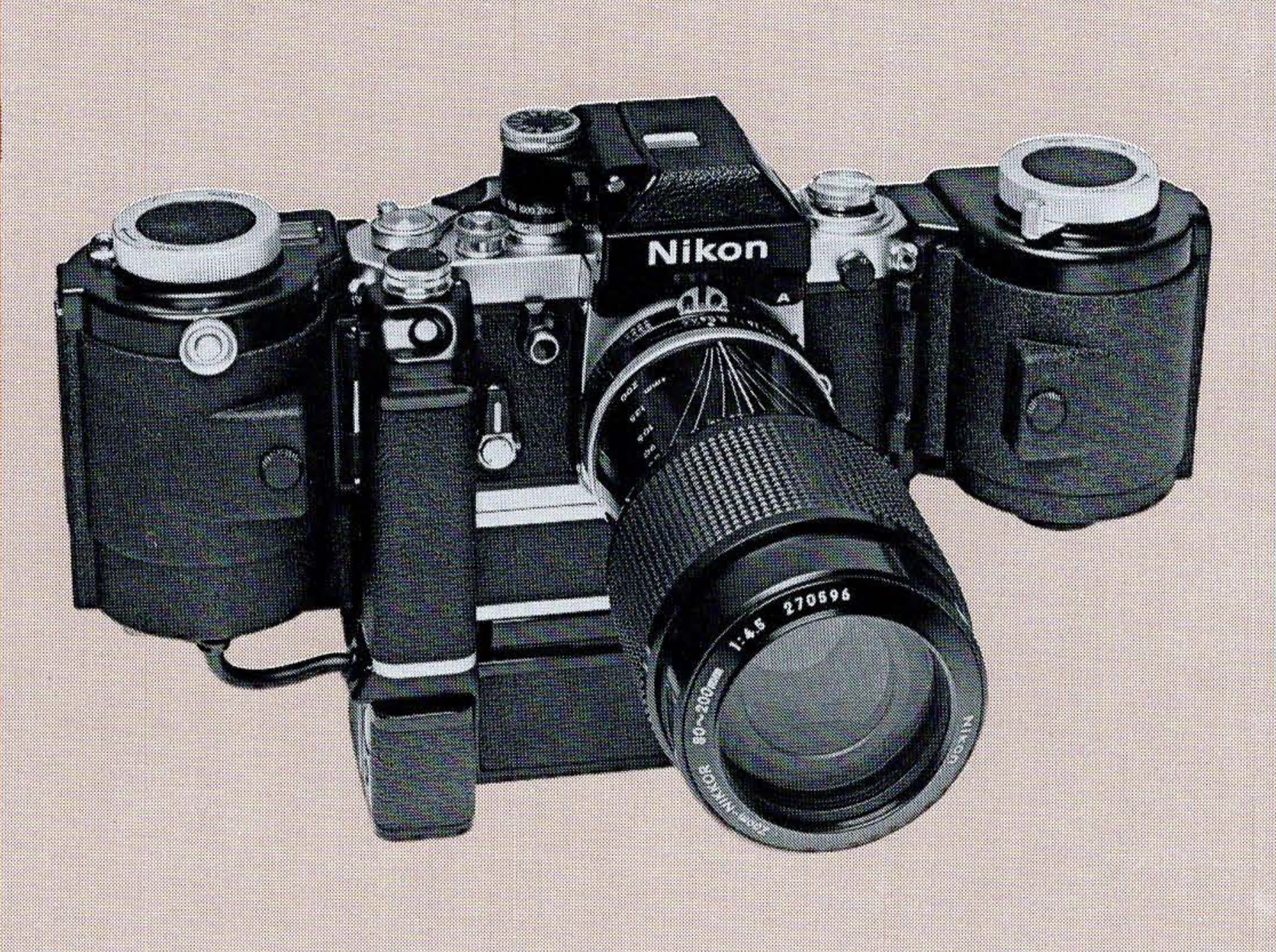
Fully rigged Nikon F2 with motor drive and 250 exposure magazine
Motor Drives (MD-1, MD-2, MD-3): These high-speed drives allowed for up to 5 frames per second. They turn the F2 into a loud, fast, and heavy beast, hard to believe but it was an importat accessoire for 1970s sports and news photographers.
Specialized Backs: From 250-exposure "bulk film" backs for surveillance to data backs for scientific recording, the F2 could be modified for almost any task.
Macro and Repro: The system included a massive range of Bellows units and slide copiers, allowing for extreme high-magnification work.
While you may never need a 250-exposure magazine (maybe you do :), knowing they exist reinforces why the F2 earned its reputation.
Nikon F2 Sample Images (Film Examples and Results)














The Verdict: Is the Nikon F2 Still Worth Buying in 2026?
Today we are surrounded by technology that is designed to be obsolete within a few years. The Nikon F2 is the exact opposite. It is a quiet middle finger to the disposable era of modern cameras. No autofocus, no auto exposure modes, no menus, no firmware updates, and absolutely nothing that gets in the way between you and the image.
So why should you buy one?
Because shooting a Nikon F2 is a physical experience in the best possible sense. You feel the weight of the metal body, you hear the precise shutter, and you get to use some of the best manual-focus Nikkor lenses ever made. Everything about it feels intentional. Nothing is automated, nothing is guessing for you, the camera simply does exactly what you tell it to do.
It’s a tool that demands your attention, but rewards you with a shooting experience that modern cameras simply don’t offer anymore. Even in 2026, the Nikon F2 still feels just as relevant as it did when it was introduced in 1971. Which is such a rare and precious thing to experience.
Is it for everyone?
Probably not. It’s heavy, it’s fully manual, and it won’t help you in any “point and shoot” situation. Some might even call it outdated. But once you get used to it, it becomes hard to go back. Shooting it is not convenient, it’s satisfying.
Where to buy a Nikon F2?
If you’re looking for a clean and properly serviced body, specialist vintage dealers or dedicated Nikon repair shops are usually the safest option. Cameras that have been CLA’d (cleaned, lubricated, adjusted) are worth the extra money, especially for long-term use.
I bought mine at Nikonclassics which i can highly recommend.
If your are looking for a super premium variant i suggest to reach out to Sover Wong. Legendary Nikon F2 repairman and seller.
The Bottom Line
The Nikon F2 is more than just a film camera, it’s THE camera system built at the peak of analog engineering. It connects you directly to the golden era of 35mm photography in a way few cameras can match. In a world of plastic, screens, and planned obsolescence, the Nikon F2 still stands as one of the most complete SLRs ever made. Looking back at my work, it’s striking that many of my favorite photographs were captured with a Nikon F2.
Buying a Nikon F2 in 2026: What to Look For

Withouth the Finder you have an instant waist level view
In 2026, purchasing a Nikon F2 is a bit tricky. They are over 50 years old, and many have survived decades of abuse. To ensure your camera remains functional and not a heavy paperweight, follow this expert inspection protocol.
1. The Viewfinder: Prism Rot & The "Horror Line"
The most common "illness" of the F2 is prism desilvering.
The Inspection: Look through the viewfinder at a bright, plain surface. Do you see a jagged dark horizontal line or "cloudy" patches near the bottom?
The Cause: Nikon used internal foam for damping. Over time, this foam turns into a corrosive mess that chemically eats the silver coating off the glass.
Minor dust is expected, but desilvering is permanent. This is why pristine DE-1 Eyelevel finders now fetch such high prices, they are the "Holy Grail" for a clean, unobstructed view.
2. Light Seals & Mirror Bumper: The "Black Tar" Syndrome
Before you load a roll of film, you must inspect the "soft" components. On an F2, these are almost certainly decayed unless recently serviced.
The Door Channels: Open the back and run a toothpick along the channels. If the material is sticky, crumbly, or looks like black tar, it’s dead. These degraded seals will cause light leaks and can shed debris into the shutter.
The Mirror Bumper: Look at the foam strip where the mirror strikes the top of the chamber. If this has disintegrated, the mirror will "clack" harshly or, worse, get stuck in the up position.
Replacing seals is a relatively easy DIY task, but it’s a “must” to keep your F2 light-tight and quiet.
3. The Titanium Shutter: Inspecting the Foil
The F2’s shutter is known for its durability, but titanium foil requires a careful inspection.
The Ripple Check: Open the back and inspect the curtains. A few tiny "dimples" are normal, but avoid curtains with deep creases or "ripples."
Shutter Capping: Fire the camera at 1/2000s against a bright light. If the frame doesn't seem to open fully or you see a dark band on one side, the shutter is "capping" and needs a specialist to re-tension the springs.
4. The Photomic Meter: "Jumping" Needles and Power
If you are buying a metered version (like the F2SB or F2AS), the electronics need a specific test.
The "Jump" Test: Slowly turn the aperture ring while watching the meter needle or LEDs. If the reading "jumps" erratically rather than moving smoothly, the internal Ring Resistor is dirty or worn.
Modern Battery Advantage: Unlike the original Nikon F, the F2 was designed for 1.5V Silver Oxide batteries (SR44). These are widely available today, meaning you don't need voltage adapters or banned mercury cells to get an accurate reading.
5. Mechanical Musicality: Slow Speeds & The Whir
Set the shutter speed dial to 1 second and fire.
The Sound: It should have a consistent, whirring sound. If it sounds hesitant or the second "click" is delayed, the lubricants have turned into glue.
A "sticky" slow-speed escapement is the #1 sign that a CLA (Clean, Lubricate, Adjust) is overdue. If you plan on taking your F2 into cold climates, fresh synthetic oils are mandatory.
6. Brass Integrity: The Impact Check
Because the F2 is made of heavy-gauge brass, a dent usually means it took a significant fall.
The Corners: Check the corners of the prism and the baseplate. If the brass is "dented in," the internal prism might be cracked, or the film advance geartrain could be misaligned.
Wind the camera. The stroke should be smooth and legendary. If it feels gritty or requires force, walk away. As written above; buying from reputable dealers is always a good idea.
Final Tip
When in doubt, buy the body condition first and the finder second. You can always upgrade a Photomic finder to a clean DE-1 later, but a body with a damaged film transport or a bent lens mount is a lost cause. The F2 was built to be serviced, if you find a clean one, treat it to a proper CLA, and it will likely outlast you.
Nikon F vs Nikon F2: Which One Should You Buy?
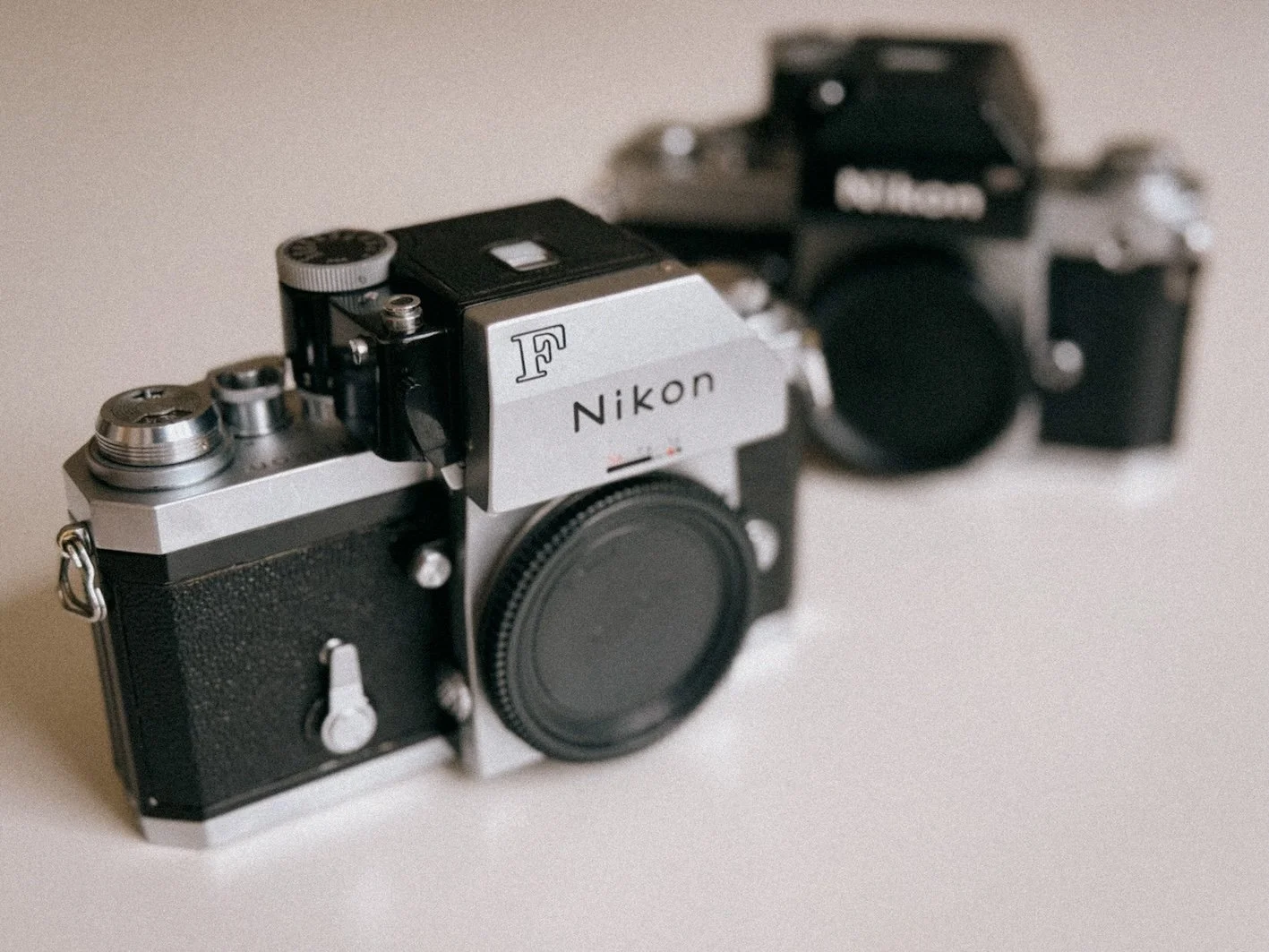
Not an easy choice
Choosing between the Nikon F and the F2 is a "not easy. Both are superb tools that will deliver great images if you do your part. However, despite their similarities, they possess entirely different souls.
The Feel
It is hard to describe until you hold them, but the difference is tactile.
The Nikon F feels like driving an original 1950s Willys Jeep. It’s raw, slightly unrefined, and incredibly raw. There is a certain "clunk" to its operation that reminds you that you are handling the very beginning of a revolution.
The Nikon F2, by contrast, feels like a refined 1970s sports car. Nikon took every rough edge of the F and polished it. The film advance is smoother, the shutter release is more ergonomic, and the overall handling feels "faster."
The Practical Reality
The Back: Many people complain about the Nikon F’s removable back (which you have to take off entirely to load film), but I find it part of the charm, it forces you to slow down. The F2, however, introduced the hinged back, which is undeniably more convenient
The Shutter: While the F is great, the F2's shutter is even better, offering speeds up to 1/2000s and a much more sophisticated slow-speed timer (doubling as a self-timer). Interestingly the F2 shutter is actually a bit louder than the shutter of the F.
The Verdict
Buy the Nikon F if: You want the purest, most "historic" SLR experience. You appreciate the "industrial" feel of the 1960s and don't mind a camera that demands a bit more deliberate attention.
Buy the Nikon F2 if: You want the peak of mechanical photography. You need a camera that feels more refined while still providing that classic Nikon vibe.
Ultimately, you don't choose an F2 because it's "better", you choose it because it is the perfected version of the camera that changed the world.
Alternatives? The Minolta SRT Series comes close but feels different again. Full review here.

Ready for the next adventure
Nikon F2 FAQ: Common Questions Answered
1. Which battery does the Nikon F2 use?
Unlike the original Nikon F, the F2 is much easier to power today. It uses two standard 1.5V silver oxide batteries (SR44 recommended) or LR44 alkaline cells. Because it was designed for 1.5V systems, you don’t need mercury batteries or voltage adapters.
Important: only the Photomic metered finders need batteries. The camera itself is fully mechanical and will work at all shutter speeds without any power at all.
2. What is the difference between a Nikon F2A and a Nikon F2AS?
This is probably the most common question when looking for an F2.
Both are AI-compatible, but the difference is in the metering system inside the prism:
F2A (DP-11): Classic needle-style CdS meter. Very analog, very “vintage” feeling, but a bit slower in low light.
F2AS (DP-12): Uses a more modern SPD (silicon photodiode) sensor with LED display. Faster, more responsive, and generally the most refined F2 finder.
If you want the “best” version, the F2AS is usually the one people end up with.
3. Can I use modern Nikon lenses on the F2?
Yes, but not all of them.
You can use AI, AI-S and Series E lenses without issues on most F2 bodies. They mount properly and work as intended.
Modern G lenses (no aperture ring) and AF-P lenses won’t really work, since you can’t control the aperture manually. So stick to older manual glass and you’re good.
4. Is the Nikon F2 better than the Nikon F3?
Depends on what you’re after.
The F3 brought electronics into the system, including an electronic shutter and aperture priority mode. It’s more modern, easier to use in some situations, but also more dependent on power.
The F2 is the last of the true mechanical Nikon flagships. No batteries needed for operation, no electronics in the shutter path. Just pure precision. That’s why a lot of photographers still prefer it for travel, expeditions, and long-term reliability.
5. What is “Prism Rot” (desilvering) and can it be fixed?
Prism rot shows up as dark patches, lines, or “clouding” in the viewfinder. It’s caused by deteriorating internal foam that slowly attacks the prism coating over time.
Unfortunately, it cannot really be repaired. The only real solution is replacing the prism. That’s why clean, clear viewfinders are getting more expensive every year.
Going Deeper: The F2 Rabbit Hole
While this guide barely covers the essentials on the Nikon F2 in 2026, the history of this camera is gigantious. I’ve tried to sum up the knowledge I feel is most important for today, but there is so much more to discover. If you’re ready to dive even deeper, check these pages.
Richard de Stoutz: Nikon F Collection & Typology
MIR: Photography in Malaysia (Nikon F/F2 Section)
Thanks to Frank-Horst for the support!
Nikon F2 Vintage Adverts








Downloads
The Nikon F2 is one of the most advanced fully mechanical 35mm SLR systems ever made, and understanding its modular design is key to using it properly in 2026. Original Nikon F2 manuals remain an essential resource for photographers who want to learn how the system works in detail, from interchangeable viewfinders and focusing screens to exposure metering and motor drive compatibility.
Whether you are trying to master the Nikon F2 Photomic finder system, understand lens compatibility across AI and Pre-AI Nikkor lenses, or simply learn how to properly load film into the hinged back system, the original documentation provides clear, technical insight that is still relevant today.
Manuals: Original Nikon F2 instruction manuals covering operation, film loading, exposure metering, and system overview.
→ (link)
Service Manuals: Technical repair and maintenance documentation used by Nikon technicians, including mechanical diagrams and adjustment procedures.
→ (link)
Brochures: Official Nikon marketing materials and product brochures showcasing the F2 system at launch, including specifications and professional positioning.
→ (link)
Enjoyed this? You might also like:
If you found this article helpful, check out my other deep dives into the world of expired emulsions and color recovery:
Forget the Mju-II: Why the Olympus AF-1 is the Best Point & Shoot Under $100
FPP Retrochrome 400 Review: Shooting High-Speed Surplus Slide Film
Nikon F Review (2026): Shooting the Indestructible 35mm Legend
422 Meters of Frozen Gold: The Expired Ektachrome Heist Part I
422 Meters of Frozen Gold: The Expired Ektachrome Heist Part II
Embrace the Blues: Why Ektachrome shifts cooler and how to handle it
Minolta SR-101 (SRT 101) Review: The Ultimate Mechanical SLR in 2026?