
Minolta SR-101 (SRT 101) Review: The Ultimate Mechanical SLR in 2026?
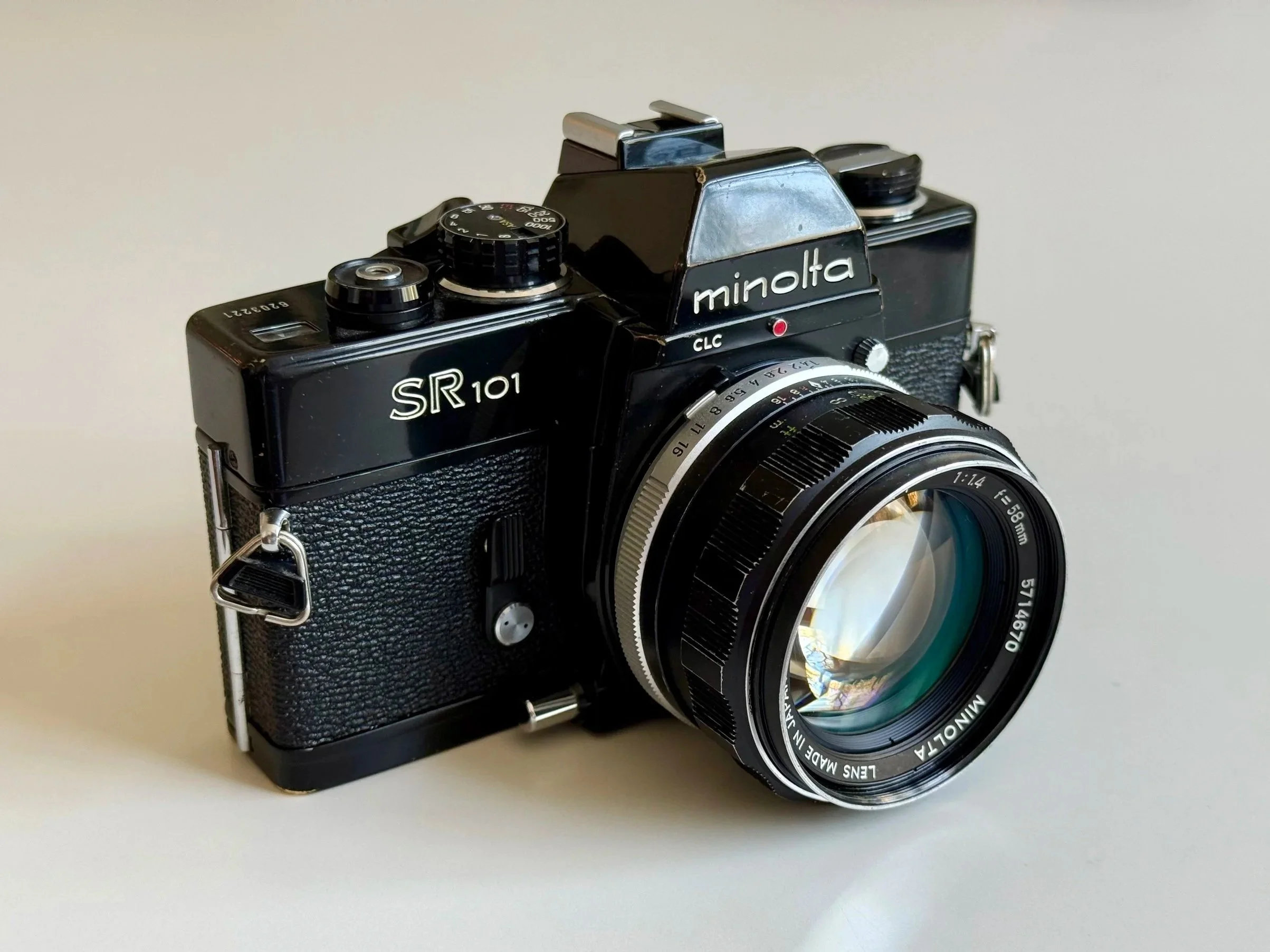
An anvil of a camera
Reading Time: 5 Minutes
The Minolta SR-101 is a fully mechanical 35mm SLR camera and the Japanese domestic version of the SRT 101b. It is known as one of the most durable vintage SLRs ever made, featuring reliable TTL CLC metering and excellent MC/MD Rokkor lens compatibility. While still highly usable in 2026, it is heavy, fully manual, and lacks modern conveniences—better suited for deliberate, analog shooting rather than casual use.
TL;DR: Minolta SR-101 at a Glance
Type: Fully mechanical 35mm SLR (JDM Version)
Equivalent: Minolta SRT 101b / SRT 201
Lens Mount: Minolta SR-mount (Rokkor Glass)
Key Features: All-brass build, TTL CLC metering, 1/1000s shutter
Power: Needed for the Meter (1.35V cell)
Best For: Mechanical purists & glasses wearers
Not For: Users wanting lightweight bodies
Minolta SR 101 Review Contents (Quick Navigation)
SR-101 vs. SRT 101: Whats is the JDM version all about?
Technical Specifications: SR-101 vs. SRT 101b
History: From Chiyoda Kogaku to the Sony Alpha DNA
Built Like a Tank: Why the SRT Series is a Solid "Anvil"
CLC Metering: The Grandfather of Matrix Metering
Viewfinder Check: A Joy for Glasses Wearers
Flash: Using the Godox IM30 with the Minolta SR-101
The 58mm f/1.4 Rokkor: Vintage Bokeh with Soul
2026 Battery Guide: Solving the 1.35V Struggle
Verdict: Is it Better Than My Nikons?
FAQ: Everything You Need to Know About the Minolta SRT Series
The "Nikon Emergency": Why I’m shooting Minolta today
A my Nikon F (full review here) and F2 were in the shop (shoutout to Camera Service Hoffmann!) for a full CLA. I was stranded without a mechanical SLR until my wife handed me her Minolta SR 101 which i hadn’t used in quite a while. I’ve always looked at Minolta as the "sensible" choice, but after a few days of hauling this brass beast around, I realized: this isn't just a backup. It’s a thing of its own.
Pros
Extremely solid, tank-like build quality
Reliable TTL CLC metering (still accurate in 2026)
Excellent Rokkor MC/MD lens ecosystem
Bright, usable viewfinder (even for glasses wearers)
Cons
Heavy compared to other SLRs
No modern automation (fully manual)
Requires understanding of older battery/metering systems
Quick Verdict: Is the Minolta SR-101 / SRT 101 still good in 2026?
Yes. The Minolta SR-101 is one of the most reliable, fully mechanical 35mm SLRs ever built. Known as a "tank" for its brass construction, it offers the legendary CLC (Contrast Light Compensation) metering and access to great Rokkor MC/MD lenses. While heavy, it remains a top choice for photographers seeking a purely mechanical, "Leica-proof" shooting experience.
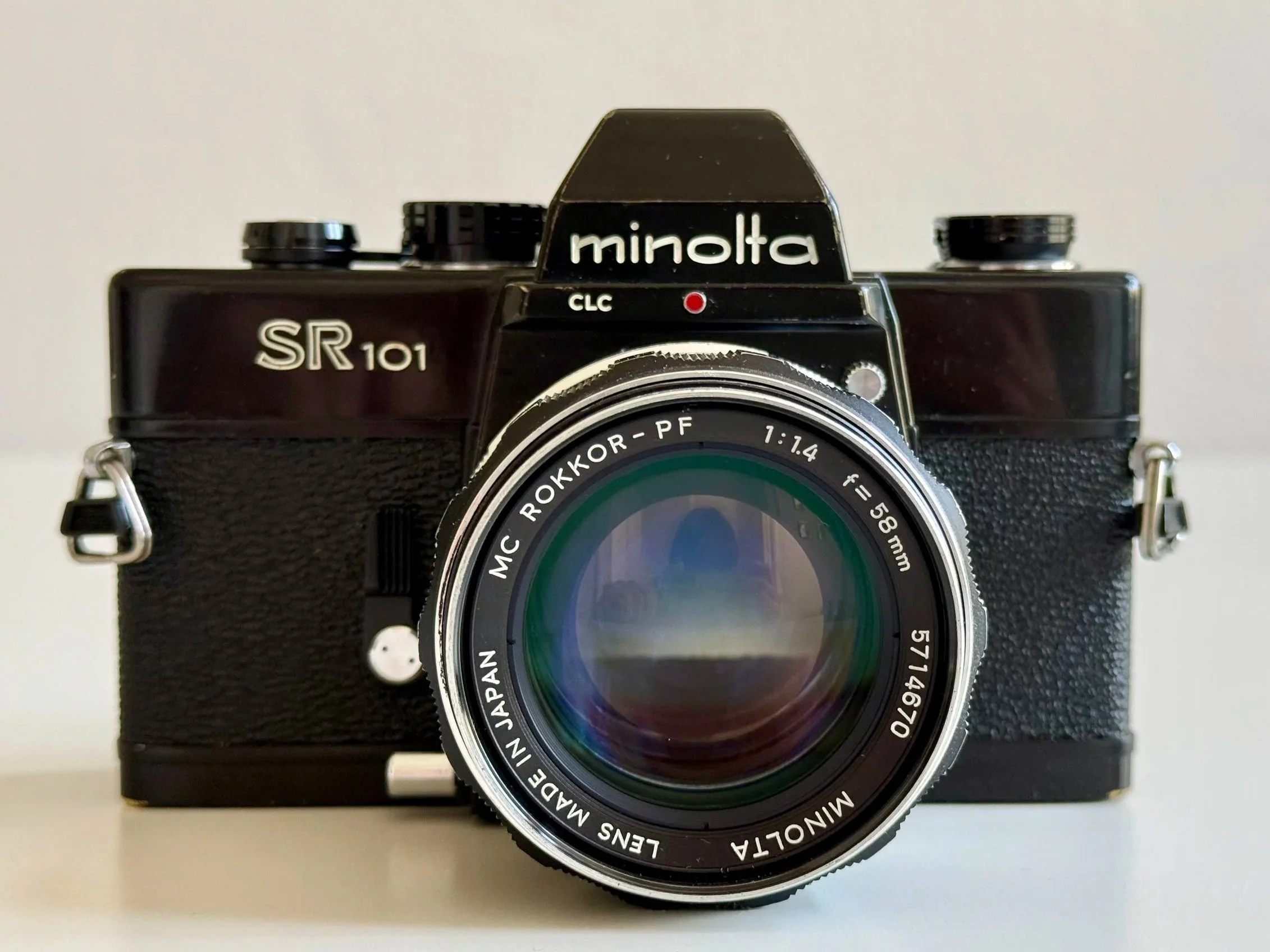
The front - self timer and depth of field preview button on the left
Minolta SR-101 vs. SRT 101: Differences of the Japanese (JDM) Version
You’re probably asking, is it an SR-101 or an SRT 101? If you're looking at the photos, you’ll notice the badge says SR-101. This is the Japanese domestic market version (JDM) of what most of the world knows as the SRT 101 (specifically the updated SRT 101b).
SR-101 vs SRT 101
If you’re looking for this camera on eBay, you’ll mostly come across the SRT 101. The SR-101, on the other hand, is the Japanese domestic version of the system. While both cameras are almost identical in core design, there are a few real-world differences that actually matter when shooting them today.
SR-101 advantages over SRT 101:
Later production refinement (equivalent to the SRT 101b / SRT 201 generation) with small mechanical improvements from years of production evolution
Built-in hot shoe with direct electrical contact, making flash use (e.g. modern Godox setups) much more convenient without a sync cable
Typically better condition on the used market due to Japan-only distribution and less export wear
What remains the same:
Fully mechanical SLR platform with the same core SR system design
Compatible with MC/MD Rokkor lenses across both systems
TTL CLC metering system with the same match-needle workflow
Overall shooting experience: heavy, solid, and deliberately analog
Depth of Field Preview: Both models feature a dedicated depth of field preview button on the front.
Mirror Lock-Up (MLU): Note: Early versions of the original SRT 101 had a mirror lock-up switch. Because the SR-101 is based on the later SRT 101b chassis, this feature was removed, which is completely fine for 99% of shooters today.
In practice, the SR-101 is not a different camera in philosophy — it is simply a slightly refined, Japan-market evolution of the SRT system. If you already like the SRT 101, the SR-101 just removes a few of its small inconveniences.
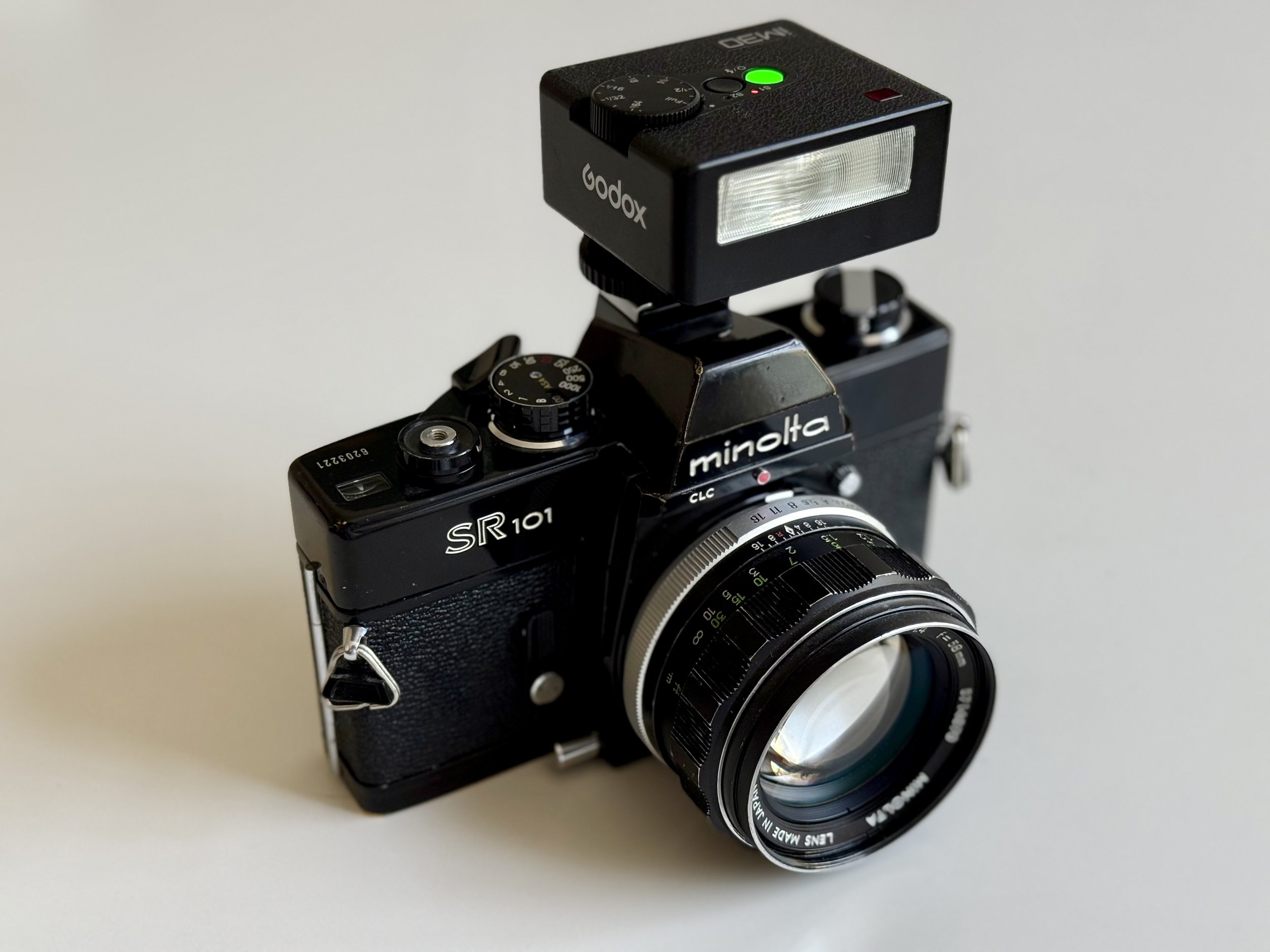
SR101 with the Godox Im30 flash
Technical Specifications: Minolta SR-101
| Feature | Specification |
|---|---|
| Camera Type | 35mm Manual Focus SLR (Japanese Domestic Market) |
| Equivalent | Minolta SRT 101b / SRT 201 |
| Lens Mount | Minolta SR-Mount (MC/MD compatible) |
| Shutter | Horizontal-travel cloth focal plane shutter |
| Shutter Speeds | 1s to 1/1000s + Bulb |
| Metering | TTL with CLC (Contrast Light Compensation) |
| Viewfinder | 0.86x Magnification (Shutter Speed visible) |
| Flash Sync | Integrated Hot Shoe + PC-Socket (X-sync at 1/60s) |
| Battery | 1.35V Mercury (Use Zinc-Air or 1.5V Adapter) |
| Weight | ~710g (Body only) |
| Build Material | High-quality chrome-plated brass and steel |
Minolta’s History: From Chiyoda Kogaku to the Leica Partnership
Before they were known as Minolta, the company was Chiyoda Kogaku. Just like Canon, their journey began with a deep obsession with rangefinders. In the 1940s and 50s, the Minolta 35 series was a direct (and some say, better built) competitor to the Leica screwmount cameras. They even had a unique film format (24x32mm) before sticking to the standard 24x36mm.
The SLR Revolution: By the late 50s, Minolta realized that the future was the SLR. While Canon was perfecting their Rangefinder line up, Minolta was working on the SR-system. The SRT 101, released in 1966, was the result of a decade of optical engineering. It was so successful that it stayed in production (in various versions) for over 10 years.
The Leica Connection: A fun fact for the Leica-purists reading this: Minolta's engineering was so world-class that it eventually led to a partnership with Leica in the 70s. The Leica R3 and the Leica CL were heavily influenced (or even built) by Minolta.
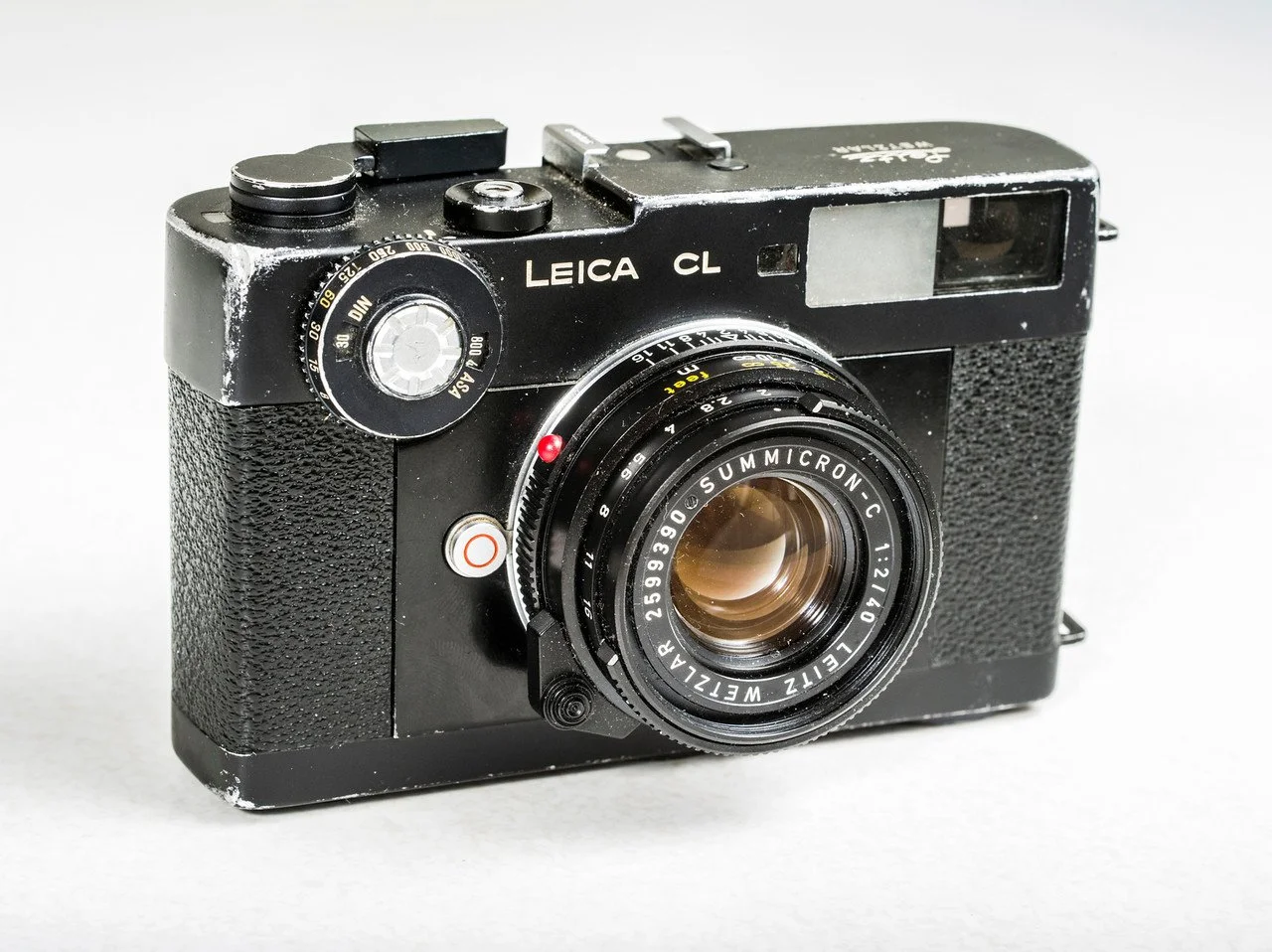
The Leica CL
The Final Chapter: From Minolta to the Sony
Many modern photographers wonder how Sony, a company known for Walkmans and TVs and the PlayStation, suddenly became the giant of the mirrorless camera market. The answer is simple: They bought Minolta’s DNA.
In 2006, after decades of innovation, Konica Minolta (who had merged a few years prior) decided to leave the camera business. Sony, looking for a way to enter the professional camera market, saw their chance and acquired Minolta’s camera division—including their legendary lens mounts and autofocus technology.
The Legacy Lives On
When you hold a modern Sony Alpha today, you are essentially holding the evolution of the Minolta SRT 101.
The "A-Mount": Sony’s first DSLRs were basically rebranded Minolta designs, and they kept the Minolta A-mount compatible for years.
The Color Science: Many fans argue that the pleasing colors and skin tones Sony is known for today originated from Minolta’s optical coatings and sensor research.
The Innovation Spirit: Minolta was always the "risk-taker" (first integrated autofocus, first CLC metering). Sony inherited this spirit, which is why they were the first to successfully push mirrorless technology to the professional level.
Build Quality & Handling: Why the SRT Series is a Tank
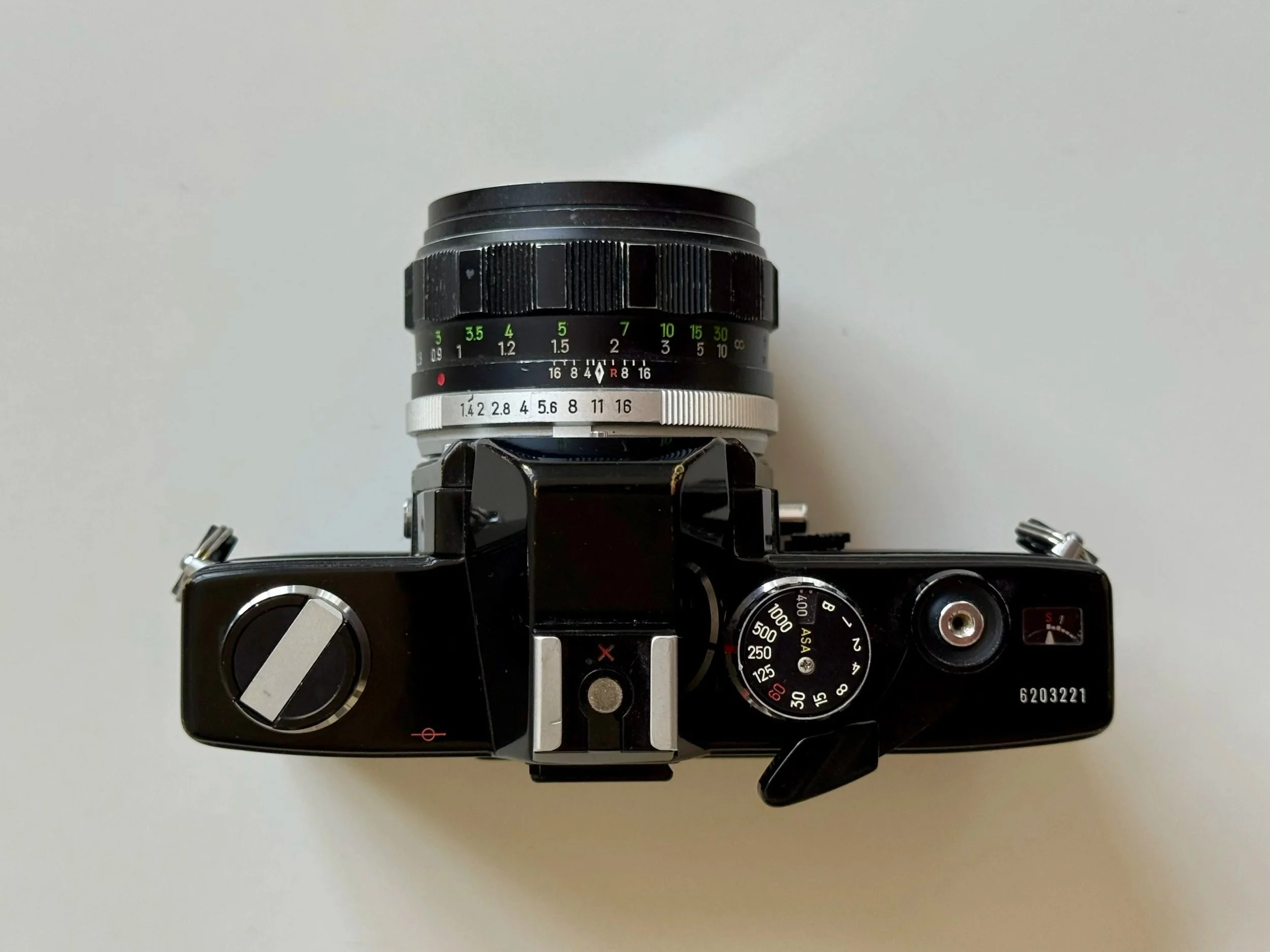
Its a tank
When you pick up the SRT 101, the first thing you notice is the weight. It’s dense. It feels like it was milled from a solid block of brass. Unlike the sleek Canon P, the Minolta is utilitarian. It will happily also work in the harshest climates.
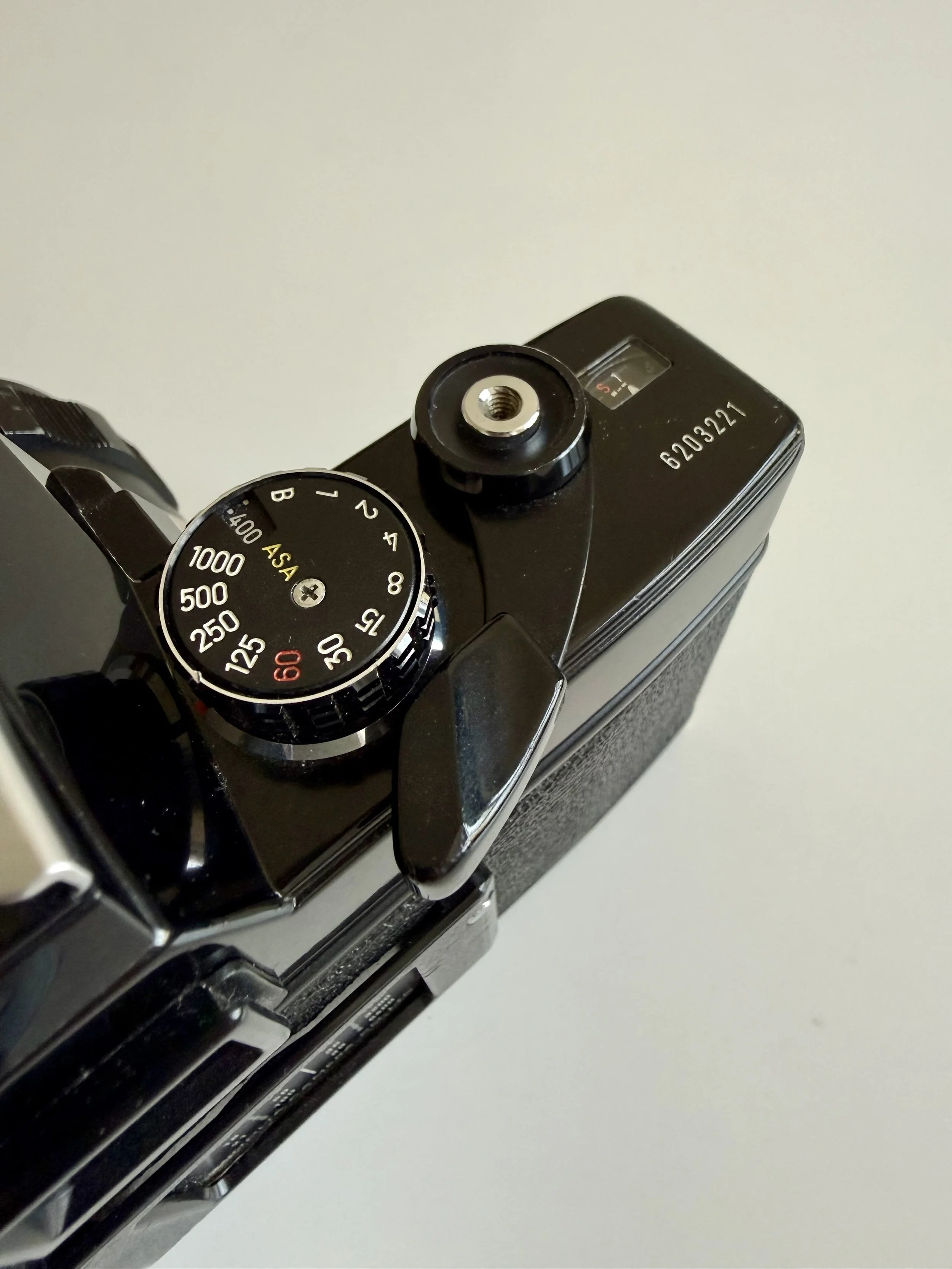
Top view close up
The "Tank" Factor: There is a reason these are still everywhere. They just don't die.
The Winding Stroke: It’s not as "silky" as a Leica, but it’s incredibly satisfying.
The Japan Connection
I didn’t just pick this up at a local flea market. I originally purchased this SRT 101 as a gift for my wife via DKY Japan on eBay—a seller I can’t recommend enough if you're looking for top-tier Japanese gear.
But what makes this specific copy special is its history: it was freshly CLA’d by the legendary Hideki Tada (better known as @obsessed_with_camera_repair). If you're deep into the analog scene, you know Hideki is an absolute master. Knowing that a legend like him worked on the internals makes all the difference. Needless to say, both the body and the 58mm f/1.4 Rokkor are in extraordinary condition—smooth, accurate, and ready for another 50 years of service.
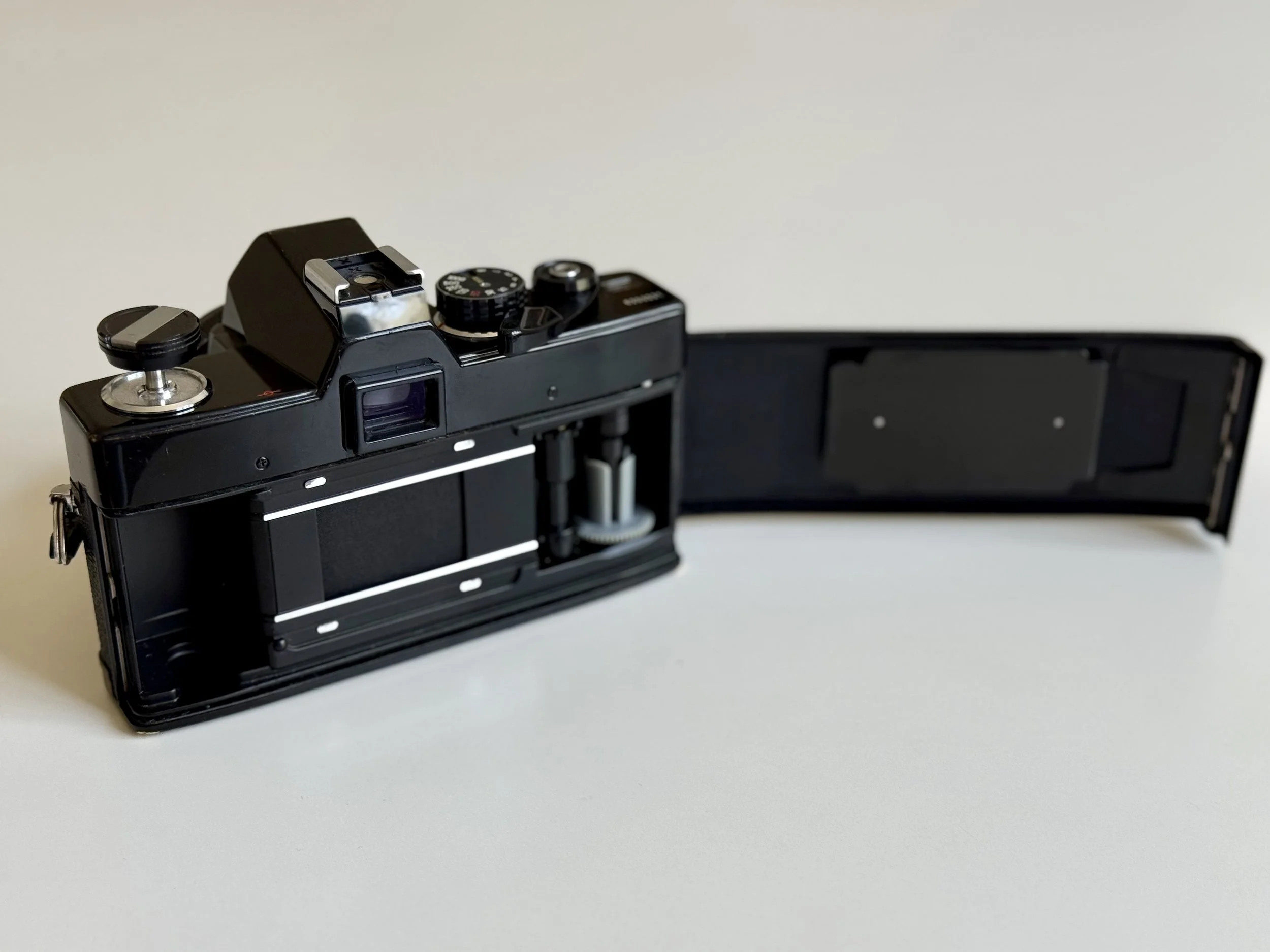
So clean! Internals with cloth shutter
How Minolta CLC Metering Works: The First Matrix Metering?
While Nikon and Canon were still figuring out basic TTL (Through The Lens) metering, Minolta introduced CLC in 1966 and it remained a main feature of the SRT series until its discontinuation in 1981. CLC stands for Contrast Light Compensation. It uses two CdS cells located in the pentaprism. They are wired in series to read the upper and lower halves of the frame independently. If you have a bright sky and a dark foreground, the meter compensates to prevent underexposing your subject. It can easily be considered the grandfather of modern matrix metering.
Does it work? Surprisingly well, even by 2026 standards. It can be considered grandfather of matrix metering.
The metering system on this camera still works like a charm, and to be honest, it’s the main reason I bought this specific model. Minolta’s "Contrast Light Compensation" was way ahead of its time, and it shows.
The "No-Fail" Experience
It’s super easy to use, and not a single frame on this camera has been under or overexposed yet. Whether I'm shooting in harsh sunlight or tricky shadows, the needle stays true. In a world where vintage light meters are often erratic or dead, the SRT 101 remains a tool you can actually trust. Which is quite rare!
Information is King: Why the SR-101 Viewfinder is a Joy for Glasses Wearers
One thing the SRT 101 does better than many of its contemporaries: It tells you everything. And the best part is, it’s massive and bright. You can see everything through that thing. Very impressive and super usable, even with glasses. Which is important to me! (as you might know by now :) So i can say, it’s one of the best vintage SLR for glasses wearers.
You can see your shutter speed and your aperture (on later models) right in the finder.
The "Match-Needle" System: It’s so intuitive. You just line up the circle with the needle and you’re good to go. No flashing LEDs, just pure analog feedback.
Fun Fact: The communication between the shutter speed, lens and the needle in the finder is actually accomplished by cables and pulleys. This may sound crude, but turned out to be super reliable.
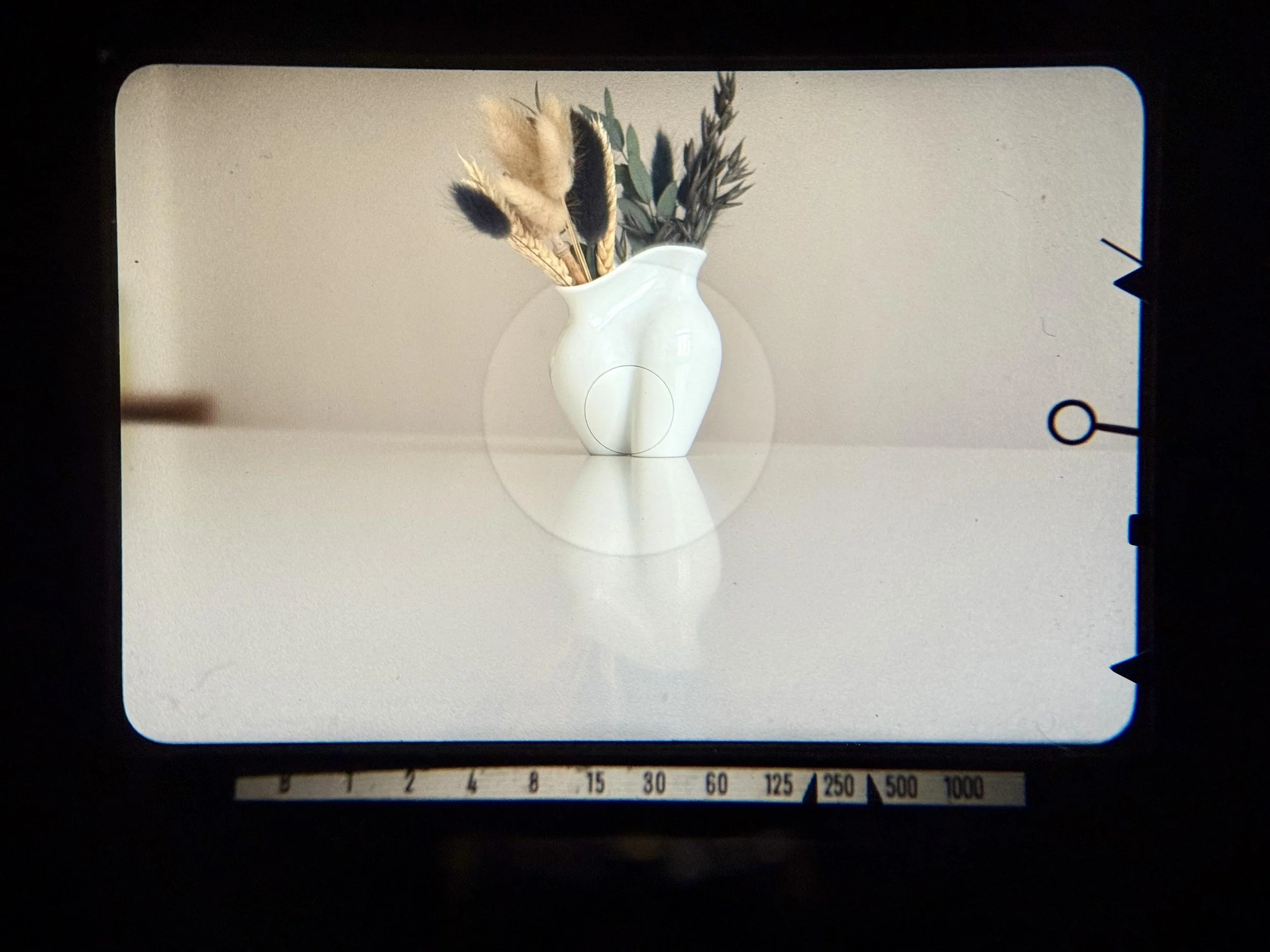
Probably one of the best Viewfinders out there - this one being specifically clean too!
Using Flash for Film Photography on the Minolta SR-101
Integrating a modern flash like the Godox IM30 into a vintage workflow might seem daunting, but the SR-101 makes it remarkably intuitive. Just slide it into the hotshoe! You can also use it hand held, off camera. How? On the front of the body, you'll find two PC sync terminals, each serving a distinct purpose: Just connect the X socket with a pc sync cable to the Godox IM30. (3,5mm jack to to PC male sync.)
X Socket (Xenon/Electronic Flash): The standard for modern photography. This is where your Godox peaks instantly at the exact moment the shutter is fully open. For the SR-101, ensure your shutter speed is set to the 1/60s sync speed (marked in red or with an 'X').
FP Socket (Focal Plane Flash): Designed for older, slow-burning flash bulbs. It initiates the bulb just before the curtain moves, allowing the bulb to burn while the slit traverses the film plane.
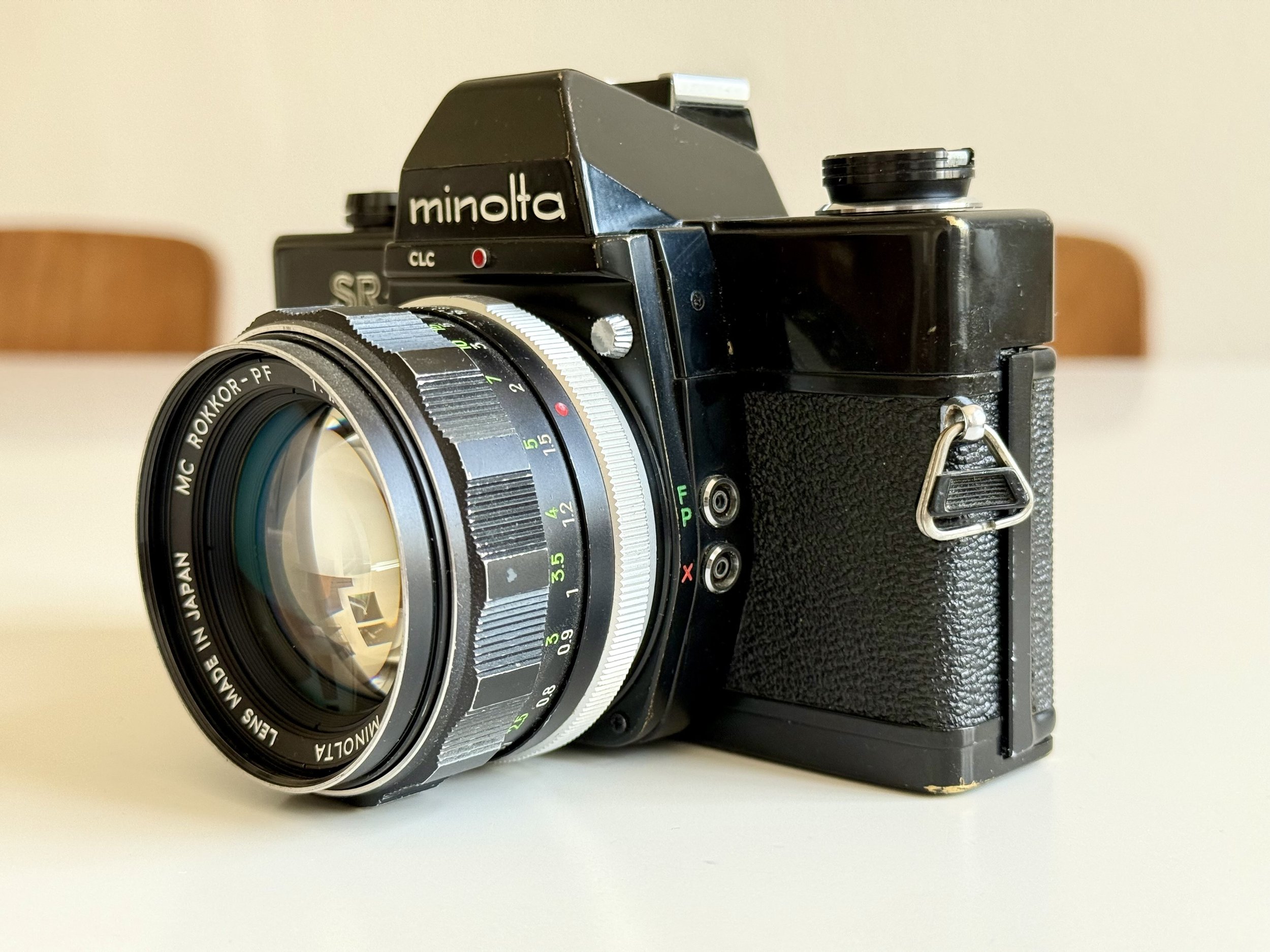
SR 101 Flash sync. sockets
Using flash on a fully mechanical camera like the SR-101 is incredibly rewarding once you get the hang of it. Let me know if you want a deep dive on how to calculate flash power and use flash manually—it’s easier than it looks, and it opens up a whole new world of light for your film photography.
Minolta MC Rokkor 58mm f/1.4 Lens Review: Vintage Bokeh & Soul
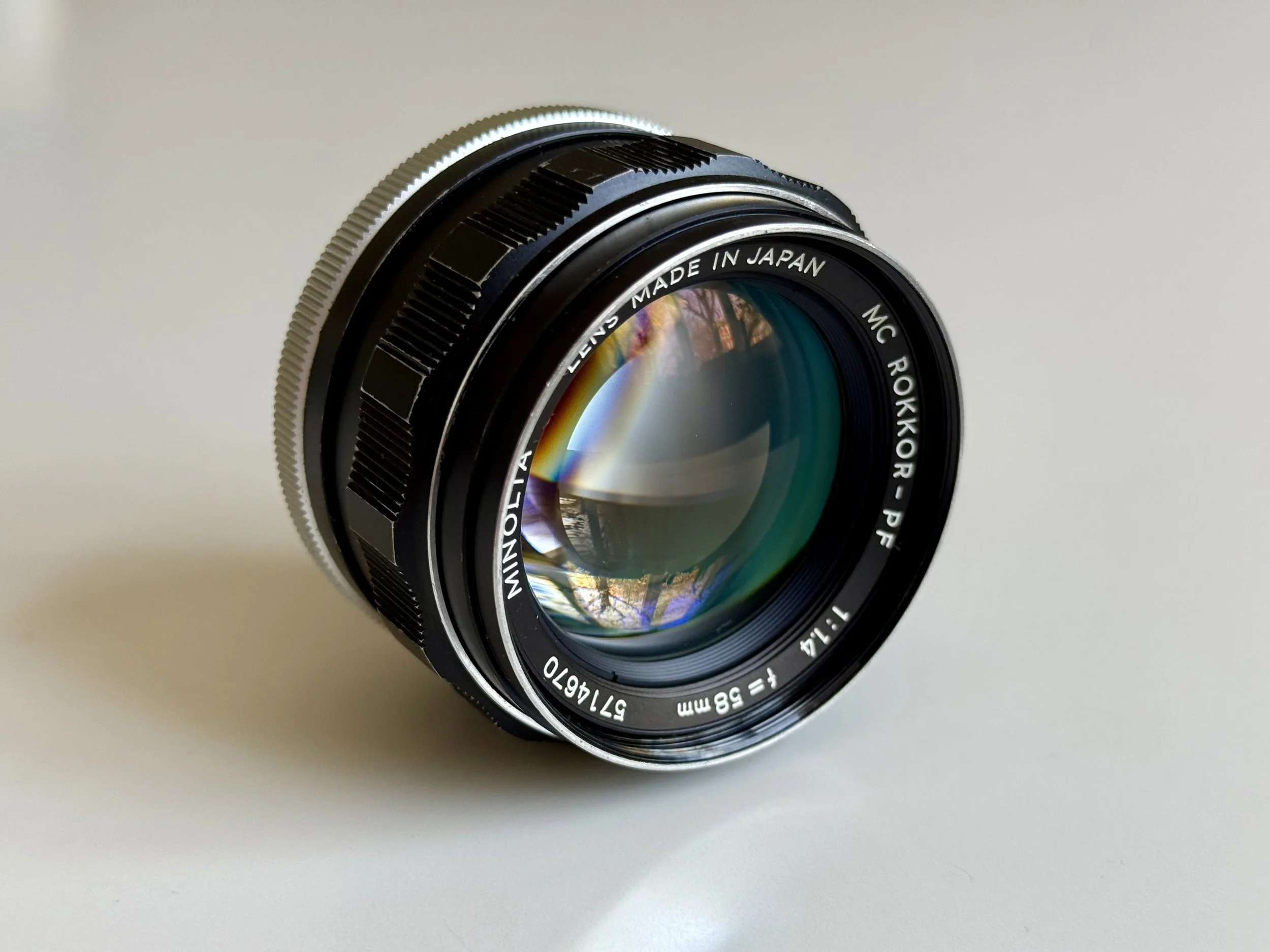
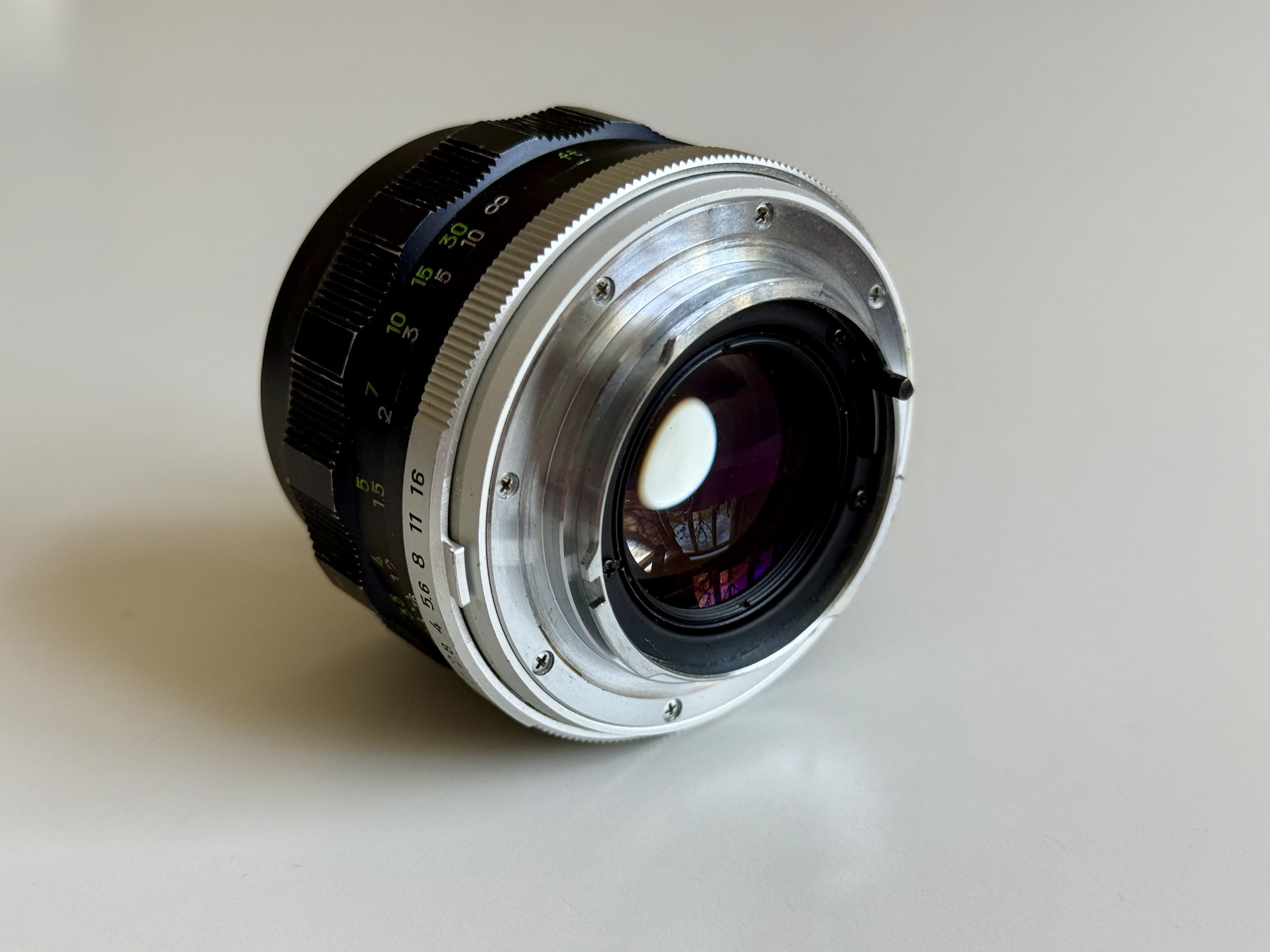
This lens has a look that is hard to describe. It possess a warmer, more romantic glow than my Nikkor lenses.
The "Wide Open" Magic If you shoot the 58mm f/1.4 wide open, things get dreamy. Very dreamy. Some pixel-peepers might call it "soft," and "bad tongues" would even say it’s unusable at f/1.4. But they are missing the point. For portraiture work, this lens is great. It gives a unique, painterly, and very vintage look that you simply cannot replicate with modern, over-corrected glass.




Value: The best part is you can still find amazing Rokkor glass for a fraction of the price of LTM or M-mount lenses. While the world is chasing Leica prices, the Minolta ecosystem remains the best-kept secret for photographers who prioritize "vibe" over charts.
Common Minolta SRT 101 Problems: Battery, Metering & Repair
Every vintage camera has its own personality, and the SR-101 is no exception. There are three specific things you need to know before you load your first roll:
1. The Hidden Power Switch Unlike many modern SLRs where the light meter is activated by a half-press of the shutter, the SR-101 has a dedicated physical switch on the bottom plate. You have to manually flip it to "ON" to see the needle move in the viewfinder. It’s a bit unusual by today’s standards. Just make sure to flip it back to "OFF" before putting it in your bag, or you’ll find a dead battery the next morning!
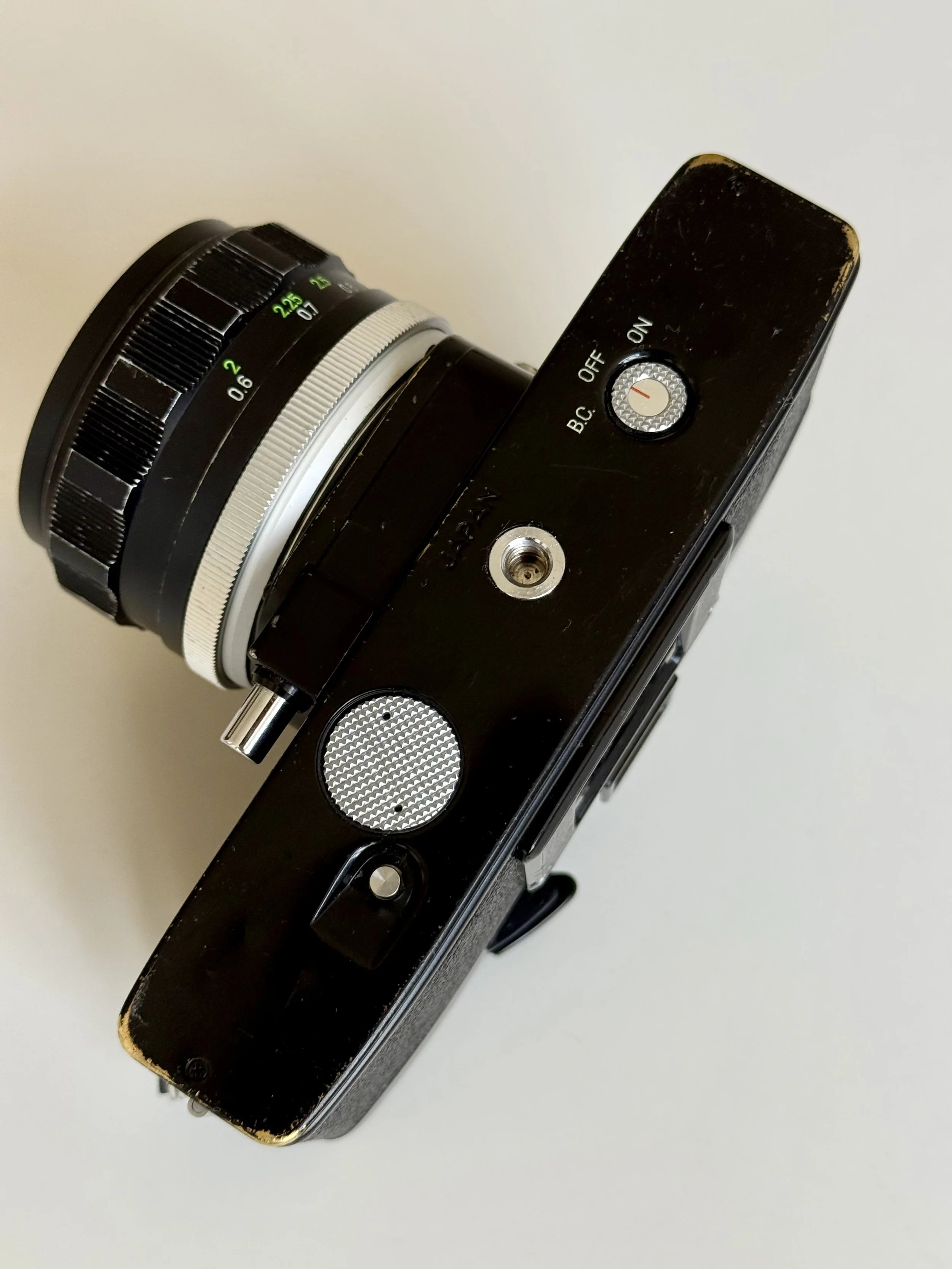
2. The 1.35V vs. 1.5V Battery Struggle
This camera was originally designed for the now-illegal 1.35V Mercury batteries (PX625). If you just pop in a modern 1.5V alkaline battery, your meter will likely be off by 1-2 stops because the voltage is too high.
The WeinCell: We’ve been using a Zinc-Air (WeinCell) battery for one and a half years now, and it’s still going strong. Most people claim these only last a few months, but if you are disciplined about flipping the bottom power switch to "OFF" when you’re not shooting, they can last surprisingly long. It’s the most reliable way to ensure the light meter stays accurate without any guesswork.
While we use a WeinCell (Zinc-Air) battery, other popular solutions for the SRT 101 battery issue include using an MR-9 adapter (which drops a 1.5v silver-oxide battery down to 1.35v) or having a technician recalibrate the meter to accept modern 1.5v batteries.
Final Thoughts: Is it better than my Nikons?
To be honest? No. My Nikon F2 is a more refined machine. But doing a Minolta SRT 101 review made me realize that this camera has just as much charm. It’s the camera you take when you don't want to worry about your gear—because you know, no matter what happens, the SR will survive.
The Minolta SR-101 is not the most advanced SLR ever made, but it is one of the most dependable. If you want a fully mechanical, no-excuses film camera with excellent metering and legendary build quality, it is still one of the best choices in 2026.
Who is it for?
The Minolta SR-101 is best suited for photographers who want a fully mechanical SLR experience and a durable, no-frills film camera. It is ideal for film shooters who prefer full manual control and a slower, more intentional shooting process.
It is especially appealing for users looking for a best vintage SLR experience with reliable metering and strong Rokkor lens compatibility.
Who the Minolta SR-101 is for:
photographers who want a fully mechanical SLR
film shooters who prefer manual control
users who want durable, long-lasting gear
Who it is NOT for:
beginners expecting automation
lightweight travel setups
casual point-and-shoot users
This is a camera for deliberate, fully manual film photography — not convenience shooting.
Minolta SRT 101 / SR-101 Frequently Asked Questions
What battery does the Minolta SRT 101 use? Originally, it used a 1.35V PX625 mercury battery, which is now banned. Today, the best replacements are a WeinCell (Zinc-Air) battery or an MR-9 adapter with a modern 1.5V silver-oxide battery.
Are Minolta SR-101 and SRT 101 lenses the same? Yes. Both cameras use the Minolta SR-mount. They are fully compatible with all Minolta MC and MD Rokkor lenses.
Does the Minolta SRT 101 shoot without a battery? Yes. The camera is fully mechanical. The battery is only required to power the internal CLC light meter. You can shoot at all shutter speeds without a battery using the Sunny 16 rule.
What is the difference between Minolta MC and MD lenses? MC (Meter Coupled) lenses were introduced for the SRT series to enable full-aperture metering. MD lenses are a later evolution designed for shutter-priority modes on cameras like the XD-7, but they work perfectly on the SRT 101.
Conclusion: Why the Minolta SR-101 is a Best-Buy in 2026
The Minolta SR-101 (and its sibling, the SRT 101) is the perfect antidote to the rising prices of Leica and Nikon FM2 cameras. It offers professional build quality, a brilliant viewfinder for glasses wearers, and a metering system that was decades ahead of its time. If you don't mind the weight, this "brass beast" is arguably the best value mechanical SLR on the market today.
Minolta SR 101 Sample Images















Enjoyed this? You might also like:
If you found this article helpful, check out my other deep dives into the world of expired emulsions and color recovery:
Forget the Mju-II: Why the Olympus AF-1 is the Best Point & Shoot Under $100
Mamiya M645 Review (2026): The Best Entry into Medium Format?
FPP Retrochrome 400 Review: Shooting High-Speed Surplus Slide Film