
Nikon F vs F2: Why I Own Both And You Should Too
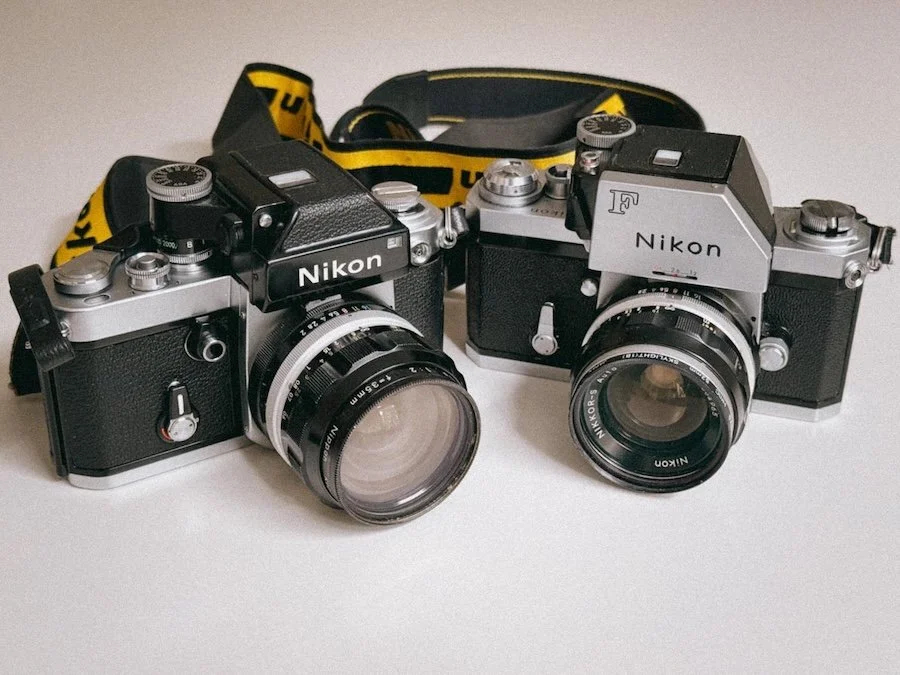
Son and Father
The Nikon F changed everything in 1959, but it wasn’t exactly perfect either. That's why, only 12 years later, Nikon introduced the F2 in 1971 (and still kept manufacturing the F up until March 1972). Both are classics in their own right, but even though they are so similar and two of the most reliable 35mm cameras you can shoot today, they feel so vastly different.
Quick Summary: Nikon F or F2?
The Vibe: The F is a child of the 50s (and a bit clunky). The F2 is the perfected version of it.
The Changes: The F2 finally has a hinged back door, a 1/2000s shutter speed and more accessoires.
Daily Use: Both use the same lenses, but the F2 feels more ergonomic and compact.
The Choice: Get the Nikon F if you want a rougher, unfiltered feel. Get the Nikon F2 if you want to go out and shoot professionally without getting annoyed by 1950s ergonomics.
Why I Have Both

Well, Nikon already knew back in the day, one Nikon was not enough.
Like many others, I shot my first roll after hunting the "analog look" on digital (disclaimer: I was of course not successful) on a gifted, rather cheap SLR. In my case, it was a Carena CX-500 with a quite nice Ricoh 50mm f/1.7 lens. After I received my scans, I was hooked and fell for the rangefinder hype. I got the Canon P (full review here), which I still really like, but it is far from ideal if you are wearing glasses. So after some missed shots, I was searching for a different shooting experience.
Being into movies like Apocalypse Now and seeing Dennis Hopper hauling around several Nikon F (Deep dive here) bodies was what sold me on the Nikon F. When my Photomic FTN arrived from Japan, I was in for a surprise. Before my eyes could even see through the finder, I noticed it was heavy. It was very heavy. Overall, the camera felt super industrial and rough with that thick 50mm f/1.4 Pre-AI lens mounted on it. I was not expecting that, but I was and still am really enjoying that ruggedness.
So why did I get the F2 as well?
The truth is, it was exactly because of the rough feel of the F. As much as I love it, there are days where I am not as tough as this camera and in need of something that feels more accessible. That’s where the F2 comes into play. After some shopping at Nikon Classics, the F2 arrived and it was exactly what I was lusting for. (Full Nikon F2 review here) It keeps the toughness of the F but feels way less stubborn in daily use. Not only that, it is also mechanically more refined. It was instantly clear that I will not part with either of them. Why? Let's find out!
Technical Differences Between The Nikon F And The F2
On paper the two cameras may appear very similar, before we look into how they feel its important to know where they differ. The F2 offers more features than the F. This might be what you are looking for or quite the opposite.
The back door
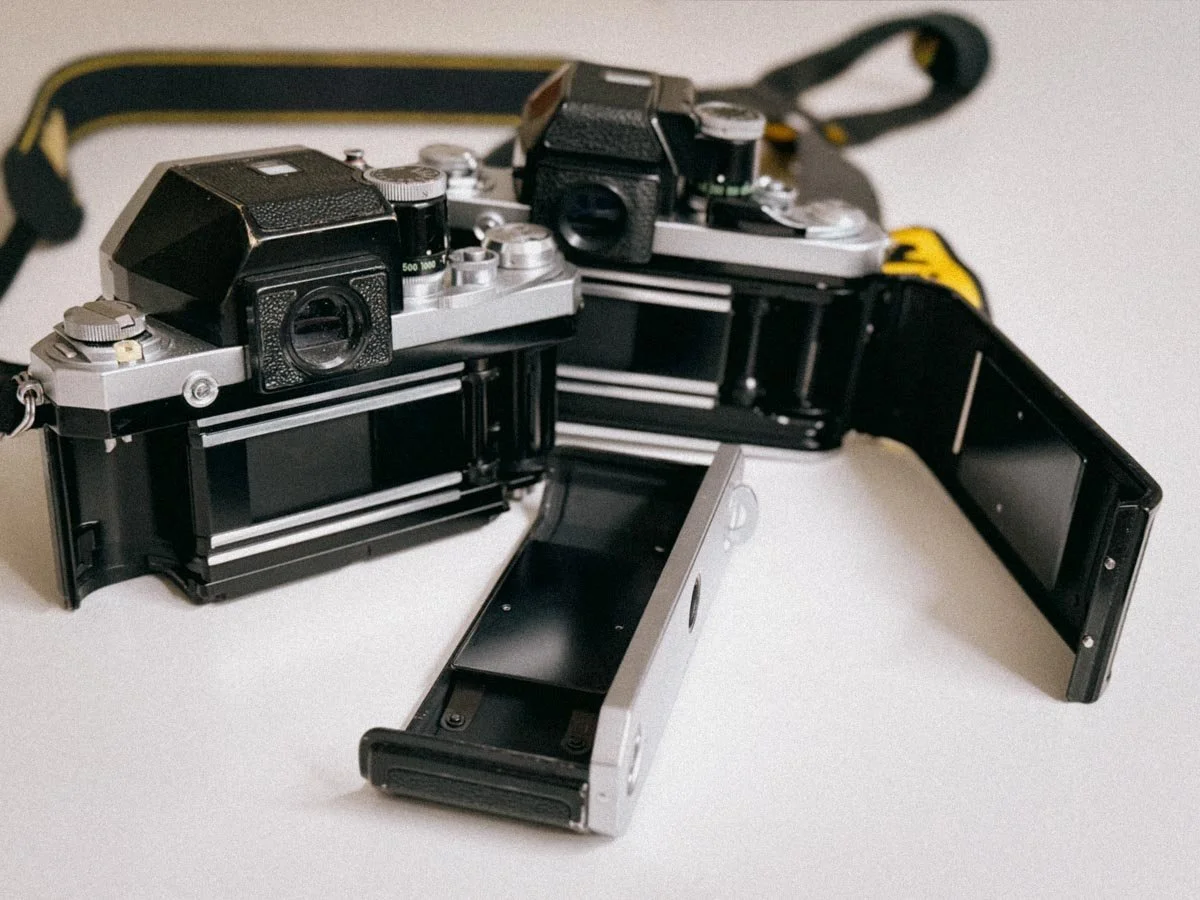
Ready to roll
This is probably the visually biggest change Nikon implemented. On the F, you have to remove the whole back to load a roll. The F2 changed this to a standard hinged back door. But to be honest, loading a roll of film into the F is not half as bad as many people make it appear. Yes, it is faster and more modern on the F2, but the F-way has its own charm.
The Shutter
The Nikon F tops out at 1/1000s, which is fine for almost any situation, but the F2 has an extra stop with 1/2000s. It also features a stepless shutter between 1/80s and 1/2000s. This gives you more precision for nailing exposures, for example when shooting slide film. You could also use the lens to go in between, but if you want to strictly stay at a certain aperture, the F2 is the way to go. Both cameras use titanium foils for the shutter curtains so they are incredibly durable. Interestingly, the shutter sound of my Nikon F is quieter and softer than the shutter of my F2.
Shutter Button placement
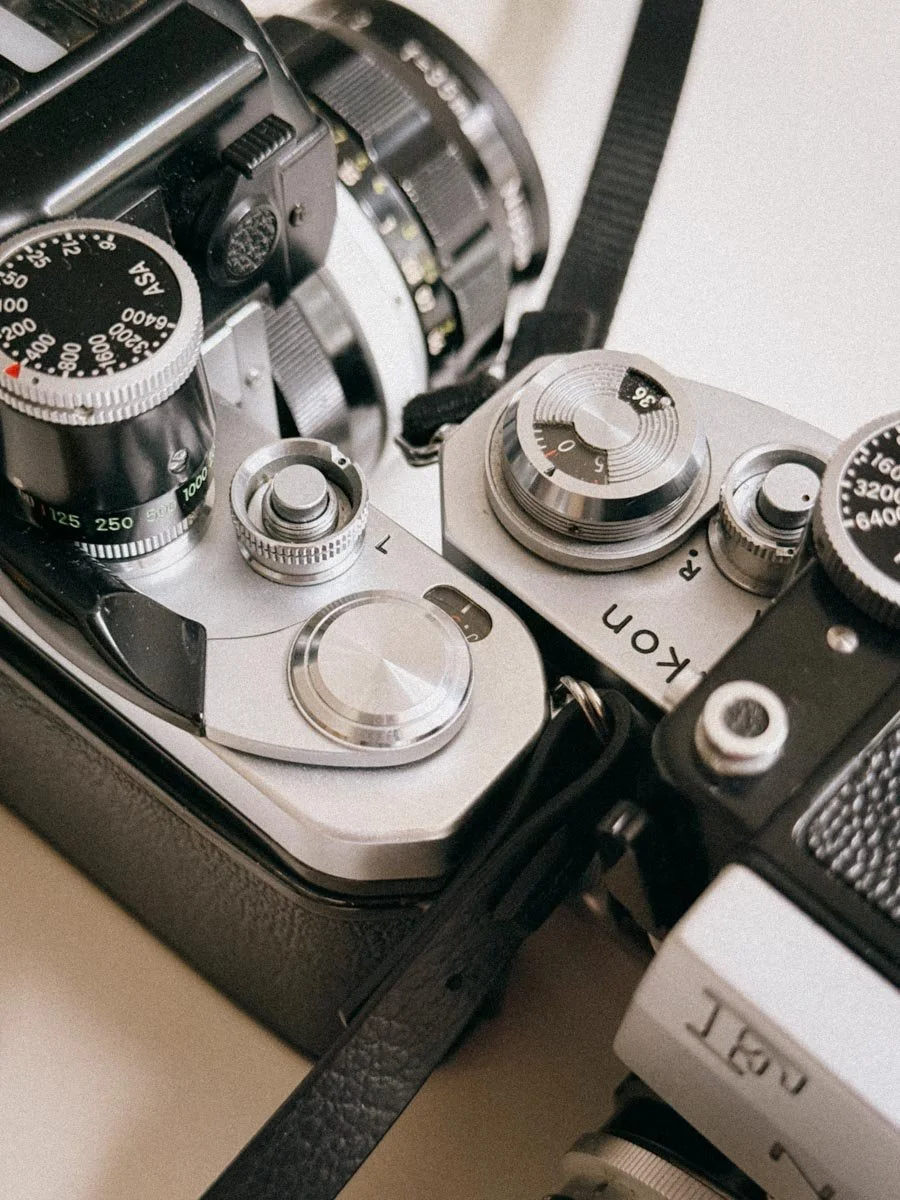
Notice the difference?
Another thing you will notice is the shutter button placement. Unlike the Nikon F2, the button on the original F is located further back on the top plate. For many, this feels unnatural at first. Again, I do not seem to be bothered by that and like both positions.
One understated feature of the F2 is the collar around the shutter button. It has two very practical modes.
First, there is the "T" mode for long exposures. If you ever forget your cable release, you just rotate the collar to T, press the button, and the shutter stays open until you rotate it back. It is a simple fail-safe.
Then there is the "L" position, which stands for Lock. This physically blocks the shutter button. It prevents you from accidentally firing a shot while the camera is bouncing around in your bag or you are constantly toying with your camera like myself.
The Film Advance Lever
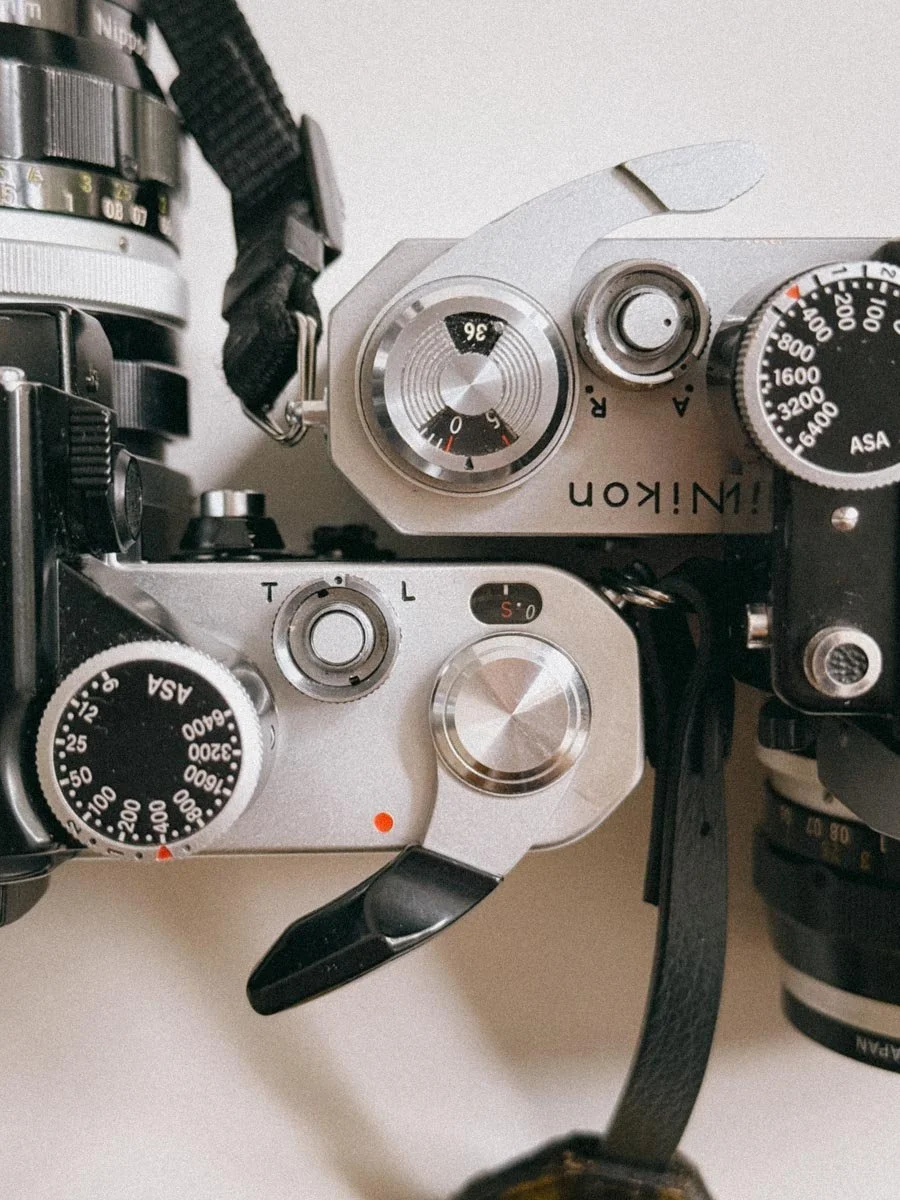
The Levers
On the F, the film advance is where you really notice its age. If the lever is in its "ready" position, you will notice it has a bit of play or "wiggle" before it actually starts to tension the shutter and wind the film.
On the F, the film advance is where you really notice its age. If the lever is in its "ready" position, you will notice it has a bit of play or "wiggle" before it actually starts to tension the shutter and wind the film.
At first I thought mine was broken. This stand-off position allows you to hook your thumb behind the lever for rapid-fire shooting. The slight play ensures that you do not accidentally put tension on the internal gears while walking around with your thumb on the lever. However, if the lever feels very loose or does not advance smoothly, your camera may need a proper CLA. This has been changed on the F2. Advancing the film feels smooth and silky in the best way imaginable. It also has a shorter stroke with only 120 degrees. This is where the Nikon F2 just hands down feels better right away. Normalizing that slightly loose film advance on the F took me quite some time. It was only settled once I got it back from CLA and it was just as "loose" as before.
Other Small Changes
The battery cavity on the F2 is now accessed via the bottom plate, whereas the F had the batteries located inside the individual metered finders. The F Also uses the super old and extremely expensive battery type PX625 - Luckily you can get adapters to not pay horrendous prices for the WEINCells. (I wrote a review - click here to read more about it) Nikon also strengthened the mounts for the finders on the F2 compared to the original F. Last but not least, mounting a motor drive like the MD-1 on the F2 is a lot easier. However, with film prices being what they are, I do not think that many people see this as a deciding factor anymore. (Even though i am sometimes dreaming of blasting through a roll with a motor drive)
Nikon F vs F2: How They Feel
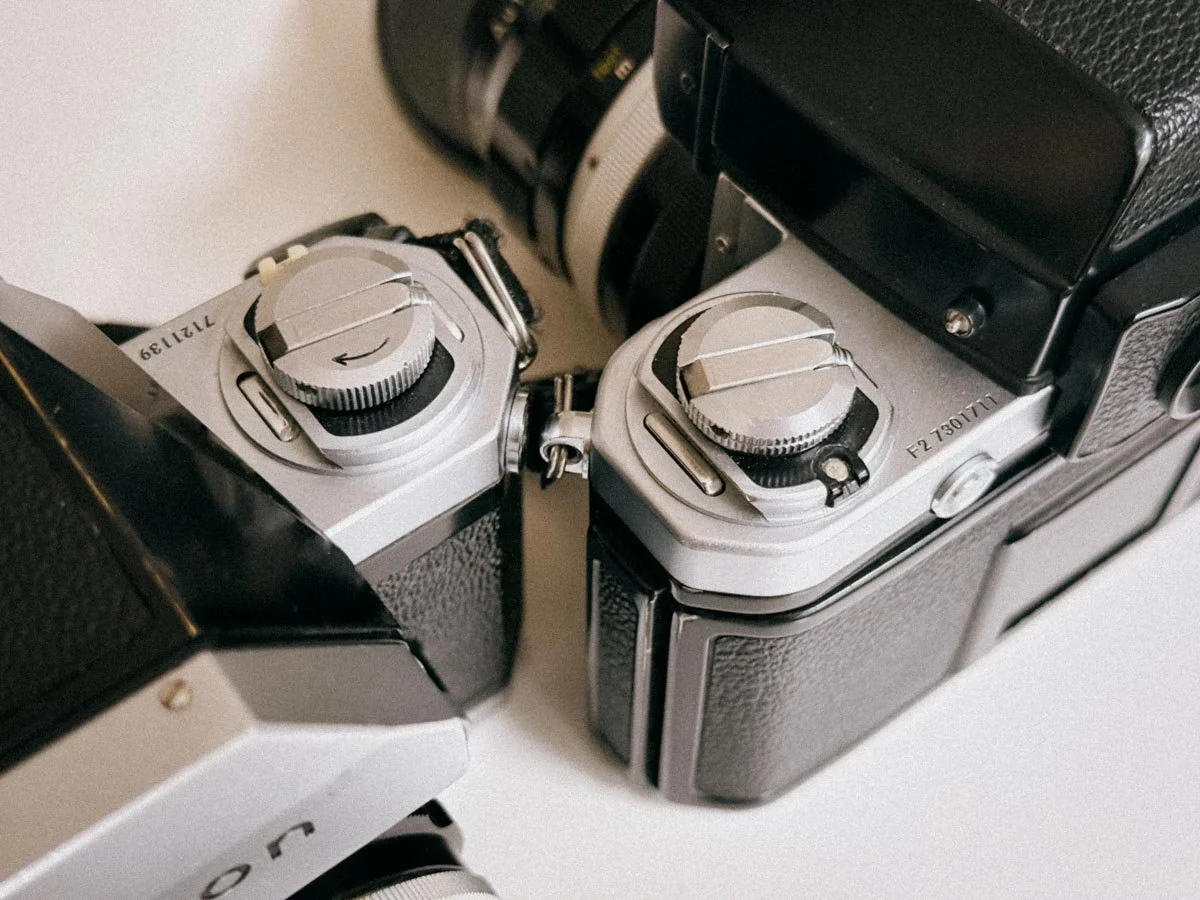
The F2 is noticeably smoother
This is where the debate usually gets heated. Even though they look like close relatives and take the same lenses, the shooting experience is quite different.
The Nikon F I already drew the comparison in another blog post to an old Jeep. With the Nikon F, another comparison that is more tool-related comes to mind: a sledgehammer. Simply holding it feels super rewarding. The unrounded edges, the leathering, and the all-metal advance that feels like the gear shift lever of an old tractor all contribute to this. Also, the film changing part makes you feel more connected since you are literally taking the camera apart to do it. All this does not mean it is not precise. The viewfinder with 100% coverage is great, and the swappable finders and focusing screens allow for a significant amount of customization. I love it.
The F2 Here things get different. Precision comes to mind while simply looking at it. The F2 is the first camera I could carry 8 hours without getting annoyed, but due to its weight, you will never forget that you have a camera in your hand. The shutter is loud and satisfying, even louder than on the F. That is the last bit of “bruteness” where you can tell it is the son of the F. Everything else is engineering perfection: sturdy but silky. From the advance to swapping finders, it is a camera that never gets in your way.
When Do I Use The Nikon F?

A casual night out on heavily expired Fuji Superia 1600
I find myself reaching for the F more often in the last couple of weeks. Maybe because its behavior and how I interact with it is the most uncompromising way of getting away from screens. I also noticed it is a matter of the clothes I am wearing. This may sound stupid, but on a hot summer day with a tank top and a light retro shirt, that outfit simply calls for the F from a style point of view. I have also used the camera alongside the F2 for professional commissioned work and it will get the job done with ease. No questions asked. But for me, this camera shines in recreational shooting or in a project-based sense. In my opinion analog photography is is not just about taking the photo; for me it is also about the; how did i feel taking the photo.
When Do I Reach For The Nikon F2?
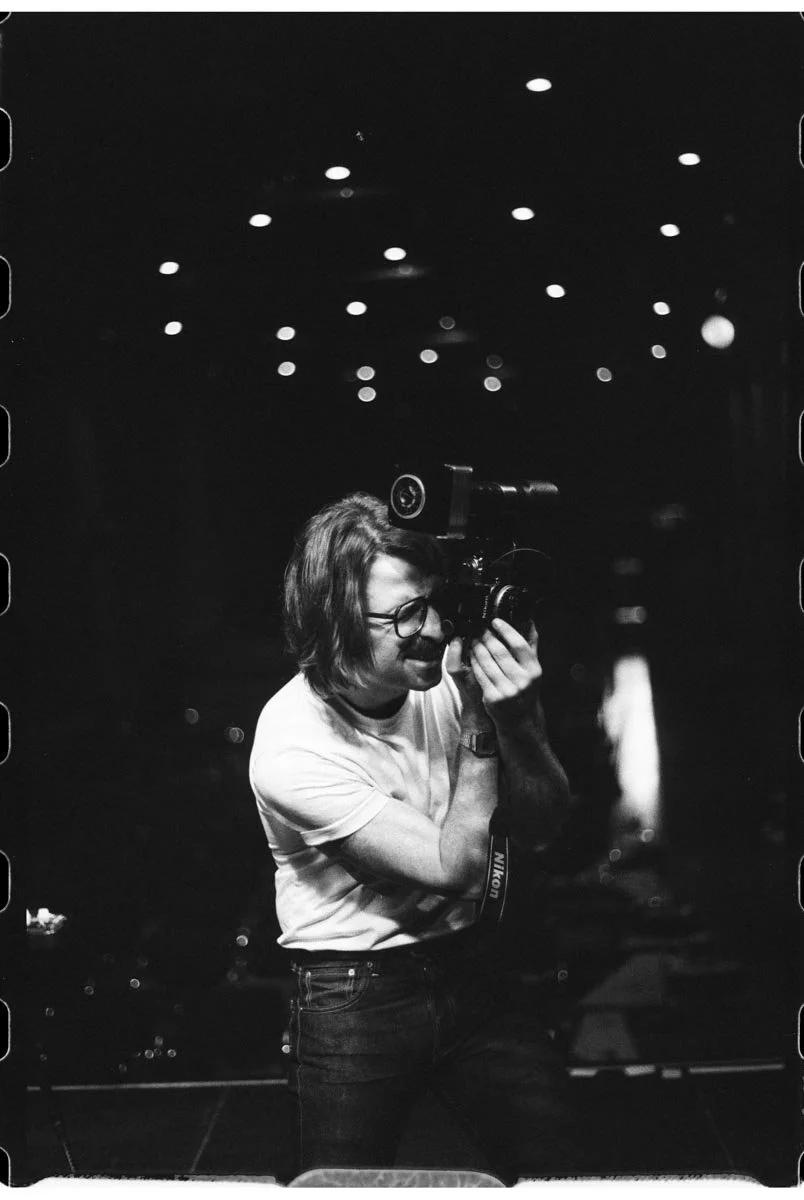
The Nikon F2 and I on site - Shot on Ilford HP pushed to 1600
Let's get it out of the way. For commissioned work, I hands down prefer the Nikon F2 over the F. When holding a camera in your hand for long hours, you start to appreciate those rounded edges more than you would ever have thought possible. Yes, the faster film loading comes in handy here too. Besides that, with its ability to do self-timed long exposures without a cable release, it is also a great travel companion. To be honest, I have not used the 1/2000s shutter speed that often, but probably only because I shoot a lot of low ISO film. I also choose it when I do not want to think about which camera to pick for a photowalk, because I know it will never bother me and will always deliver. Which leads me to my next point.
Why You Need Both
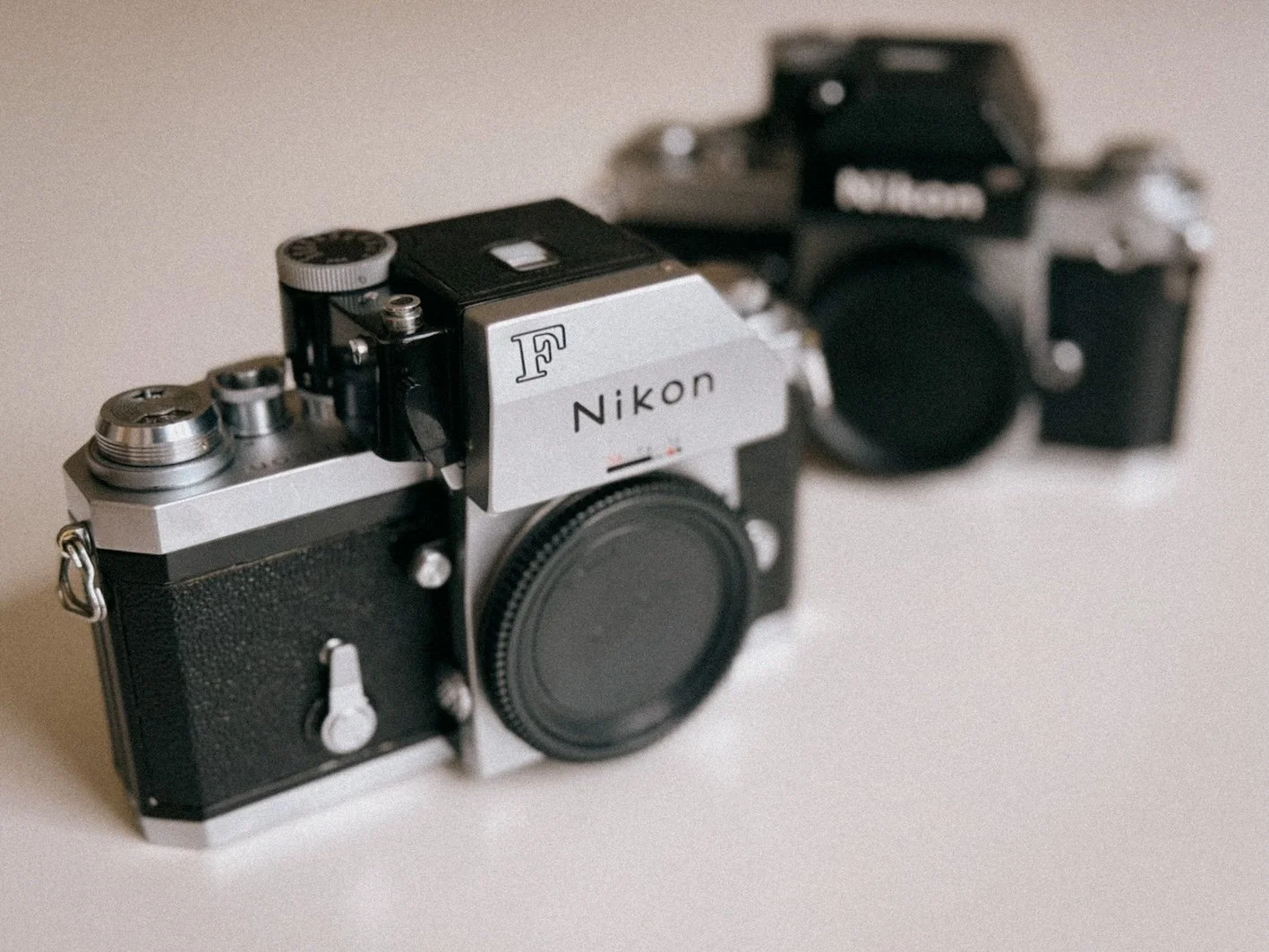
Gotta have them all!
Choosing between the Nikon F and the F2 is not a matter of which camera is better, but rather which experience you are looking for. Both are overbuild and will very likely outlast us all, especially after a good CLA.
If you are like me and you can enjoy the raw, mechanical ritual of photography, you will love the Nikon F. It is the choice for those days when you want to slow down and feel intentional or inspired. It might be less ergonomic and a bit slower to load, but it feels more direct. If you want a camera that makes a statement, has tons of swag, and doubles as a piece of industrial art, the F is the one.
On the other hand, if you need a reliable tool for commissioned work that disappears in your hands, go for the Nikon F2. It is the perfected version of the F and is comfortable to use for hours on end. For travel, work, or those days when you just want a camera that works without any quirks, the F2 is my go-to all-mechanical SLR.
Realistically, you might find yourself in the same position as I am. You start with one because of the history or the look, only to realize that you want the other as well. Whether it is the rebellious soul of the F or the engineering perfection of the F2, both are great honestly. Or, if you are like me, you just keep both. One for the swagger and one for the work.
Make sure to read both of my deep dives if you are looking for more detailed infos and manuals on both the Nikon F and Nikon F2.
Nikon F & F2 Buying Guide
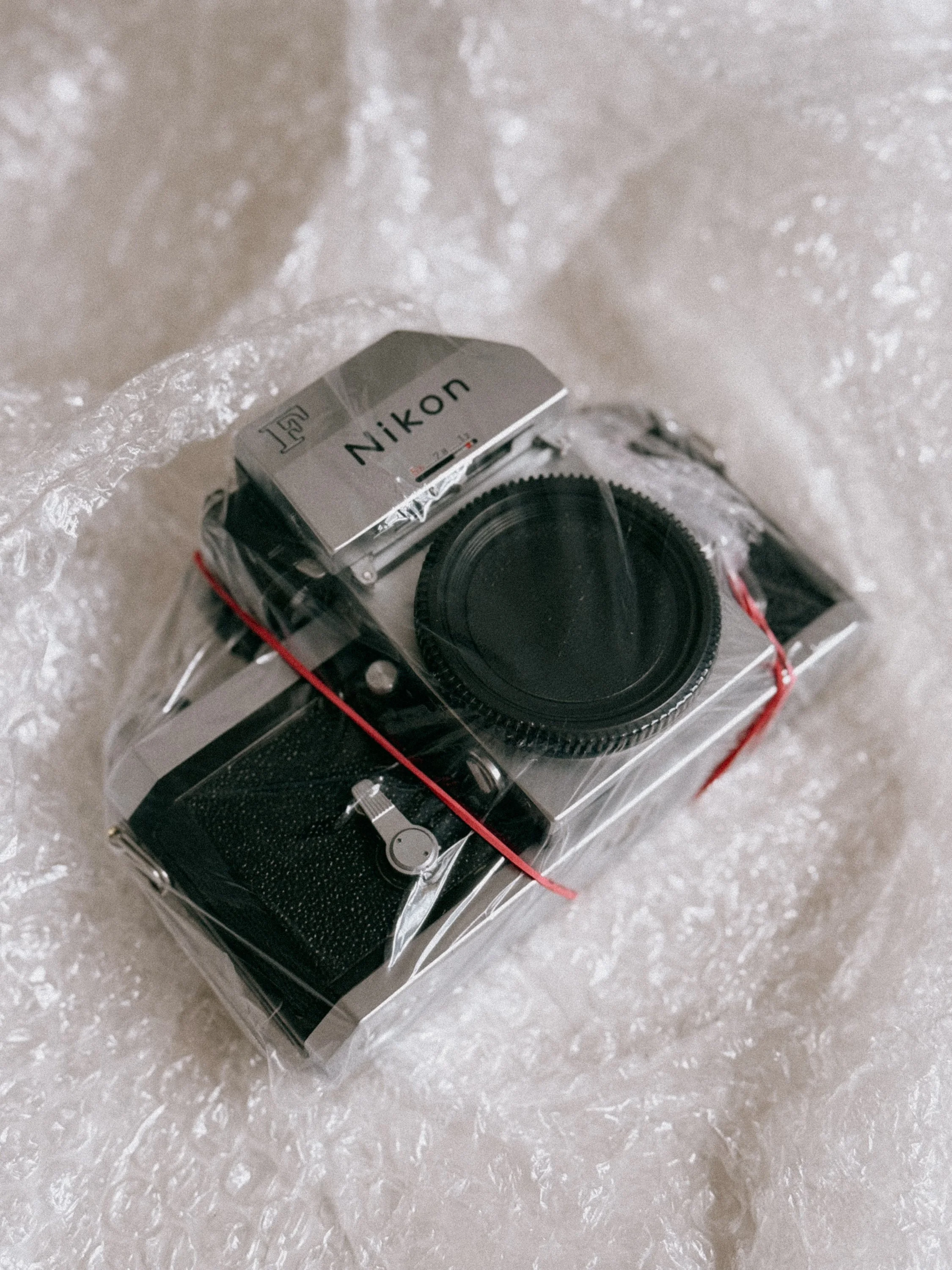
Fresh out of the oven
Buying a Nikon F or F2 today is always a bit of a gamble. Don’t forget, these cameras are sixty years old and they have seen some stuff. Here is what you actually need to check.
The Viewfinder: Prism Rot Look through the finder. If you see a dark horizontal line, "black snow," or cloudy patches at the bottom, that is desilvering. The original foam inside the finder has turned into a chemical mess over the decades and eaten the silver coating. This is irreparable. It is also the reason why clean "Eye-Level" prisms now cost more than the actual camera bodies. If you find a clean one, get it serviced immediately to remove that old foam before the rot starts.
The Focusing Screen The screens are interchangeable, which is a blessing because they are often scratched to hell from decades of bad cleaning. A scratch won't affect your photo, but it will drive you crazy while focusing. Check for deep marks. The good news is you can swap them in seconds, the bad news is that clean ones are getting expensive.
The Titanium Shutter Nikon used titanium foil for the curtains. It is tough as nails, but not invincible. Open the back and look at the curtains. They should be flat. If they look like crumpled kitchen foil or have "ripples," be careful. Also, hold the camera up to a light (without a lens) and check for pinholes. You want to see total darkness.
Slow Speeds and Sticky Mirrors Fire the camera at 1 second. If the "clunk" takes three seconds or if the mirror stays up for a moment before coming down, the old grease has turned into glue. This is the clearest sign that the camera is crying for a CLA. It is not a dealbreaker, but you should factor the service cost into the price.
The Photomic Meter To be honest, in 2026, most of these meters are either dead, "jumping," or just straight up lying to you. Plus, the original mercury batteries are gone. Many people like myself just use the bulky Photomic finders for the look and use a phone app or a small external meter for actual exposure. If you want a working internal meter, make sure it has been calibrated for modern batteries.
The "Impact" Check The Nikons is made of thick brass. It takes a lot of force to dent it. Check the corners and the baseplate. If you see deep dents, the camera has taken a serious fall. This could mean a cracked internal prism or, even worse, a lens mount that is no longer perfectly parallel. A few scratches are fine (that is called character), but avoid the ones that look like they were used as a hammer.
Enjoyed this? You might also like:
If you found this article helpful, check out my other deep dives into the world of expired emulsions and color recovery:
Forget the Mju-II: Why the Olympus AF-1 is the Best Point & Shoot Under $100
Mamiya M645 Review (2026): The Best Entry into Medium Format?
How to Edit Expired Slide Film: A Technical Guide to Rescuing E-6 (Ektachrome 64T)
Nikon F2 Review (2026): Is This the Best Mechanical 35mm Camera?
Nikon F Review (2026): Shooting the Indestructible 35mm Legend
FPP Retrochrome 400 Review: Shooting High-Speed Surplus Slide Film
422 Meters of Frozen Gold: The Expired Ektachrome Heist Part I
422 Meters of Frozen Gold: The Expired Ektachrome Heist Part II
Embrace the Blues: Why Ektachrome shifts cooler and how to handle it
Minolta SR-101 (SRT 101) Review: The Ultimate Mechanical SLR in 2026?