Mamiya M645 Review (2026): The Best Entry into Medium Format?

The Mamiya M645
The Mamiya M645 in a way democratized the medium format SLR in 1975. Back then, if you wanted to shoot medium format, you either had to get a compact consumer folding camera, a TLR, or go with the super bulky Pentax 67 or the RB67, which was introduced in 1970. So the M645 was the first professional-grade but portable solution.
Why I Ended Up Buying a Mamiya M645
Is Medium Format Actually Worth It?
Mamiya M645 Specifications and System Overview
Waist-Level Finder vs Prism: Two Very Different Shooting Experiences
What It’s Like to Shoot the Mamiya M645
Sekor C 80mm f/2.8 Review: My Everyday Lens
Using the M645 for Portraits, Street and Travel Photography
Buying a Mamiya M645 in 2026: What to Check Before You Buy
Mamiya M645 vs RB67: Which One Fits You Better?
Why I Ended Up Buying a Mamiya M645
When the film photography bug bites you, there is no going back. So, after three months of shooting with my Canon P (find out why i as a glasses wearing person love it here), I knew I wanted to try medium format. I, of course, landed on the typical candidates: the Mamiya 7, RB67, RZ67, Pentax 67, Rolleiflex, and many more. The problem was, I wanted to try it without going broke. Any of the cameras I mentioned go well above €1,000 if you want one in good condition.
So, I did some more digging and stumbled across the Mamiya 645. Yes, it does not have the rotating back like its bigger brothers, but it is cheaper to get and you can shoot more pictures than on a 6x7. Some folks in forums claim it's not worth it, as the size upgrade coming from 35mm would be disappointing. But is it? Let's find out!
Is Medium Format Actually Worth It?
Yes it’s worth it
Before getting into the Mamiya M645 specifically, let’s talk about medium format in general, and specifically the 645 format. If you are coming from normal 35mm film, you might wonder why anyone would bother carrying around a heftier camera just to get fewer shots.
To put it simply: yes, it absolutely is. The negatives are massive compared to 35mm, and the quality is just completely different.
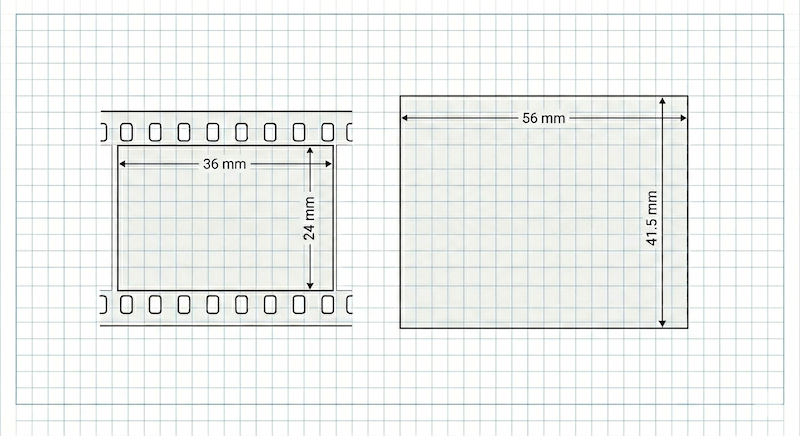
When you look at the dimensions, the difference doesn't sound that huge. But when you look at the actual surface area, it's a completely different story:
35mm Full Frame: 36mm x 24mm = 864mm²
645 Medium Format: 56mm x 41.5mm = 2324mm²
The Result: The 645 negative has almost exactly 2.7 times the surface area of a normal 35mm frame. This means with every single shot, you are capturing nearly three times as much image information, detail, and fine tonal gradations.
You can really enlarge these pictures and they still look great. Since you are using longer lenses, like an 80mm that acts like a standard 50mm on 35mm film, you get a creamy background and a look that you just can't really replicate on smaller formats.
Moving from 35mm to 645 completely forces you to slow down. You get less shots per roll. But that's exactly why 645 hits the sweet spot. It gives you that specific high-end medium format look, but it's still way more portable and cheaper to shoot than bigger 120 formats like 6x7. For me, it is absolutely worth the trade-off.
Mamiya M645 Technical Specifications
Mirror Lock Up Lever And Lower Shutter Button
Just to be clear: throughout this article, I am talking about the original, first-generation Mamiya M645 built between 1975 and 1987. If you are looking to buy one today, you will find that Mamiya actually made seven different manual-focus models over the years, divided into two distinct generations.
While they all share the exact same lenses and film inserts, accessories like viewfinders and grips don't always cross-communicate between the two eras.
Here is the quick version of how they differ:
First Generation (M645, 1000S, M645J): The original model shoots up to a 1/500s shutter speed, the 1000S pushes that to 1/1000s, and the M645J is a stripped-down version. None of these models allow you to change film magazines mid-roll.
Second Generation (Super, Pro, Pro-TL, 645E): These moved to a molded plastic shell design. The Super, Pro, and Pro-TL added removable film backs, allowing you to insert a dark-slide and swap film mid-roll. The 645E was the later entry-level exception, built with a fixed back and a fixed viewfinder.
Technical Specifications
| Feature | Specification |
|---|---|
| Film Format | 120 film (15 exposures) / 220 film (30 exposures) |
| Frame Size | 6 x 4.5 cm (actual image area: 56 x 41.5 mm) |
| Lens Mount | Mamiya M645 bayonet mount |
| Shutter Type | Electronically controlled cloth focal-plane shutter |
| Shutter Speeds | 8 seconds to 1/500 second, plus Bulb |
| Flash Sync | X-sync at 1/60 second |
| Viewfinder Options | Interchangeable, Waist-Level Finder, Prism Finder, Metered Prism |
| Focusing Screens | Interchangeable, Split-image, Microprism, Matte |
| Film Advance | Manual winding crank or winding knob |
| Battery Requirement | 1x 6V 4LR44 / PX28 battery (Required to operate the shutter) |
| Weight | Approx. 945g (Body only) / ~1.5kg with 80mm lens and Prism |
Why the 645 Format Just Works
The 120 Magazine
The doorbell rang and I pretty much ripped the package out of the postman's arms. There it was, my first medium format camera! The Mamiya M645 with its standard 80mm f/2.8 lens and metered prism! I was surprised. It was actually a lot smaller than I imagined. The prism gives the camera a bulky look, so I ordered a waist-level viewfinder right away.
The test roll was Ilford HP5. Upon receiving the scans, I was actually disappointed. Why? Check out the picture below. The camera had light leaks, even though the "trusty" seller on eBay Kleinanzeigen said he had just replaced them. Being the handyman I am, I knew I had to give that camera a proper second try. So, I got a guide on how to replace the seals and went ahead. It was actually quite an easy job. Still, the camera was not off to a great start, to say the least.

Notice The Horizontal Line?
During our honey moon trip to Italy things started to come together. With new light seals, I was in for a treat. The depth of field and overall resolution were just different and a definitive upgrade from the 35mm I had shot so far. So, the camera was with me on many photo walks and holidays from that point on.

Kodak Ektachrome Just Rules - Especially in 120
And that is where the 6x4.5 format shines in terms of practicality. If you shoot a 6x7, you are constantly swapping rolls after just 10 frames, which gets annoying when you are just walking around. ‘Cause believe me, you will need some time to adapt to that whole “less shots per role thing” But with the 645, you don't feel stressed about wasting film, but you still get a big negative. Plus, the standard rectangular aspect ratio just works for normal prints without any awkward cropping.
As I only had and still have one lens, it is actually very compact considering the fact that you are shooting proper medium format 120 film. Having it around my shoulder does not feel much different than my Nikon F or F2 (I love both, if you can’t decide which one is right for you, here you go). So, the more I shot with it, the happier I got that I got the camera in the first place.
Waist-Level Finder vs Prism: Two Very Different Shooting Experiences

The Waist-Level Finder is a lot smaller
While my camera came with the metered prism finder, I actually got it because of the waist-level finder. Having seen that on Instagram and countless YouTube videos, I just wanted to try it for myself, but I was in for a surprise—again.
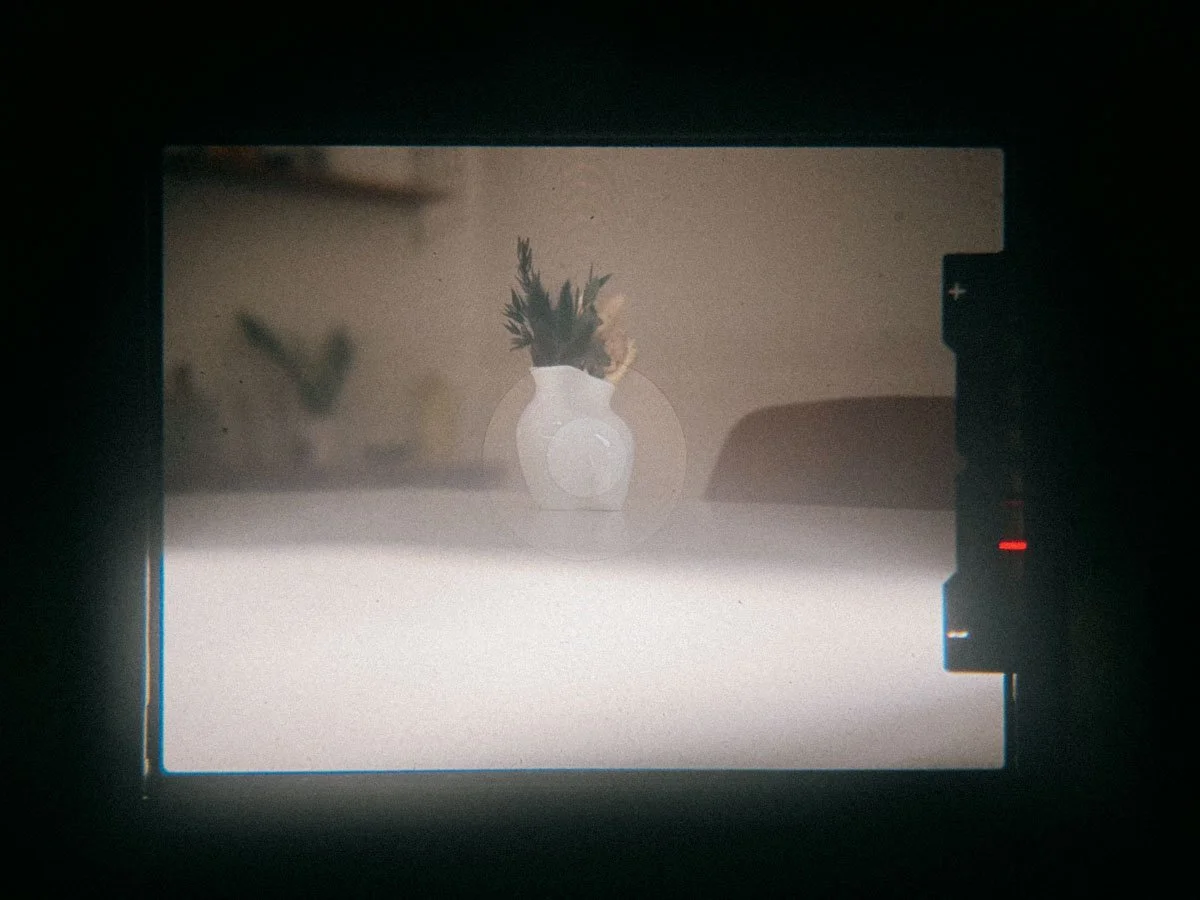
Underexposed Flowers
With the metered prism attached, it actually feels quite normal to use and very similar to most SLR cameras. You get a meter needle, and the shutter dial is now on the prism. Since the Canon P comes without a meter and the one built in here seems to work, that was quite nice for a change. One thing to watch out for: you really have to make sure to set the dial on the body to the red dot so the camera knows the dial on the finder is now in charge. This is indeed a bit strange, as you might accidentally move the shutter dial on the body and then ruin the exposure.
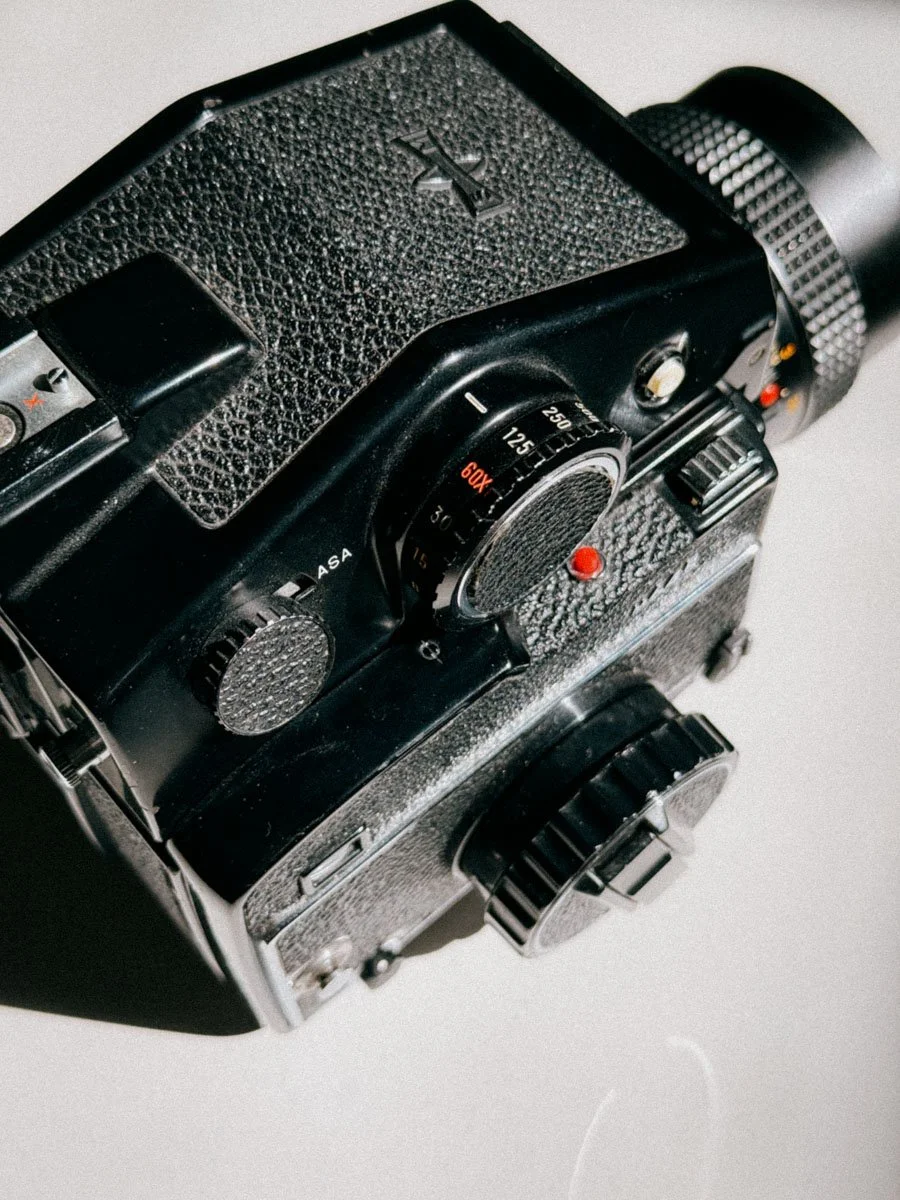
The beefy metered Prism Finder
It is quite a heavy finder and makes the camera look a bit bulky and less “agile”
The waist-level viewfinder is a joy to use. Once you get used to it. Yes, it absolutely takes some time to get the hang of it, as left and right are switched. This is not a big problem when shooting in landscape orientation. If you want to shoot portraits, well, you are in for a surprise. You now have to stand at a 90-degree angle to your subject and try to frame it, whilst up has now become down. Not very intuitive, but it can be done. It's a challenge nonetheless.

The uncluttered “Analog Dispaly”
Critical focusing is actually easier than I imagined, thanks to the magnifying glass that flips out when pushing the silver button. This is well worth the learning curve, as framing your picture with an analog display is just so cool! Also the lower position of the camera relative to your subject is quite a inspiring perspective!
For studio and commercial use where you might want to shoot a lot in portrait orientation, it's very handy to have both. While traveling, I usually only bring the waist-level finder with me.
So, If you are looking to buy an M645 yourself, really think about what kind of shooting experience you are after, because your choice of viewfinder completely changes how the camera feels.
What It’s Like To Shoot The Mamiya M645

It is a hefty camera, no matter what finder you are using. The overall build is also great. Very un-plasticky and super sturdy.
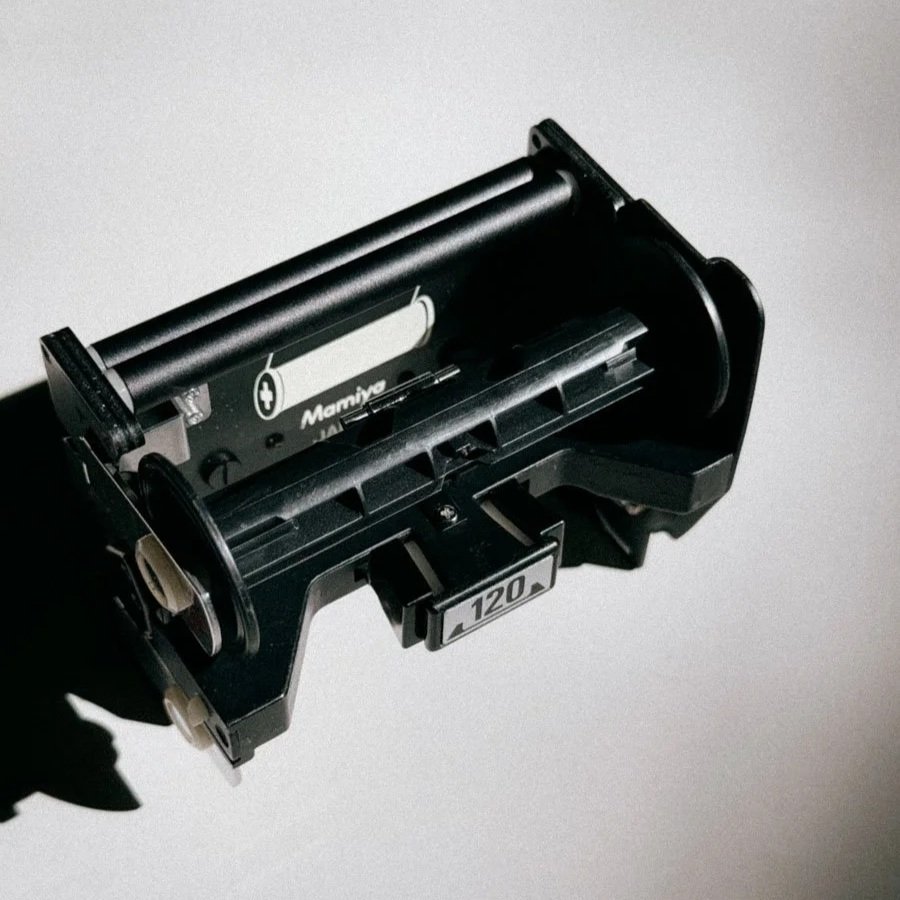
Loading the film is also super easy. Open the back, extract the magazine, load the film. Just make sure the emulsion side is facing the shutter curtain. (Yes, I managed to screw that one up once and got black scans.) Turn the film advance, or extract the crank for even faster winding, till it stops and you are good to go! It’s now at your disposal.
Having only 15 frames instead of the usual 36 on a 35mm roll changes how you take pictures. It forces you to slow down even more and be very selective with your composition. You actually stop, think, and make sure everything is perfect before hitting the shutter, because every frame counts. I found myself walking away from a scene not taking the picture quite often. That being said, compared to other medium format systems, it is still incredibly fast. You don't have to swap rolls after just 10 frames like on a 6x7, and the handling is quick enough that you can easily keep up with the action if you need to.
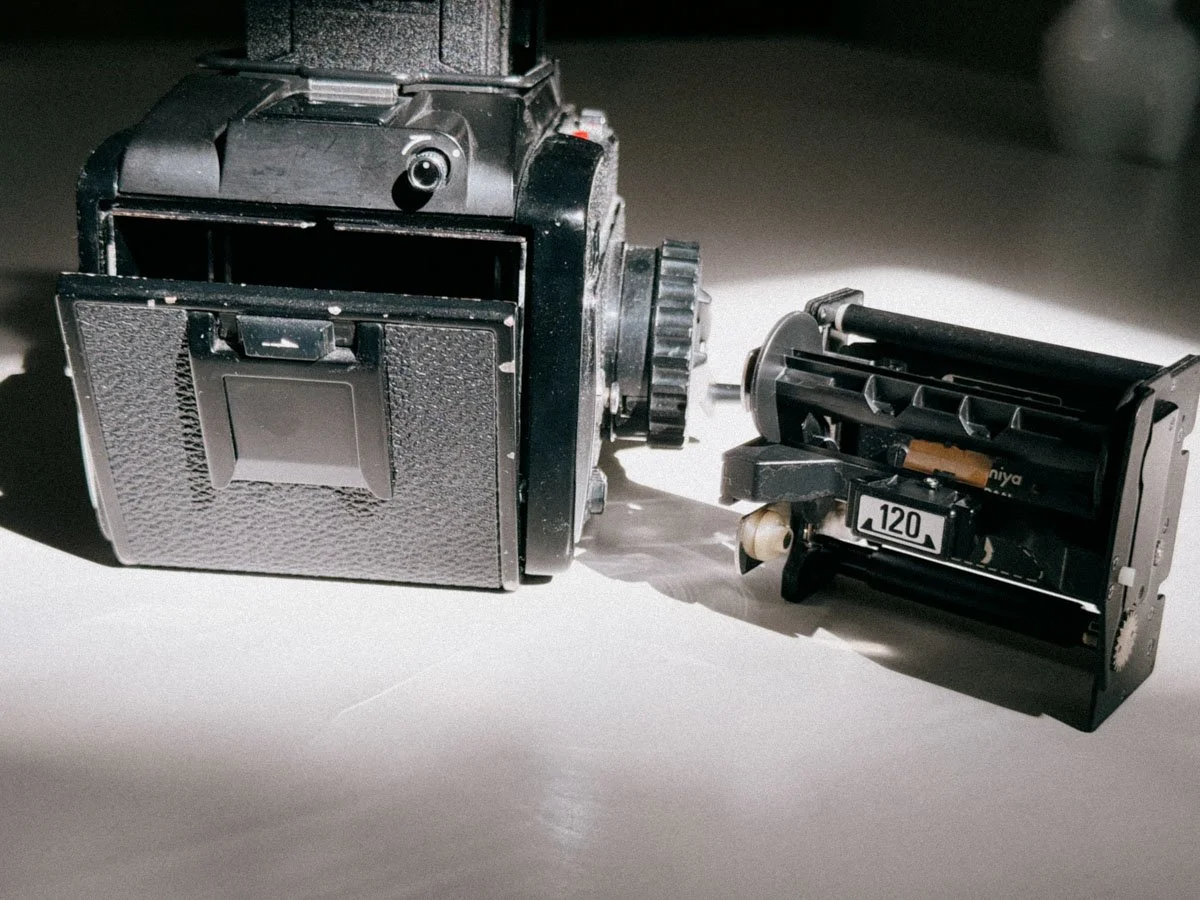
Magazine unloaded
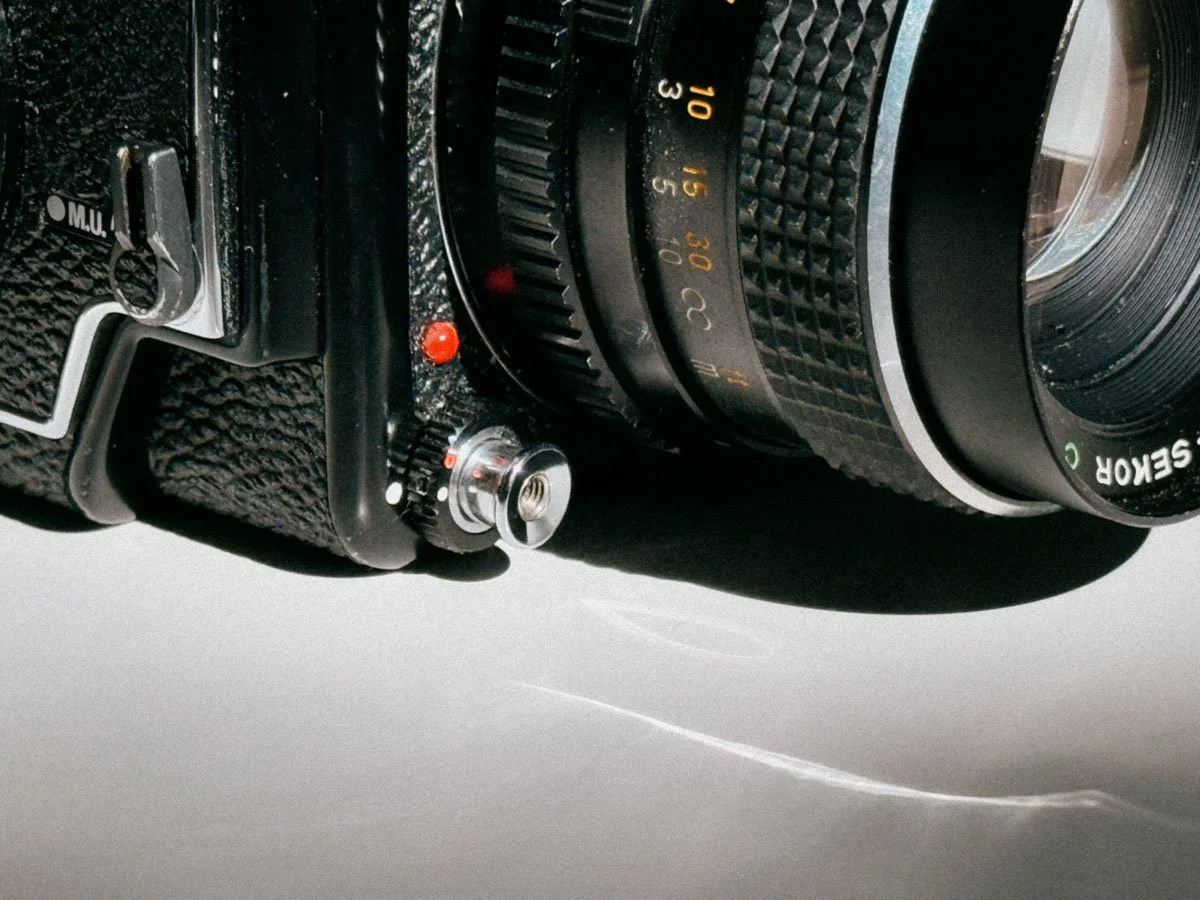
The shutter speed dial on the left is self-explanatory, but what isn't are the two shutter buttons. Don't get me wrong, it's great to have the two, as the one on the top is perfect for the waist-level finder and the one on the front is great for the prisms. BUT again, this needs some time to get used to. And you will absolutely fire that thing unintentionally. You've got a mirror lock-up on the front, as well as the double exposure lever on the right-hand side next to the film advance.
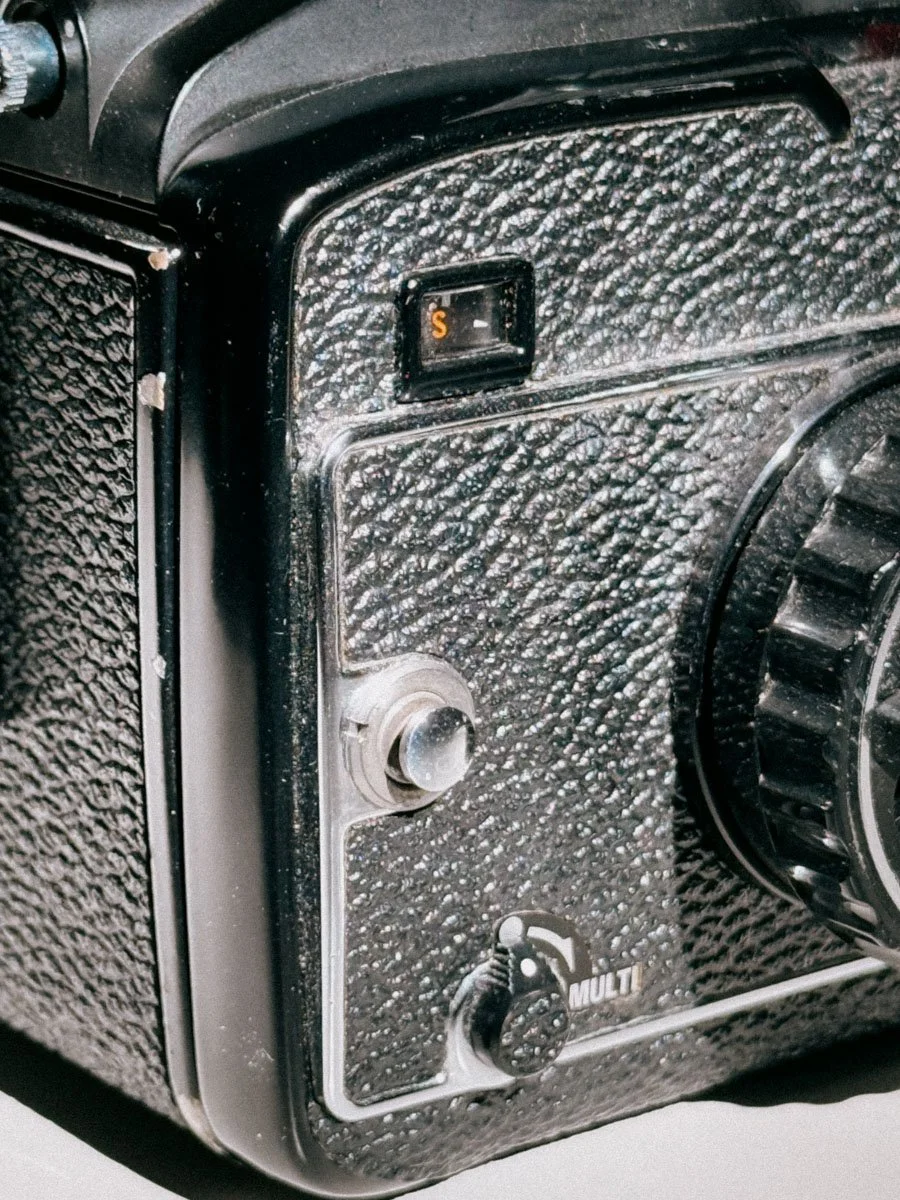
One thing that freaked me out and made me think my camera was broken: without having a film loaded, you MUST engage the multi-exposure switch in order to check the camera. Otherwise, it will not fire the shutter!
If you managed to read this far, there was a lot of getting used to. And that's just the plain truth. But I found it enjoyable, as it forced me to "learn" a new camera system. It's nothing major, but it is a different design than a standard 35mm camera. Dials and switches are just in different places. But again, it's not that hard, and I found it easy to adapt and get used to it.
The thing I love most about it is its size. And even though it's a bit tricky to set up, once the film is advanced and the exposure is set, even amateurs, newbies or friends without analog photography knowledge will be able to snap a picture.
Sekor C 80mm f/2.8 Review: My Everyday Lens

The Standard 80mm Lens
This is a great lens, and don't get confused: due to the different format, it is equivalent to roughly a 50mm f/1.8 on 35mm film. Lots of people struggle with that standard focal length. I did too, but when shooting this lens from the hip with the waist-level viewfinder, it just clicks. It looks very natural and beautiful. The bokeh is very creamy, and it's easy to separate your subject from the background.
Another practical plus is the common 58mm filter thread, which makes finding cheap filters or a replacement lens cap incredibly easy. Also, while a lot of people in forums rave about the faster 80mm f/1.9, that lens is a lot bigger, heavier, and way more expensive. This f/2.8 version keeps the camera lightweight and perfectly balanced. It is plenty sharp wide open, but once you stop it down to f/5.6 or f/8, the details are absolutely insane.
The build quality is great, and overall, it is just an awesome lens to walk around with.
Using the M645 for Portraits, Street and Travel Photography
As already mentioned, it is a very portable camera and definitely capable of street photography when using zone focusing. Again, here is where the waist-level finder comes in handy. You don't have the camera in front of your face, but down at your waist. Especially in crowded places, I was able to catch some candid scenes because people didn't notice the camera. Is it quiet? No.
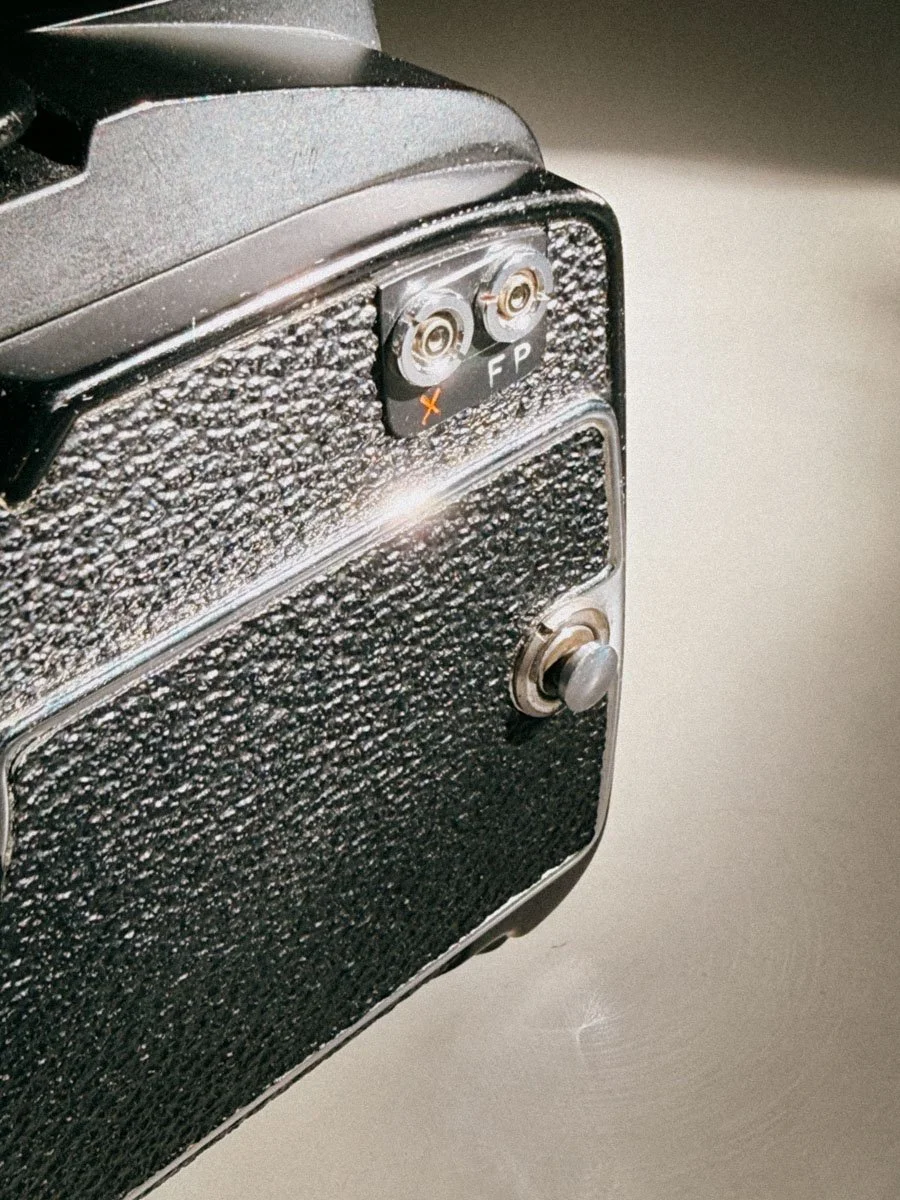
The M645 also features flash sync ports making it easy to use with modern flashes.
For traveling, it is absolutely perfect, but I still notice that I would not take it as my only camera. One thing to keep in mind: since this camera needs a battery to operate, it can be tricky, especially in cold conditions. My shutter quit working on me twice, either because of the battery not delivering the power in the cold or it might have also been because of the fact that the lubricants are older and my example is need of a CLA.
Buying a Mamiya M645 in 2026: What to Check Before You Buy

The Shutter Speed Dial
As I mentioned earlier, it is always best to buy from trusted sellers or, even better, test the camera out in person if you get the chance. These cameras are decades old, and "tested and working" can mean very different things on eBay or Kleinanzeigen.
If you are hunting for an M645, here is a quick checklist of what you should absolutely double-check before handing over your money:
The Light Seals and Mirror Bumper: Don't just trust the description. Ask the seller directly if they have been replaced, or budget around €15 and an hour of your time to do it yourself. Check the seal around the door and the foam pad where the mirror hits the top of the body.
The "Prism Line" (De-silvering): If you are buying a camera with a prism finder, ask the seller if there is a line across the viewfinder. Over time, the glue inside the prism degrades, causing a horizontal line right through your view. It doesn’t affect the photos, but it is incredibly annoying to look at.
Battery Compartment & Electronics: Since the M645 is electronically controlled, it is a paperweight without a working battery. Open the battery door on the bottom and check for corrosion or leaked acid. Also, make sure the battery check button (the little green light) actually lights up.
Sticky Slow Shutter Speeds: As I found out the hard way in the cold, old lubricants can freeze up the shutter. Fire the camera at 1 second or 2 seconds and listen closely. Does it sound like a crisp, steady second, or does the shutter hang open for too long?
Oily Aperture Blades on the Lens: Take the Sekor C lens off, look through the glass, and flick the aperture preview lever. The blades should snap open and shut instantly. If you see a shiny, dark residue on the blades, it’s oil, which will slow down the lens and ruin your exposures.
Frame Spacing: If you can test it in person, bring an old, developed roll of 120 film. Load it into the insert and wind it through. Make sure the frame counter advances correctly and the winding crank stops exactly when it's supposed to. Faulty spacing can lead to overlapping pictures.
Mamiya M645 vs RB67: Which One Fits You Better?

The 645 With The Metered Prism Finder Attached
When looking into Mamiya medium format, you always end up comparing the M645 to the RB67. They are completely different. The RB67 gives you those huge 6x7 negatives and that rotating back, but it's basically a giant, heavy studio camera that you almost always need a tripod for.
If you're on the fence about which one to get, starting with the M645 just makes a lot of sense. It's a great way to dip your toes into medium format and see if you even like the workflow. You get the better depth of field and resolution without the crazy weight and learning curve of a 6x7 system.
Plus, you can always upgrade later. If you realize you want those massive negatives, you can just sell the M645 and get an RB67. The market is pretty steady, so you won't really lose money anyway. But honestly, a lot of people think the 645 is just a stepping stone, only to find out it's their perfect sweet spot. It's portable enough for travel, gives you more shots, and is much cheaper to shoot over time.
Mamiya M645 Sample Images
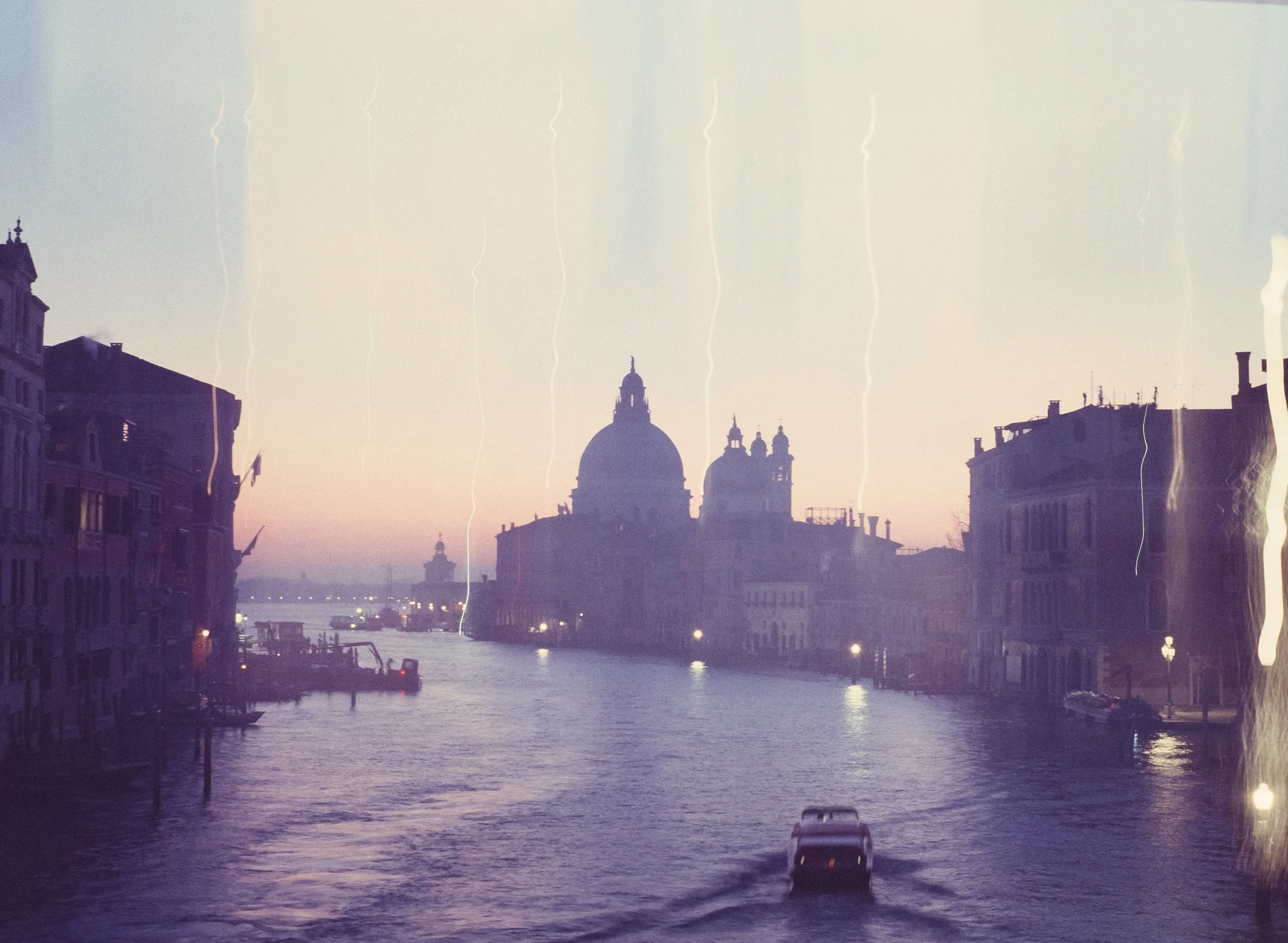
Here are some images for you. Portra, B&W, Slidefilm as well as expired Ektachrome. (I am a sucker for the latter. if you want to know more about how i edit slide film, here you go)







Final Verdict: Is the Mamiya M645 Still Worth It in 2026?
I love my M645. By now, you’ve probably realized that it takes some time to adapt to, but that’s just part of the game with analog photography. Each camera is different, feels different, and will absolutely influence the way you shoot. I am by no means a believer in the "camera body doesn’t matter" crowd.
I might send mine in to get a CLA (Clean, Lubricate, Adjust) soon, though. As I mentioned, it tends to freeze up a bit in the cold, but maybe that’s a little unfair of me, since I’m pretty spoiled in terms of reliability with my fully mechanical Nikons.
If you have to choose one camera to start your medium format journey, the M645 is definitely the go to choice. For me, it probably is the easiest and most approachable entry into medium format. The balance between image quality, portability and price is just hard to beat. So if you're on the fence, give it a try!
Mamiya M645 FAQ
1. Is the Mamiya M645 good for beginners?
Yes, definitely. It takes a bit of time to get used to, especially if you are coming from 35mm, but compared to cameras like the RB67 or Pentax 67, the M645 feels surprisingly approachable. Film loading is simple, the controls are easy to understand.
2. Does the Mamiya M645 need a battery to work?
Yes. The original M645 uses an electronically controlled shutter, so without a battery the camera will not fire. Luckily it only needs a common 6V PX28 / 4LR44 battery, which is still easy to get today.
3. How many pictures do you get on a roll of 120 film?
You get 15 shots on a standard roll of 120 film. That is one of the reasons why the 645 format feels so practical. Compared to 6x7 cameras with only 10 exposures per roll, the M645 feels much less limiting for travel or everyday shooting.
4. Is the waist-level finder hard to use?
At first, yes. Especially when shooting vertically. Left and right are reversed, and once you turn the camera for portraits your brain needs a moment to adapt. But after a few rolls it starts feeling surprisingly natural. The built-in magnifier also helps a lot with focusing.
5. What is the best lens for the Mamiya M645?
For most people, probably the Sekor C 80mm f/2.8. It is sharp, relatively compact, affordable, and gives you that classic medium format look with very smooth background separation. A lot of people chase the 80mm f/1.9, but the f/2.8 is much smaller, lighter, and honestly easier to carry around.
6. Does it work with regular straps?
No, you need a dedicated Mamiya strap due to the attachements.
Enjoyed this? You might also like:
If you found this article helpful, check out my other deep dives into the world of expired emulsions and color recovery:
Forget the Mju-II: Why the Olympus AF-1 is the Best Point & Shoot Under $100
How to Edit Expired Slide Film: A Technical Guide to Rescuing E-6 (Ektachrome 64T)
Nikon F Review (2026): Shooting the Indestructible 35mm Legend
FPP Retrochrome 400 Review: Shooting High-Speed Surplus Slide Film
422 Meters of Frozen Gold: The Expired Ektachrome Heist Part I
422 Meters of Frozen Gold: The Expired Ektachrome Heist Part II
Embrace the Blues: Why Ektachrome shifts cooler and how to handle it
Minolta SR-101 (SRT 101) Review: The Ultimate Mechanical SLR in 2026?