Rangefinder vs SLR – Canon P vs Nikon F: Two 1959 Classics Compared
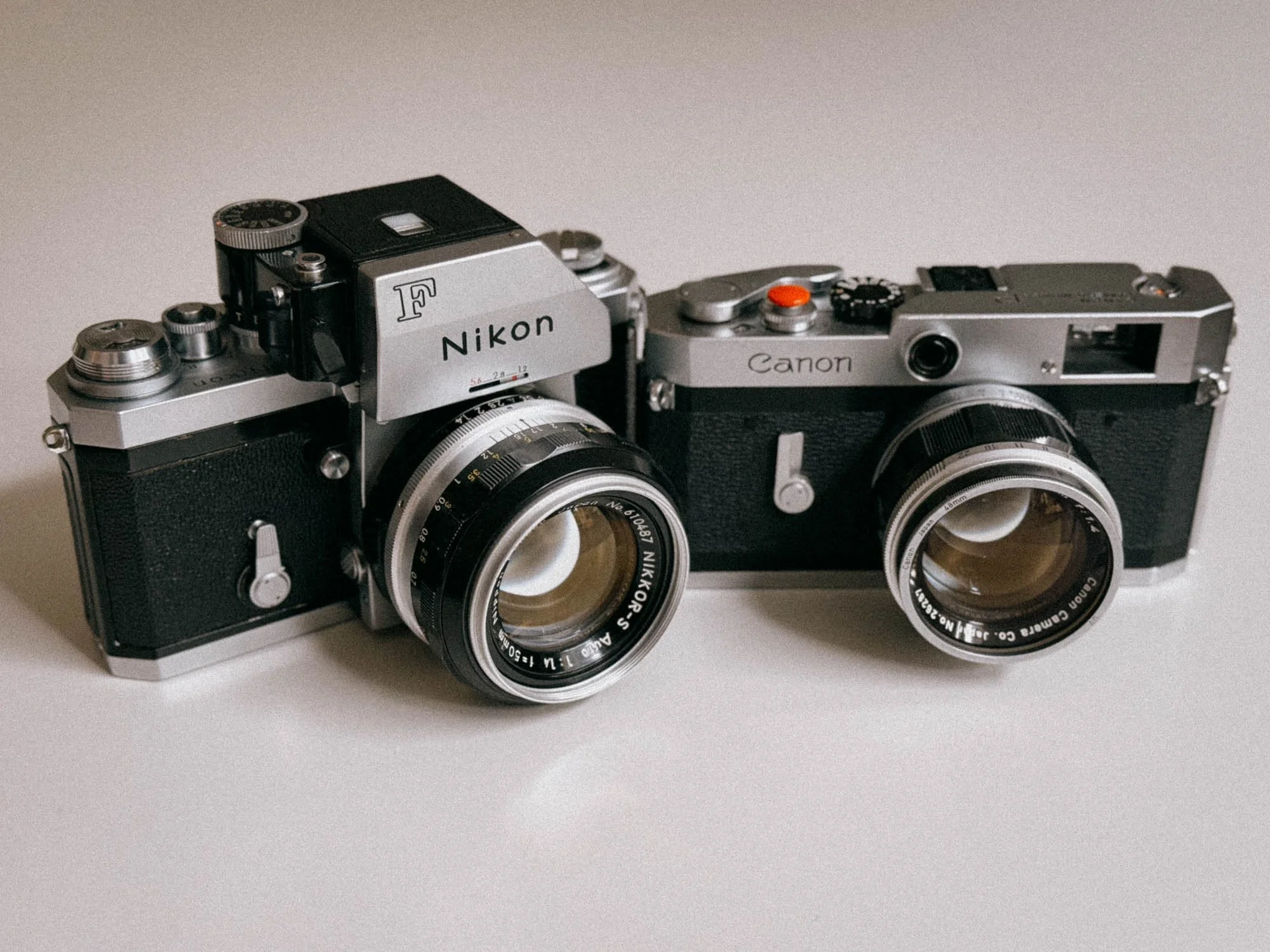
Rangefinders and SLRs are two of the most iconic ways of shooting 35mm film.
The Canon P and the Nikon F both hit the market in 1959, but they couldn't be more different in the way they approach photography. In this Canon P vs Nikon F comparison, I want to look at what actually separates a rangefinder from an SLR in everyday use.
As I own both cameras and have already written individual reviews about the Canon P and the Nikon F. After shooting both for a while, I thought it would be interesting to see what actually separates them in everyday use, and whether the Canon's rangefinder really holds up to the hype once you take a closer look.
So let's jump back in time to the eventful year of 1959, when Fidel Castro overthrew the Cuban dictator, Mattel introduced Barbie, and these two cameras hit the market. Let's put them side by side and find out which approach I actually prefer, and which one might be the better buy for you.
1959: When Rangefinder Met SLR
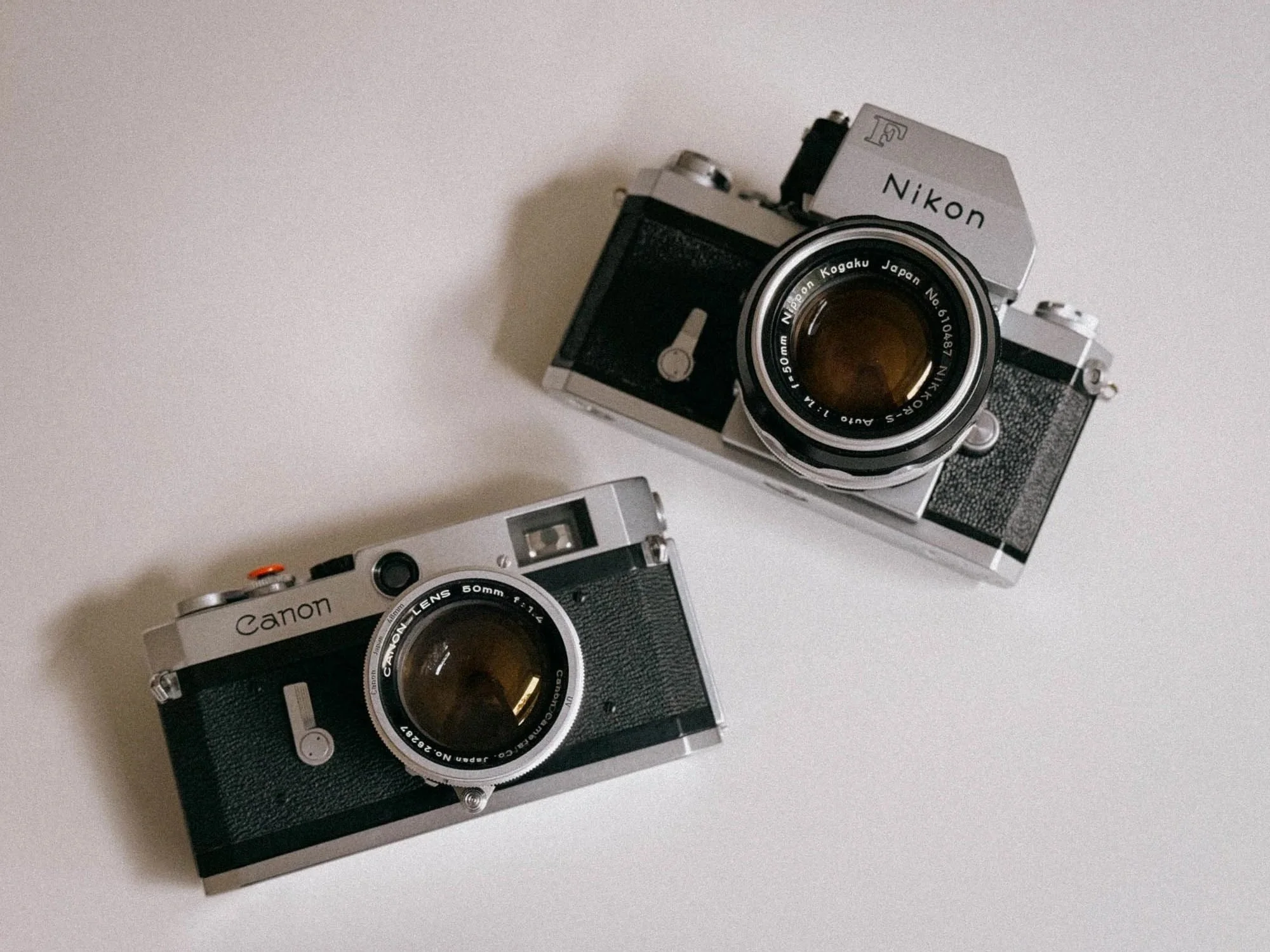
Canon P and Nikon F with 50mm F/1.4 Lenses
Up until 1959, rangefinders were the norm, with Leica spearheading camera technology and brands like Canon and Nikon building cameras based on the same general concept. The Canon P, for example, is arguably a very close relative of the Leica M2, with some interesting differences and improvements like its stainless-steel foil shutter. SLRs, on the other hand, had already been around for decades, but the Nikon F brought a lot of previously separate ideas together in a way that had a huge impact on professional photography.
It's not like Nikon reinvented the wheel. It was more like they very cleverly combined features that were already known and used, such as the quick-return mirror, automatic aperture stop-down when pressing the shutter, 100% view through the finder and interchangeable prisms, and put them all into one camera system. On top of that, you got motor drives and the now legendary F-mount instead of a screw-in lens mount.
Needless to say, the Nikon F sparked a revolution and put enormous pressure on established rangefinder systems, including Leica.
I've already written individual reviews about both cameras. The Canon P was actually my first rangefinder and my first “proper” film camera. The Nikon F came later, when I wanted to find out what I was missing. After having shot both for quite some time, I don't think the usual “rangefinder vs SLR” debate is quite as simple as some people make it sound. And that's not solely because of the technical differences. We all know, looks are a thing.
Sure, the Canon P has a nice viewfinder. But it also has some pretty annoying weaknesses. And yes, the Nikon F is built like a tank, but it is also big and heavy. Personally, I don't mind that at all, but I know plenty of people do.
Two cameras introduced in the same year, both fully mechanical, both built like tanks, and both still perfectly usable more than 60 years later.
So let's take a closer look at what actually separates them.
The Canon P Rangefinder
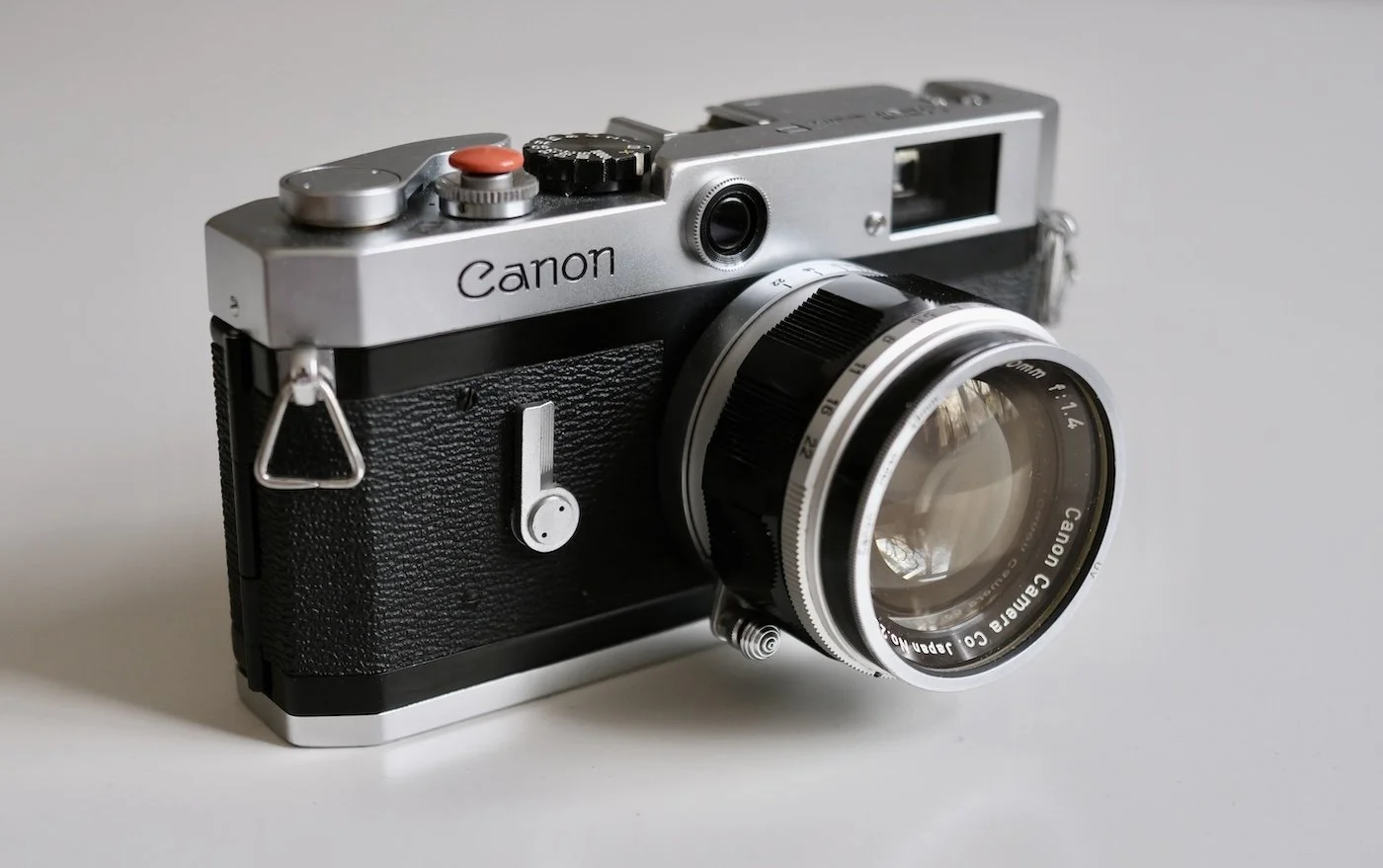
The Beautiful Canon P
The Canon P was my first rangefinder as well as the camera that got me properly hooked on shooting film.
Introduced in 1959, it was Canon's answer to the Leica rangefinder system, using the M39/LTM mount and a fully mechanical shutter with speeds from 1 second to 1/1000. There is no meter, no battery and no other bells and whistles. Just the camera, the lens, your Sunny-16 capabilities or whatever light meter you decide to bring along.
And honestly, that's part of what makes the Canon P so enjoyable to shoot.
The camera itself is relatively compact, beautifully made and feels much more substantial than its price on the used market might suggest. The 1:1 viewfinder gives you a very natural way of seeing the scene rather than feeling like you're looking through a small tunnel.
The Canon P also has permanent 35mm, 50mm and 100mm framelines, which makes it considerably more flexible than a lot of people might expect from an old LTM rangefinder.
At least in theory.
For me, the Canon P has become more or less a 50mm-only camera. And that has a lot to do with me wearing glasses. The 50mm framelines sit comfortably within the finder, while the 35mm framelines are pushed so far towards the edges that I simply can't see them.
Oh yes, its viewfinder. This is exactly where the Canon P's elegant vintage appeal and usability starts to fall apart for me
Why? More on that in a bit.
The Nikon F SLR
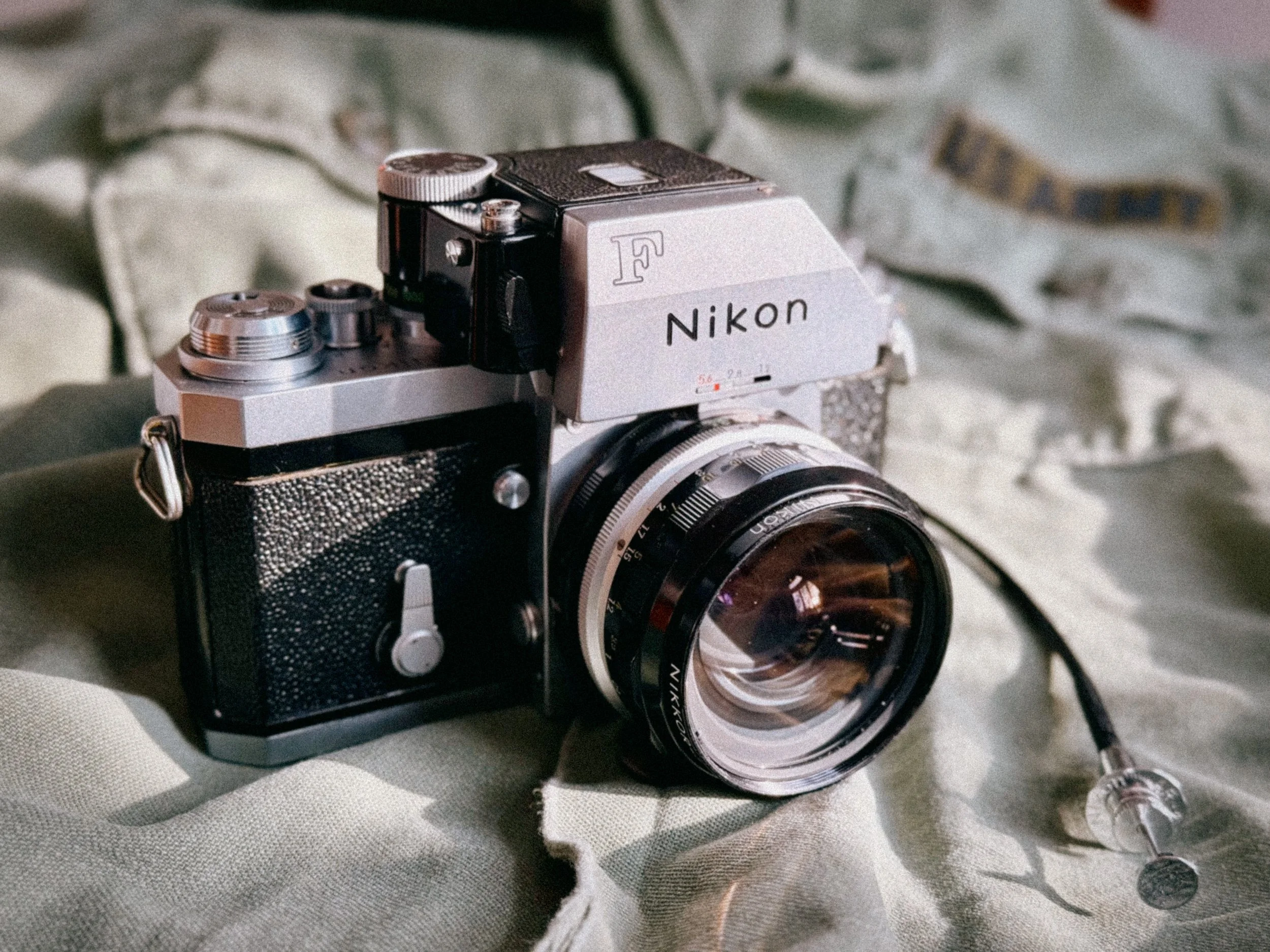
Nikon F With Special Shutter Release Cable
After roughly a year with the Canon P, I wanted to find out what I was actually missing.
And the answer was quite a lot.
Introduced in 1959, the Nikon F took a completely different approach. Instead of looking through a separate rangefinder system, you look straight through the lens. What you see is what ends up on the negative. No guessing, no framelines and no parallax to think about.
The Nikon F is also a fully mechanical camera, with shutter speeds from 1 second to 1/1000 plus B, and it doesn't need a battery to actually take a picture. My particular camera came fitted with a Pre-AI 50mm f/1.4 and the metered Photomic FTN finder which uses the dreadful PX625 batteries. Luckily there is a workaround! You can adapt modern batteries! How? I have another blog about that topic here.
The F was designed as a proper system camera from the beginning. Which is probably the biggest difference compared to the Canon P.
The Nikon F was never really meant to be just one camera. You could change the finder, focusing screen, back and lens, and add a motor drive. The F-mount gave you access to a huge range of lenses, while the modular design meant you could build the camera around whatever you actually needed.
If you want to dive deep into the topic of Nikon F accessories, lenses and more, feel free to check out my in-depth review on it here.
Of course, there is a price to pay for all of that.
Have I already mentioned that it's built like an absolute tank? Once you put the Photomic finder and a standard 50mm f/1.4 on it, you're carrying a brick around your neck.
Personally, I don't mind that at all. In fact, I quite like it.
So if the Canon P is about stripping photography down to the essentials, the Nikon F is almost the opposite. It gives you more options, more flexibility and ultimately more control.
And this is where the whole rangefinder vs SLR question starts getting interesting.
The Canon P Viewfinder
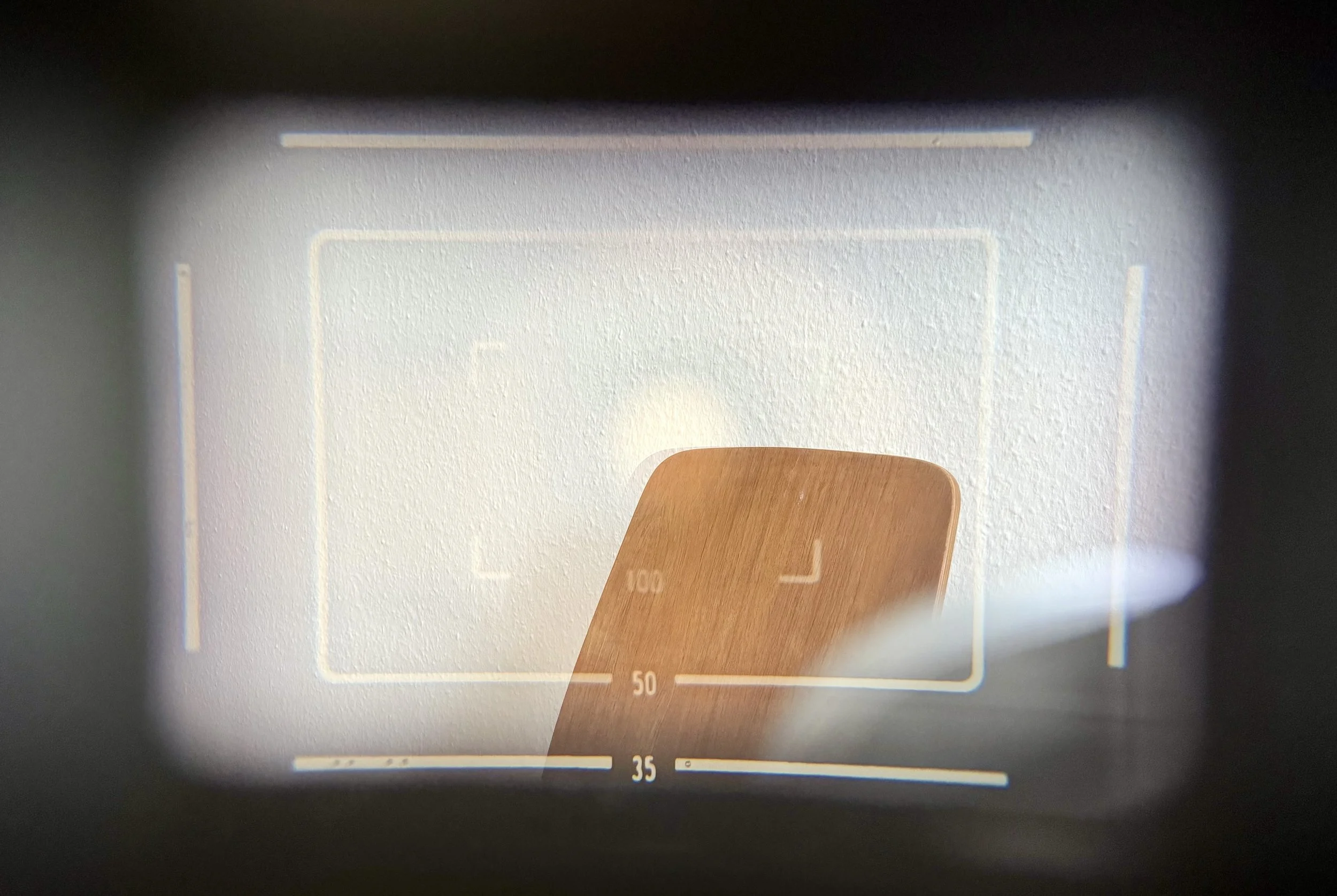
Canon P Viewfinder/Rangefinder With Framelines
I already gave some hints on my view on the Canon P’s rangefinder. It's fine during normal daylight conditions, but it can be a pain in so many ways.
Shooting with Glasses
As mentioned before, I wear glasses. And unfortunately, the Canon P's 1:1 viewfinder does not like that.
The 50mm framelines are absolutely fine. They sit comfortably within my field of view and the 100mm framelines obviously aren't a problem either. The 35mm framelines, however, are a different story.
They sit so far towards the outer edges of the finder that I simply can't see them properly while wearing my glasses. I can see parts of them, but not enough to confidently judge the whole frame.
And that basically takes street photography classic 35mm focal length off the table for me.
Of course, I could take my glasses off, use the camera without seeing the whole finder or simply get used to estimating where the frame ends. But none of these “solutions” work for me.
Which has turned it into a 50mm-only camera.
Against the Light
In good daylight, the Canon P finder works just fine. The 1:1 view and the ability to shoot with both eyes open give you a good sense of what's happening around you.
But point the camera towards a strong light source like the sun and things can get ugly pretty quickly.
The finder is prone to reflections, especially when there is a bright light source somewhere in or around the scene. Instead of just seeing the frame and the subject, you can suddenly get reflections and ghostings making it incredibly hard to nail focus with a 50mm lens. This is especially tricky when shooting backlit portraits wide open.
For me that's not just a minor annoyance.
This is probably the point where the Canon P's Leica’esque appeal starts to crack a little. It looks beautiful. It feels beautiful, but the optical design has its limitations.
And at night, things get even worse.
Shooting at Night
Night photography with the Canon P can be... let's just say interesting.
Bright streetlights, car headlights, illuminated signs and shop windows are basically the perfect recipe for disaster. Instead of one clean image, you will end up with severe reflections.
At some point, you're not really sure anymore whether you're looking at the rangefinder patch or a reflection of a streetlight somewhere inside the finder. Add some light rain or mist and it’s plain unusable.
And this is where I honestly have to say: shooting the Canon P at night is a complete pain in the ass.
The rangefinder itself still works. The camera hasn't suddenly stopped focusing. The problem is that the thing you're supposed to use for composing and focusing becomes so cluttered with reflections that you can’t even see the rangefinder patch anymore.
And this is probably the most important takeaway on the Canon P: the rangefinder experience is fantastic when the conditions are right. I don’t know if a Leica M behaves similar though.
Through the Lens: Where the Nikon F Wins
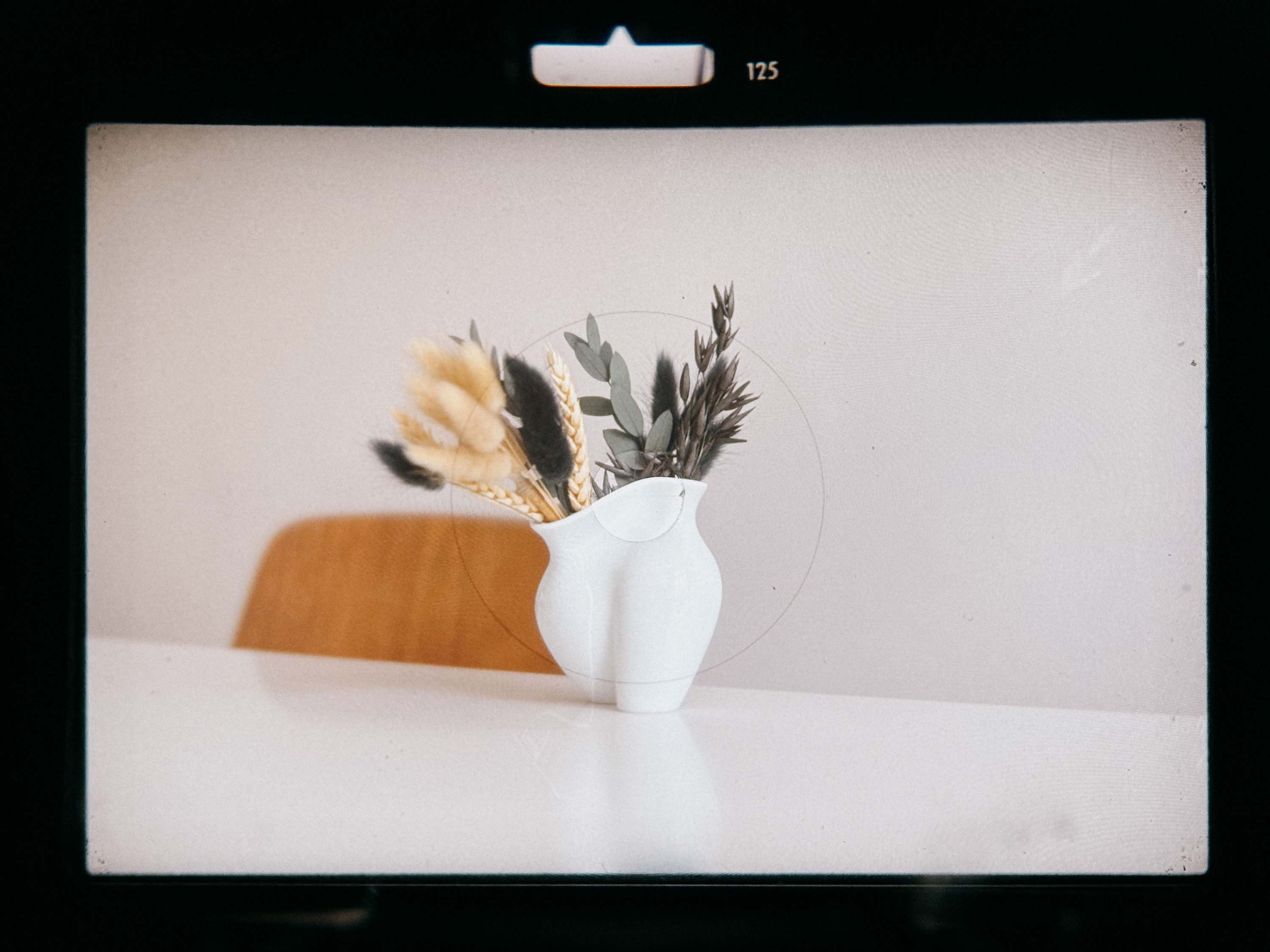
Clear View
This is where the Nikon F starts to have a pretty obvious advantage.
With the Nikon F, you see exactly what the lens sees. The focal length doesn't matter. Whether you're shooting a 24mm, 50mm or 105mm lens, you simply look through the finder and see the actual frame you're about to capture.
Put on a different lens and the whole perspective changes immediately. A wide-angle lens actually looks and feels wide. A telephoto lens actually looks and compresses like a telephoto lens. It sounds obvious, but after shooting a rangefinder for a while, it feels surprisingly liberating.
Needless to say, there is something reassuring about seeing exactly what will end up on the negative. And this isn't just useful for composition.
It also makes focusing different focal lengths much more intuitive. With a 50mm lens, both cameras are quick and easy to focus. But once you start working with longer lenses, closer subjects or more complicated compositions, I find the F much easier to trust. Especially when using the split-image focusing screen!
This is probably why I prefer the Nikon F for anything that feels remotely like a proper shoot. This includes portraits shot open! Nailing critical focus is just sooo much easier!
One Lens vs. A Whole System
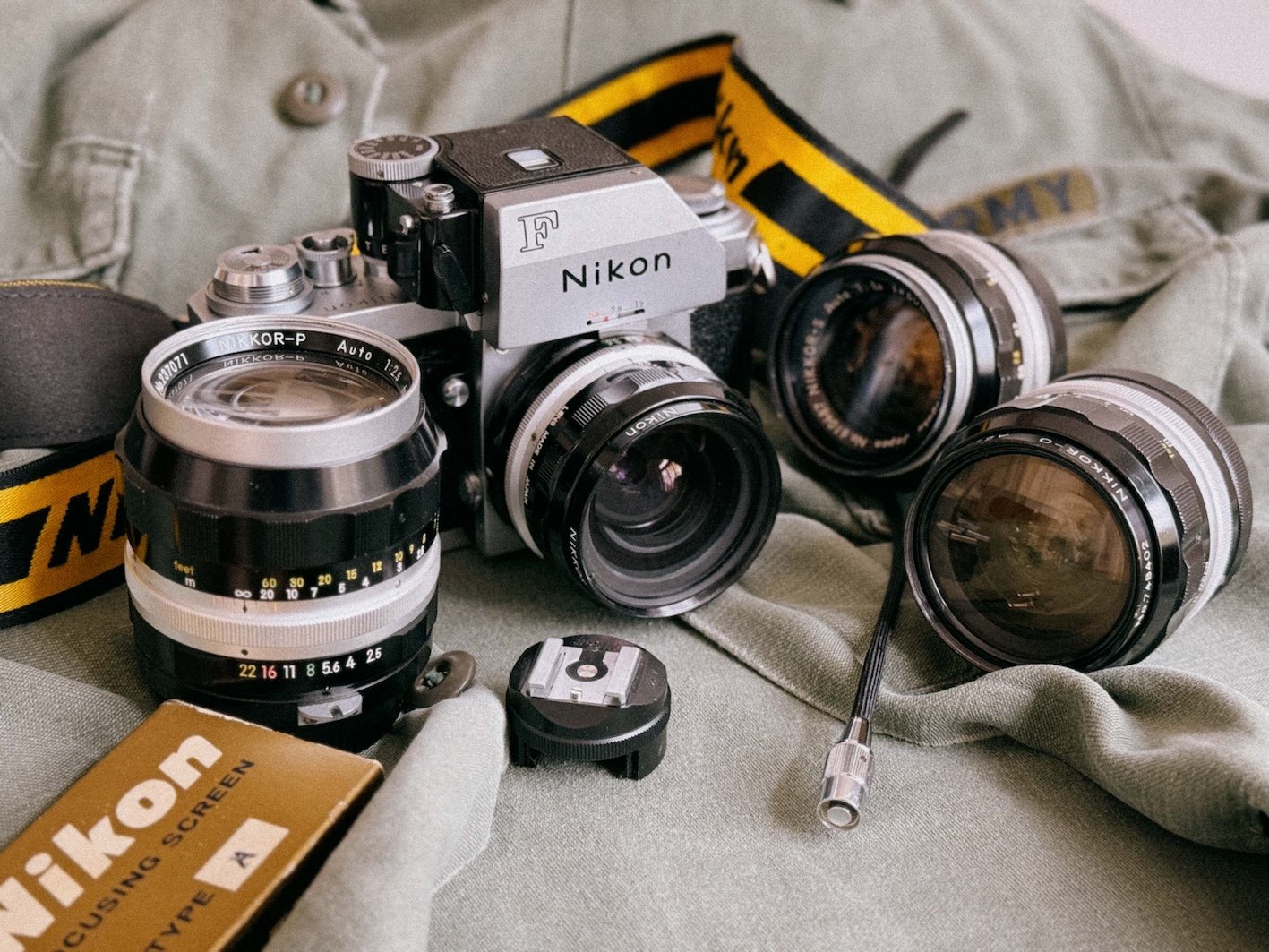
More Is More - isn’t it?
The biggest downfall is also the biggest win for my relationship with the Canon P. Since I can't and don't really want to use anything other than 50mm lenses on it, I also don't have to worry about which lens I want to mount when I'm just grabbing a camera for a walk. Less load on my mind.
Those walks also usually happen when the weather is good, so the viewfinder issues don't really matter that much here. Sure, if I want to take a portrait, I might be a bit slower, but there is something about having no options. It feels wholesome in a way.
The Canon P is a camera I pick up because I enjoy the experience of shooting it. And quite frankly, I enjoy looking at it too. In some way, it does act like a fashion accessory that also takes pictures on film.
The Nikon F is the camera I pick up when I already know what I want to photograph and simply want the camera to give me as much control as possible.
And that's a pretty important distinction.
A Quick Note on the 50mm f/1.4 Lenses:
Both cameras are often paired with 50mm f/1.4 glass, but they render wide-open shots quite differently. The Canon 50mm f/1.4 LTM, often dubbed the "Japanese Summilux", feels softer at f/1.4. The Nikkor-S 50mm f/1.4, however, has a distinctly dreamier, more swirly character wide open. Thanks to subtle spherical aberration at f/1.4, it creates a soft, nostalgic glow around bright highlights and a smoother, painterly background blur. My example is very sharp at around f/2.8.
But I hardly ever shoot at f/1.4 on the Canon. I just missed focus too often in the past, so I try not to go below f/2.8.
Canon left - Nikkor right


The Shooting Experience
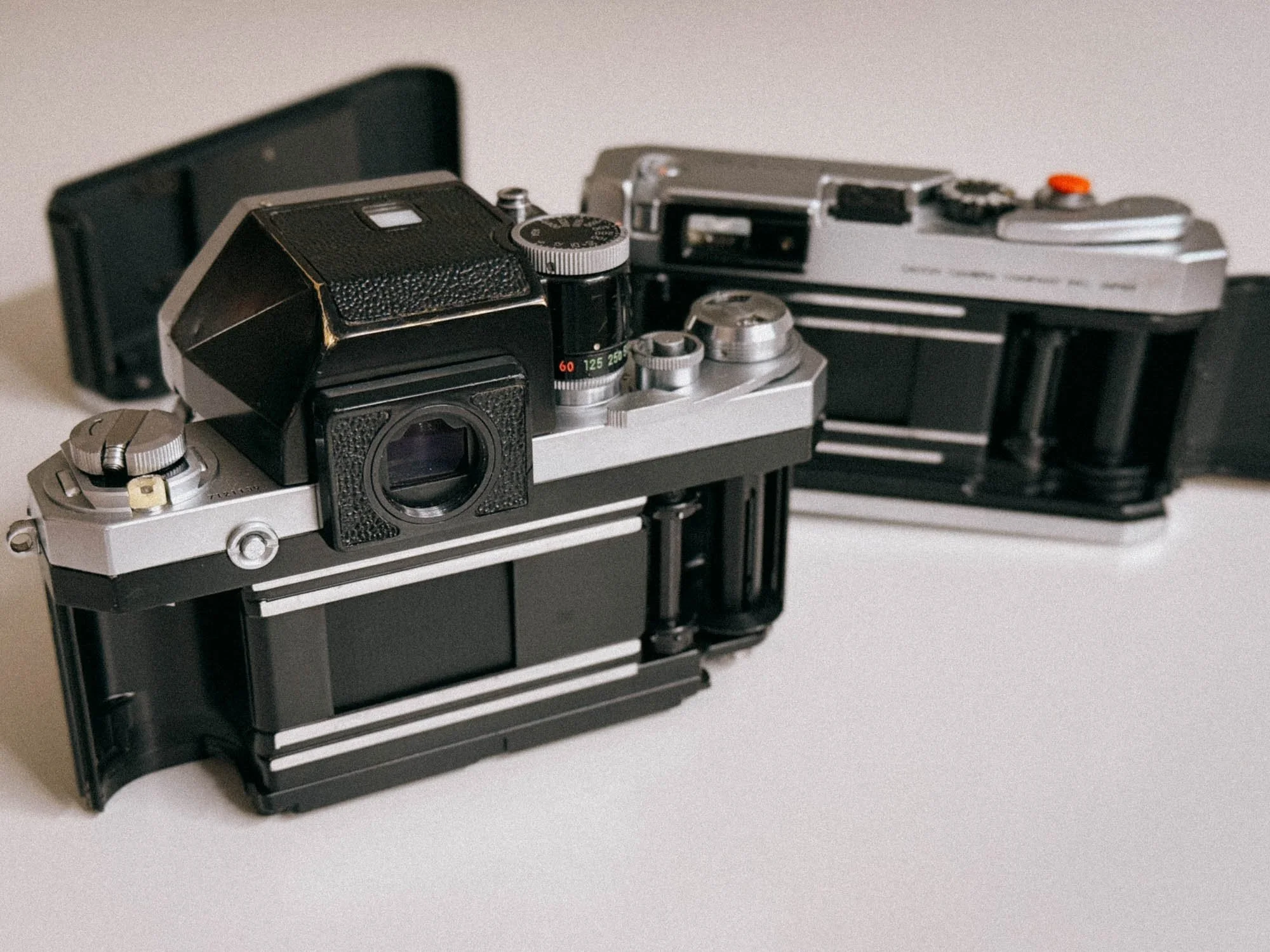
Film Loading - Easy On Both, Despite The F’s Removable Back
In the end, I use these two cameras for quite different things.
The Canon P is my recreational camera. I take it when I want to go for a walk, shoot a roll, practice Sunny-16 or simply enjoy shooting without thinking too much about lenses and settings. The limitation to 50mm is actually part of the appeal.
But it doesn't fulfill the classic street photography role for me. I can't properly see the 35mm framelines with my glasses and I don't want to mess around with external viewfinders. Zone focusing a 50mm is also nowhere near as forgiving as doing it with a 35mm.
With the Nikon F, I can simply put on a 35mm lens and the unmetered prism. The camera becomes noticeably more compact and lightweight, and zone focusing suddenly makes a lot more sense.
So for me, the Canon P is about the experience.
The Nikon F is the one I trust when it matters.
Verdict: Canon P vs Nikon F
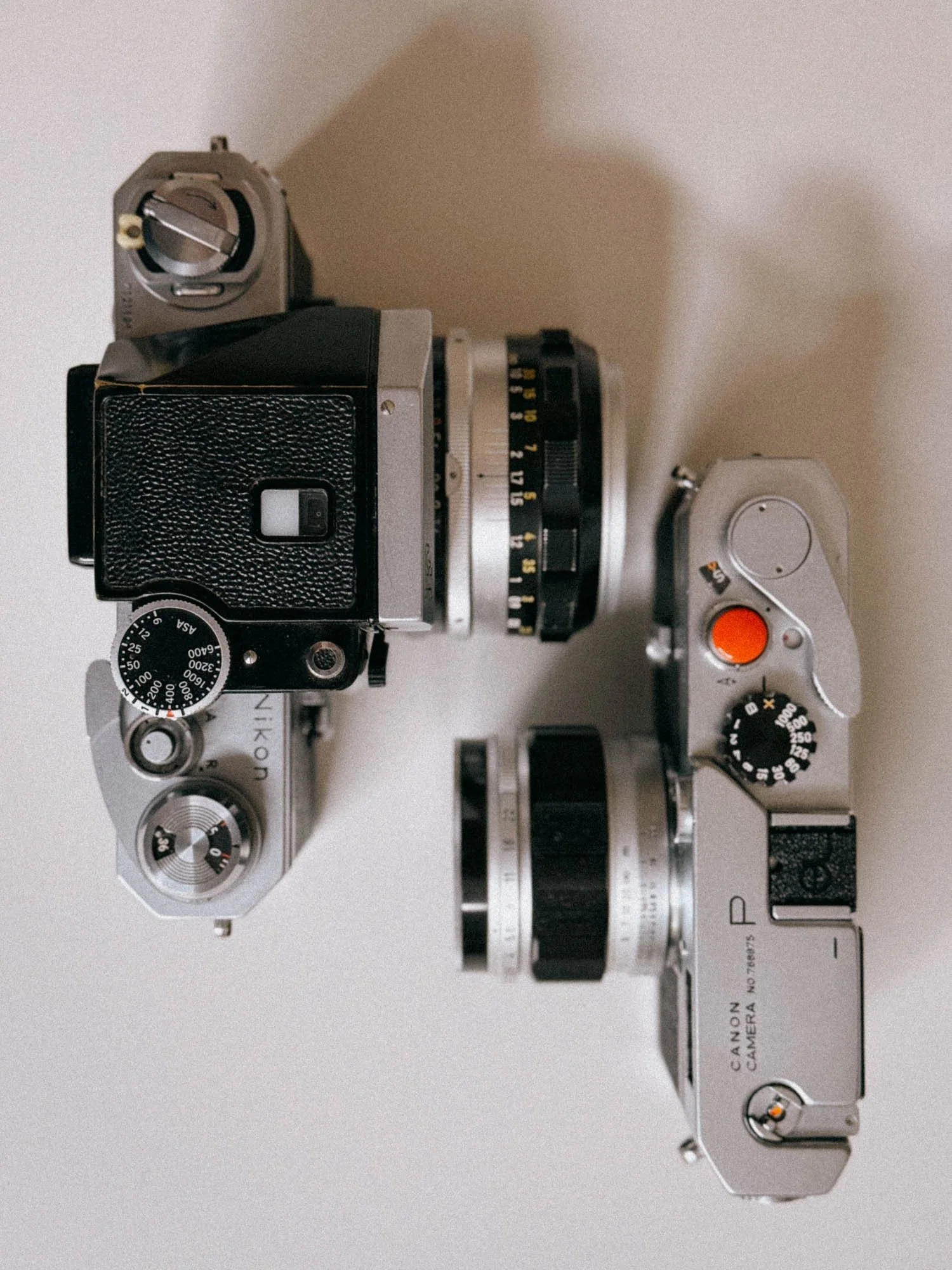
Top Down View Size Comparison
By now you probably understand that a simple spec comparison won't do the trick when comparing these two. If I had to give you one piece of advice, it would be: try both before you buy and see what you actually prefer and why.
I know it's not particularly fashionable to say that you bought a camera mainly because of the way it looks. But for me, that's actually one of the reasons I still have the Canon P. It might sound weird, but it absolutely shouldn't.
The Canon P combined with the 50mm f/1.4 is more than capable of producing great, sharp images. The way to get there is just a different one.
Just be aware of a camera's strengths and weaknesses. For me, that means I wouldn't bring the Canon P to a professional shoot. The Nikon F is simply the camera I trust when I really need to get the shot.
But not everything has to make sense.
Don't fall for the hype and be honest with yourself about what you actually enjoy. If you like a man purse that takes pictures, get it.
I did.
Enjoyed this? You might also like:
If you found this article helpful, check out my other deep dives into the world of expired emulsions and color recovery:
Flash Photography with Film Cameras: Manual Flash, Auto Flash & Guide Numbers
Forget the Mju-II: Why the Olympus AF-1 is the Best Point & Shoot Under $100
How to Edit Expired Slide Film: A Technical Guide to Rescuing E-6 (Ektachrome 64T)
Nikon F Review (2026): Shooting the Indestructible 35mm Legend
FPP Retrochrome 400 Review: Shooting High-Speed Surplus Slide Film
422 Meters of Frozen Gold: The Expired Ektachrome Heist Part I
422 Meters of Frozen Gold: The Expired Ektachrome Heist Part II
Embrace the Blues: Why Ektachrome shifts cooler and how to handle it
Minolta SR-101 (SRT 101) Review: The Ultimate Mechanical SLR in 2026?